




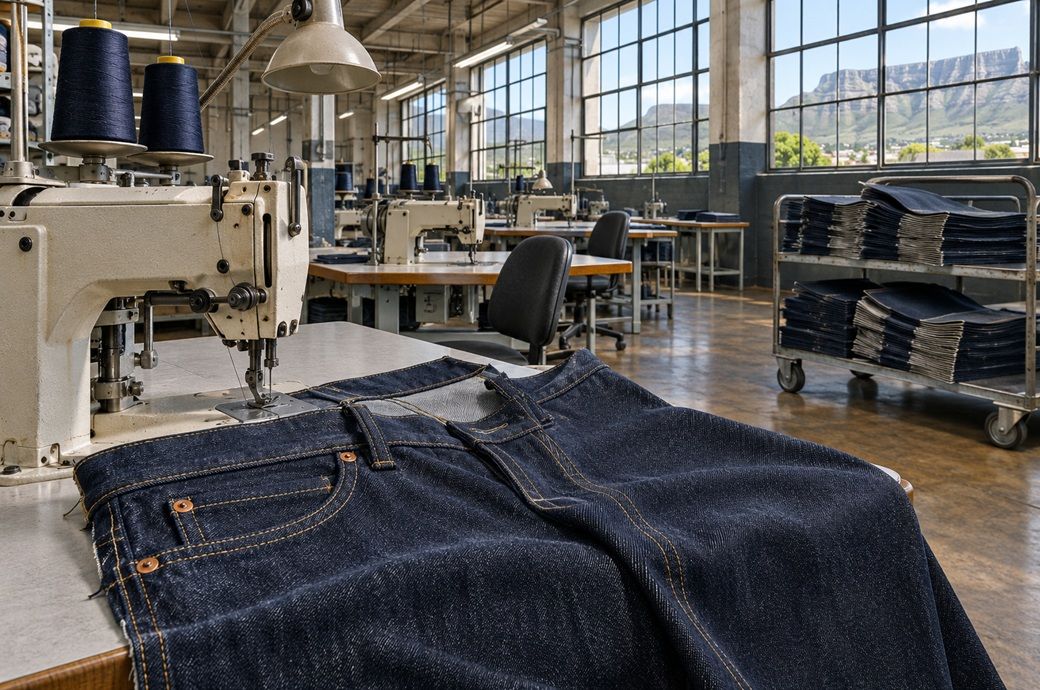
Levi Strauss has proposed the closure of its manufacturing facility in Epping, Cape Town, which could jeopardize more than 400 jobs, according to media reports. The company has initiated consultations under Section 189 of South Africa’s Labour Relations Act regarding potential layoffs, but it has stated that no final decision will be made until discussions with employees and their representatives conclude.
While the exact reasons for the proposed closure have not been publicly clarified, industry experts believe that it is not directly linked to South Africa’s potential loss of benefits under the African Growth and Opportunity Act (AGOA). Nonetheless, the uncertainty surrounding continued AGOA eligibility has raised concerns among clothing and textile industry stakeholders about export competitiveness, market access, and investor confidence.
The Southern African Clothing and Textile Workers’ Union (SACTWU) has expressed worry about the likelihood of prolonged unemployment for affected workers, particularly after they exhaust their severance packages. The union has called for alternative job opportunities and measures to preserve local manufacturing capacity.
The potential closure could also have repercussions for suppliers, service providers, and businesses connected to the Epping facility. Moreover, stakeholders point to rising costs as a critical factor undermining the competitiveness of local manufacturers. Expenses related to electricity, logistics, labor, and general overhead are increasingly challenging for businesses, particularly in a sector characterized by narrow profit margins.
Capacity utilization is another pressing issue; manufacturers need sufficient production volumes to distribute fixed costs effectively while sustaining productivity and quality. Underused facilities tend to inflate production costs, further compromising competitiveness.
In response to some of these challenges, the Cape Chamber has implemented the Scaled Labour-Intensive Manufacturing (SLIM) initiative, aimed at enhancing asset utilization, shared infrastructure, and overall factory efficiency. The initiative proposes alternative working arrangements to boost production hours without jeopardizing working conditions or fostering permanent dependency on subsidies.
The proposed facility closure has highlighted questions surrounding the future of local manufacturing. The Cape Chamber believes that there are viable alternative denim manufacturing options within South Africa and hopes that Levi Strauss will continue sourcing from these local manufacturers.
South Africa maintains a developed clothing and textile manufacturing sector, with InvestSA noting that the industry includes about 4,500 manufacturers and is supported by a strong wholesale and retail base. Stakeholders emphasize that preserving this industrial base will require ongoing investment in technology, productivity, and efficient production systems, alongside an environment that fosters competitiveness and enables manufacturers to achieve economies of scale.
While addressing the immediate impacts on affected workers is a priority, the situation also encourages broader reflection on the challenges confronting the industry and the need to create conditions that support domestic manufacturers in remaining competitive and sustainable.
