




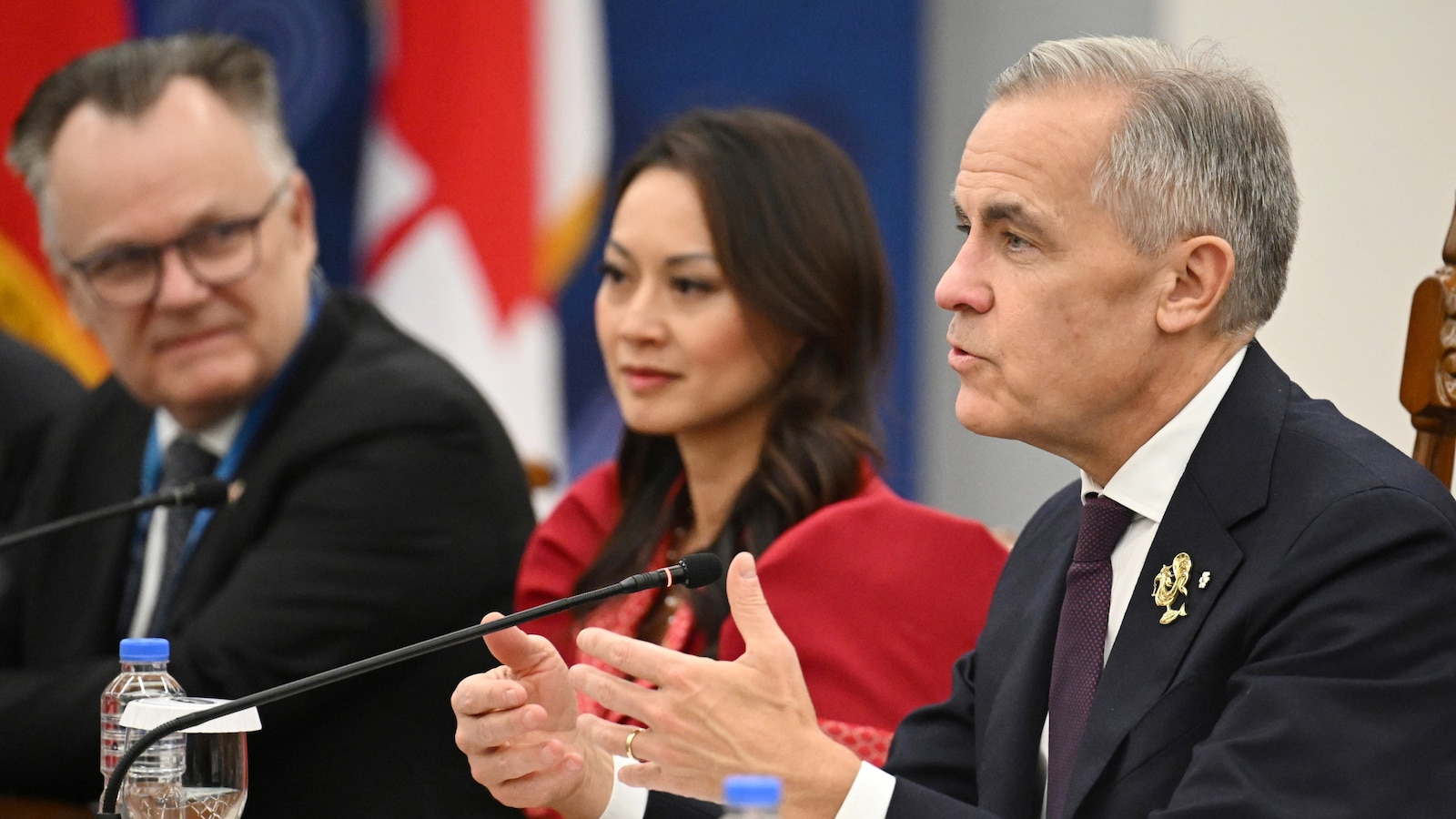
Canadian Prime Minister Mark Carney reported progress in trade negotiations with the United States while attending events in Asia. Carney revealed that he had a lengthy discussion with U.S. President Donald Trump and senior administration officials before his trip. This dialogue suggests that both nations may be moving closer to a trade agreement following a breakdown in talks last August.
In tandem with these discussions, Carney announced that Canada has substantially concluded free-trade negotiations with the Association of Southeast Asian Nations (ASEAN) and reached a separate agreement with the Philippines. These agreements aim to diversify Canada’s trade relationships amid ongoing tensions due to Trump’s tariffs.
“I had quite a long, substantive conversation with President Trump just before leaving for this trip,” Carney said in Manila. “We are making progress. There is the possibility of a deal, a bilateral deal. But we’re not yet there.”
U.S. Trade Representative Jamieson Greer and Trump’s chief of staff, Stephen Miller, were also part of the conversation. Carney emphasized that Canada will not accept any agreement that undermines its auto industry, which has suffered from U.S. tariffs.
Negotiations between the two countries had previously stalled due to U.S. demands deemed unacceptable by Canada. Following these issues, Washington imposed 50% tariffs on approximately $20 billion in Canadian goods, prompting retaliatory tariffs from Canada in September. Despite this setback, discussions have resumed.
The trade relationship between Canada and the United States is one of the largest in the world, and a successful agreement may lead to reduced tariffs on critical sectors such as steel and aluminum. Ahead of the midterm elections in the U.S., Trump acknowledged that the countries were “very close” to an agreement, while Carney noted that some contentious U.S. demands related to Canadian culture and trade negotiations with other countries have been moderated.
The issue of U.S. tariffs on Canadian goods has become a focal point in U.S. politics, with Democrats attributing rising prices to these tariffs and pledging to challenge them. This situation presents Canada with a complex decision: accept a deal that reduces, but does not eliminate, tariffs or await a potentially more favorable outcome as Congress addresses tariff concerns.
Canada’s government estimates that the ASEAN agreement could inject nearly 2 billion Canadian dollars (approximately $1.4 billion USD) into the Canadian economy, potentially creating almost 14,000 jobs in sectors such as agriculture and manufacturing. Officials aim to finalize the ASEAN agreement next year.
The agreement with the Philippines, which covers more than 90% of tariff lines, is also expected to be signed next year and is projected to triple Canadian exports to the Philippines by 2035.
Carney is attending several summits during his trip, including the European Political Community summit in Ireland and the upcoming ASEAN summit and Francophonie summit in Cambodia. He is also scheduled to meet with Chinese President Xi Jinping at the Asia-Pacific Economic Cooperation summit in China.
Currently, Carney has made it a priority to double Canadian exports to non-U.S. countries by 2035.
