




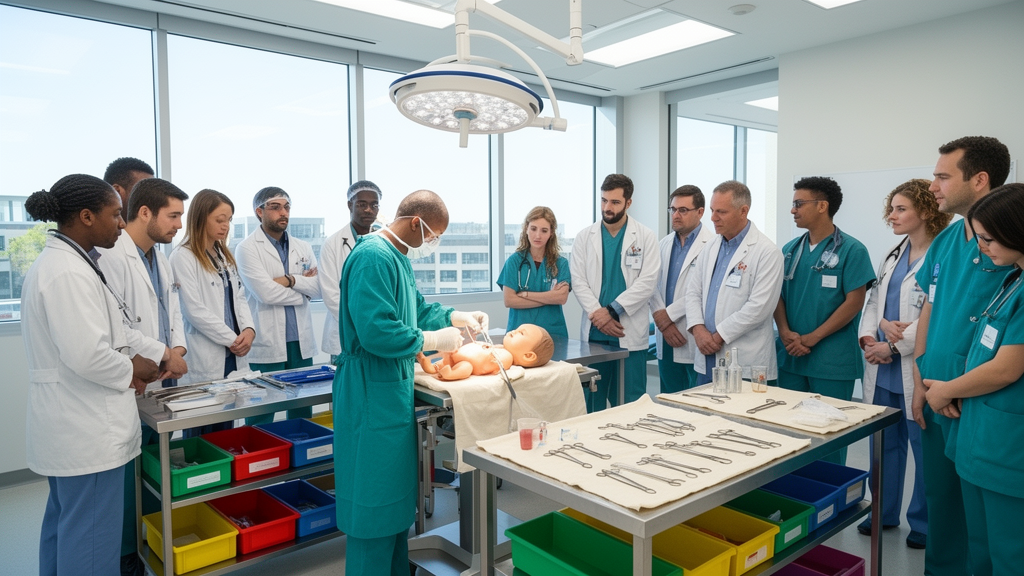
A new educational framework aimed at integrating environmental sustainability into pediatric surgical training has been established, as detailed in a policy review published in Frontiers in Medicine. Developed by clinicians at the University of Cape Town and the Red Cross War Memorial Children’s Hospital, the initiative seeks to address the lack of formal environmental education in medical curricula within low-to-middle-income countries.
Healthcare systems significantly contribute to ecological damage, with clinical services accounting for about five percent of global greenhouse gas emissions. Surgical theaters alone generate between seven and thirty percent of hospital waste, with single-use plastics often making up a large portion of discarded materials. Despite operating under financial constraints, hospitals in these regions frequently adopt high-consumption practices, such as single-use instruments, that exacerbate waste problems. The authors of the review advocate for educational interventions that would teach trainee surgeons about the adverse effects of clinical consumption on natural ecosystems.
The framework utilizes the five UNESCO Education Pillars for Sustainable Development, focusing on raising awareness, building knowledge, developing skills, fostering the right attitudes, and active participation. The authors argue that sustainability should not be viewed as a separate theoretical topic, but rather contextualized within everyday clinical challenges. This holistic approach aims to cultivate a culture of ecological responsibility among future medical practitioners.
To exemplify the framework’s application, the authors examine gastroschisis, a severe congenital abdominal defect that requires urgent surgical intervention. In high-income countries, advanced non-operative techniques are being adopted, but access to such methods is limited in South Africa, leading to increased costs and environmental impacts. By analyzing the challenges faced in managing such cases, trainees can better understand the intersection between surgical practices, environmental issues, and economic implications.
The review highlights operational inefficiencies and the environmental consequences of surgical care, including the use of improvised solutions like Bogota bags, often made from non-medical materials, which could introduce harmful chemicals into neonatal care. The authors emphasize that trainees must critically evaluate these choices and their implications for patient safety and environmental health.
Furthermore, the authors argue that there is a significant gap in clinical research regarding climate impacts on surgical outcomes. Current pediatric surgical education often omits discussions on how environmental factors can influence postoperative recovery and infection rates, particularly in warmer climates.
Red Cross War Memorial Children’s Hospital has implemented various sustainable practices, like energy-efficient retrofits and water conservation initiatives, which serve as practical examples of sustainable healthcare management. The authors call for a reevaluation of policies governing single-use medical device reprocessing, noting that regulatory frameworks vary significantly between countries and often inhibit environmentally friendly practices. They stress the need for training programs to provide surgeons with the advocacy skills required to navigate these challenges and develop sustainable surgical systems.
Next, the authors recommend further research into the adaptation of these principles within local contexts and emphasize the importance of integrating sustainability into the pediatric surgical curriculum to foster a new generation of environmentally conscious medical professionals.
