




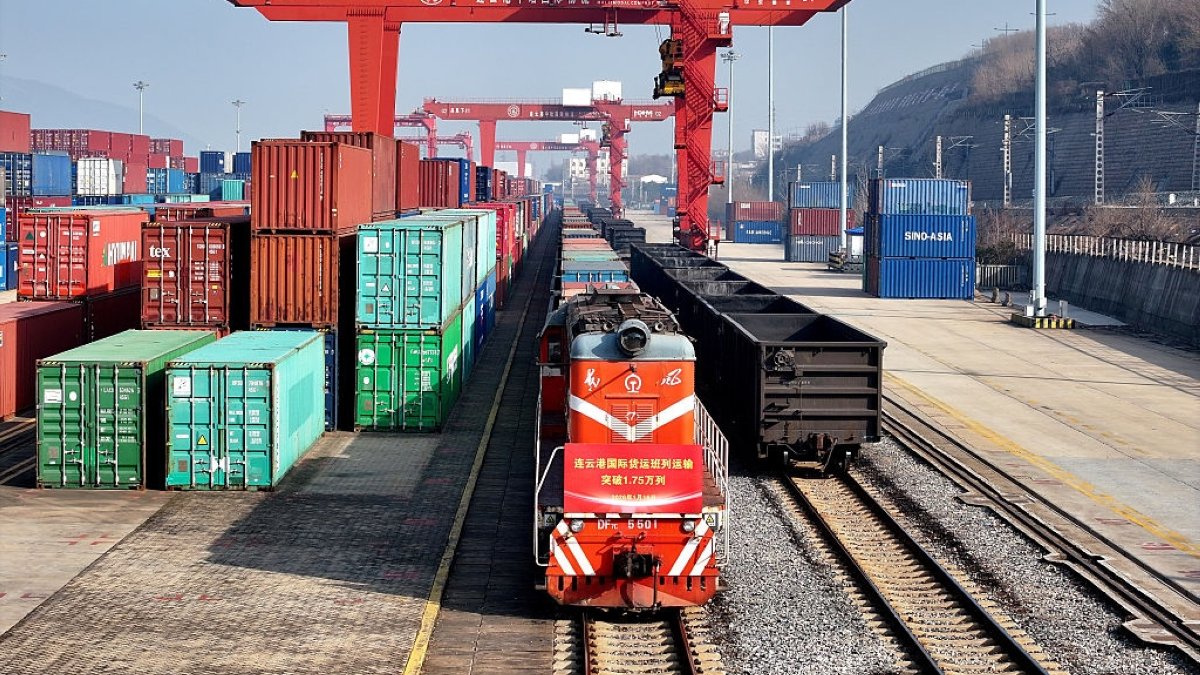
A Memorandum of Understanding (MoU) signed on September 30, 2026, by Kazakhstan, Uzbekistan, and the United Arab Emirates marks a critical step in advancing the Central Asia-South Asia (CASA) railway project. This initiative aims to facilitate a significant trade route connecting the region through Kazakhstan and Uzbekistan to Pakistan’s ports of Karachi and Gwadar.
The agreement allows the involved parties to conduct technical and economic studies to assess the feasibility of the necessary railway infrastructure and related facilities. A joint working group will be created to evaluate various dimensions of the project, indicating a shift from initial political commitments towards practical assessments. However, no specific timelines for construction, total project costs, or financing options have been finalized at this stage.
Kazakhstan officials state that CASA is expected to handle up to 10 million tons of cargo annually to Pakistani ports, highlighting the project’s potential economic impact. The effectiveness of CASA, however, will largely depend on its competitiveness regarding cost, transit times, and security, which are vital for landlocked Central Asian states seeking reliable access to global markets.
The CASA project represents more than just a railway investment; it is part of a broader strategy by Kazakhstan and Uzbekistan to enhance transportation links and create diverse trade routes. By developing a southern route, they hope to distribute foreign trade across various pathways rather than relying solely on existing connections.
Central Asia’s geographic challenges have necessitated this shift toward southern trade routes. Countries like Kazakhstan, Uzbekistan, Turkmenistan, Kyrgyzstan, and Tajikistan lack direct access to oceans, relying on neighboring countries for their trade. CASA aims to establish a vital link through Pakistan, potentially allowing these nations greater access to the Indian Ocean and enhancing Pakistan’s role as a transit hub for Central Asian maritime trade.
A key element of CASA is the Trans-Afghan railway, which aims to connect Afghanistan to Pakistan. This segment, developed by Uzbekistan, Afghanistan, and Pakistan, includes the Mazar-i-Sharif-Torkham section, projected to extend approximately 760 kilometers. Feasibility studies began in 2025, with the project now estimated to cost over $7 billion as of June 2026. Rising costs have prompted scrutiny of CASA’s economic viability, as transport costs and secure access to Pakistani ports are crucial factors.
Competing routes are also under consideration, with Kazakhstan expressing interest in the Turgundi-Herat route in Afghanistan and Uzbekistan exploring connections between Mazar-i-Sharif and Herat. These projects, alongside Iran’s Khaf-Herat railway, could create additional options for southern connections, enhancing the region’s resilience to geopolitical risks.
However, CASA faces significant challenges, particularly concerning security within Afghanistan. The project’s success depends on not only building infrastructure but also maintaining a safe and uninterrupted transit corridor. Recent tensions between Afghanistan and Pakistan highlight potential risks that could adversely affect transit times and costs, with political stability becoming crucial for CASA’s economic prospects.
As Central Asian states pursue diplomatic initiatives regarding Afghanistan, improving security and economic connectivity will be essential. The predictability of border crossings and customs procedures will also influence the project’s success. Involvement from the UAE could enhance financing and logistical capabilities, although specific investment details have yet to be disclosed.
Ultimately, the CASA project represents a strategic move for Central Asia, aiming to secure new access routes for trade. Its success will be determined by the ability to maintain economic competitiveness and ensure security along the corridor.
