




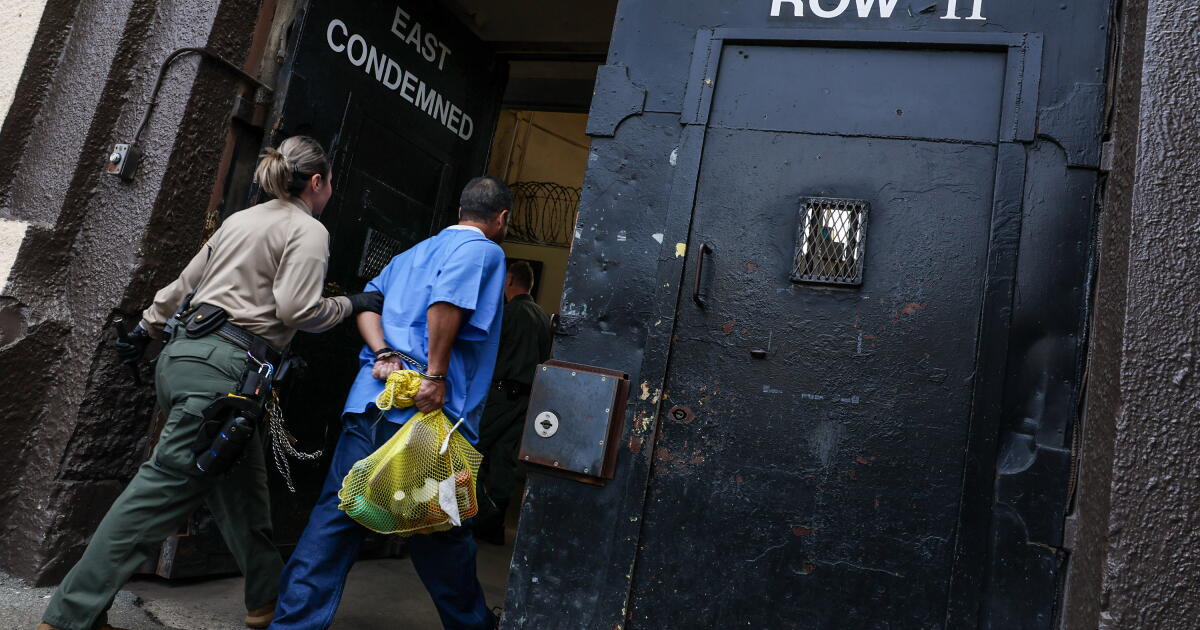
SACRAMENTO — California Governor Gavin Newsom recently announced plans to commute the death sentences of all 548 inmates currently on death row, converting their sentences to life without the possibility of parole. This decision has prompted a mixed response regarding its implications for capital punishment in the state.
Newsom’s clemency announcement, made on November 5, comes amid ongoing debates about the future of the death penalty in California. Critics have pointed out that while Newsom is taking a significant step towards reform, he has not moved to fully abolish capital punishment, which some see as a necessary goal.
Some commentators have described Newsom’s approach as an overreach of power and an insufficiently legislative solution to the issue. They argue that rather than acting unilaterally, Newsom could have sought to mobilize support for a repeal initiative in the California Legislature and potentially put the matter to a vote among the citizenry. Many believe that the people of California should have a say in such a consequential decision regarding state-sanctioned punishment.
According to state law, any commutation for inmates with multiple felonies must receive approval from the California Supreme Court. Of the 548 inmates Newsom plans to commute, approximately 382 have prior felony convictions. This adds a legal complication to the governor’s plan, particularly given the limited time left in his administration before his successor, Democrat Xavier Becerra, takes office on January 4.
As it stands, the Supreme Court’s decision on these commutations must be made before that transition, adding pressure to an already complicated situation. If the justices choose not to act on Newsom’s request, it could lead to an extensive case review process, which may be infeasible given the upcoming holiday season.
Newsom previously instated a moratorium on the death penalty in 2019 and has since scaled back the death row infrastructure at San Quentin State Prison. Despite his stance on reform, the legal framework surrounding capital punishment remains complex, and the governor’s decision has sparked discussions about the efficiency and morality of maintaining the death penalty.
Critics have noted that California has not carried out an execution since 2006, and the financial burden of the death penalty system continues to be a point of contention. Supporters of abolishing capital punishment argue that life sentences without parole would be more practical and less costly for taxpayers.
As the situation develops, attention will focus on how the state Supreme Court will respond to the commutation request and whether Becerra will pursue a repeal measure in the future, reflecting the ongoing tensions surrounding capital punishment in California.
