




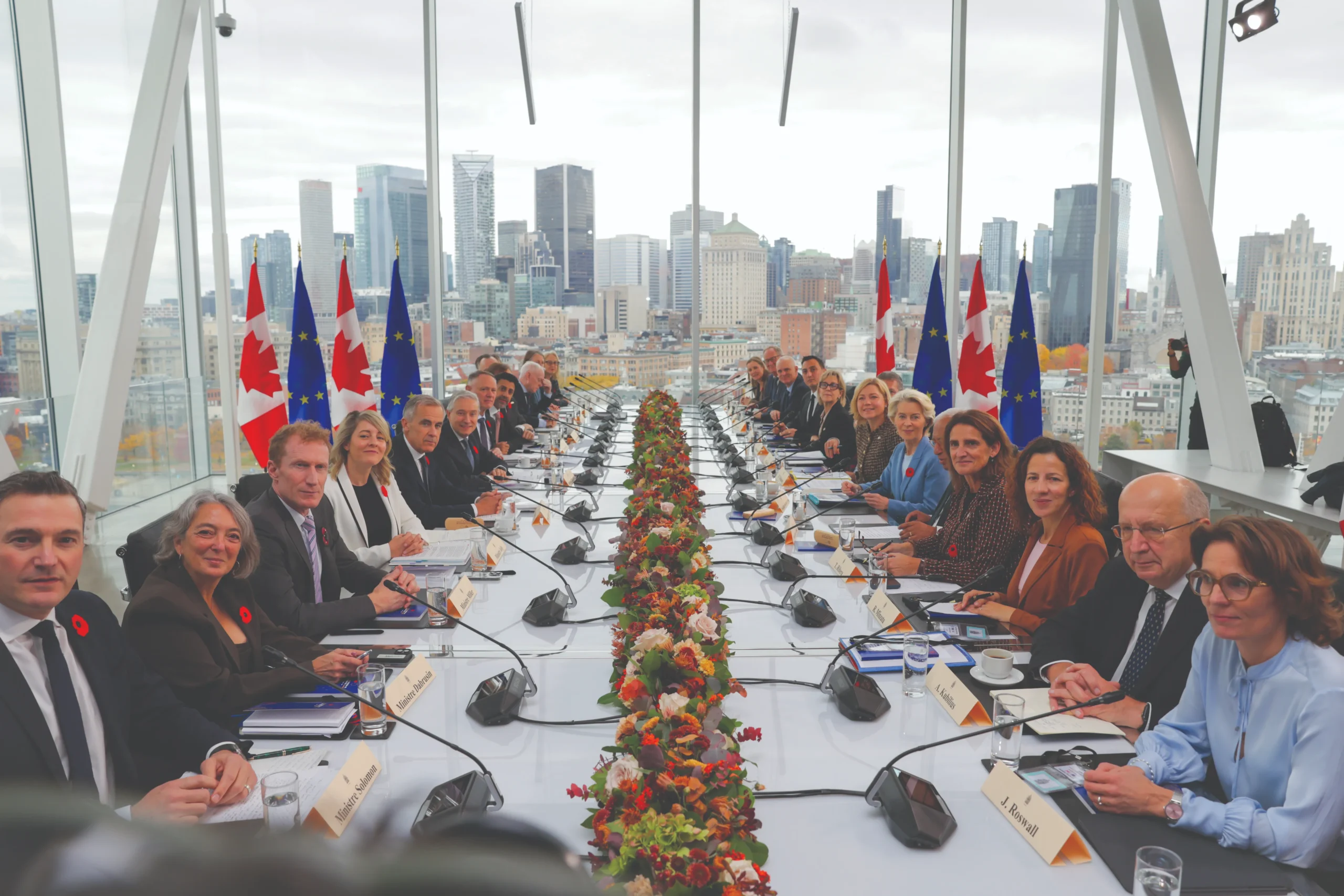
The European Union is considering an enhanced relationship with Canada that would expand economic and strategic cooperation beyond their current free trade agreement. This proposal, brought forth by European Commission President Ursula von der Leyen on September 16, 2026, aims to bring Canada closer to European markets and security arrangements without granting full EU membership. Canadian Prime Minister Mark Carney has expressed support for this initiative, viewing it as a chance to diversify economic ties amidst uncertainties in U.S.-Canada relations. During the October summit in Montreal, EU and Canadian leaders pledged to work towards formalizing a closer association by 2027.
An Unprecedented Offer: What Has Europe Proposed?
The proposal for a closer partnership surfaced during the European Parliament’s annual State of the Union address. The following day, Carney welcomed the suggestion and outlined his vision for collaboration in multiple sectors, including trade, defense, and technology. He emphasized that Canada does not aspire to join the EU but wishes to cultivate a partnership that enhances the sovereignty of both parties.
This initiative was officially advanced at the 21st EU–Canada Summit in Montreal on October 29–30, where leaders outlined the “Alliance for the Future.” This framework focuses on six areas for increased cooperation: trade and regulatory cooperation; digital and research technologies; critical resources; financial services; security; and community ties. They agreed to aim for a definition of this “ever-closer association” by their next summit in 2027.
However, a significant differentiation exists between the initial proposal and the final agreement. While von der Leyen initially mentioned “associate membership,” the joint statement from the summit did not endorse this status. Instead, it reaffirmed a commitment to developing an “ever-closer association,” reflecting legal and political nuances, as “associate membership” lacks an established category within EU treaties. Some EU member states, including Germany and France, expressed concerns over potential implications for other non-member nations.
Membership Without Membership: Understanding Europe’s Different Arrangements
The EU, composed of 27 full member states, maintains various forms of relationships with external countries. These do not equate to different levels of membership, as only full members have decision-making roles in EU institutions. Non-member nations can engage in specific trade, political, and security arrangements. Examples of these relationships include:
- Full EU membership: Countries like France and Germany have complete access to EU decision-making.
- European Economic Area (EEA): Norway and Iceland engage in the Single Market but lack voting rights.
- Customs Union: Turkey benefits from a customs union without full Single Market access.
- Association Agreement: Agreements that establish political and economic ties, such as Ukraine’s agreement with the EU.
- Schengen Participation: Non-EU member states like Switzerland participate in the Schengen area.
For Canada, a possible path to a deeper partnership may be an association agreement under Article 217 of the Treaty on the Functioning of the European Union, which allows for agreements with non-member countries focused on mutual rights and obligations. The European Parliament Research Service indicated that such an agreement could facilitate closer relations, while acknowledging it would not create an intermediate membership status.
Potential benefits for Canada include reduced regulatory barriers and enhanced cooperation in areas such as digital trade and cybersecurity. The summit also discussed potential access to valuable EU resources like the Galileo satellite navigation system.
Why Do Canada and Europe Need Each Other?
Beyond increased trade, this proposal is driven by evolving economic and security needs. Canada aims to diversify its international partnerships to reduce reliance on the U.S., which accounted for a significant portion of its trade. Carney highlighted the importance of collective resilience against vulnerabilities from dependence on specific partners.
For Europe, fostering closer ties with Canada may yield essential resources, strengthen the defense industrial base, and enhance energy security amid changing geopolitical landscapes. The summit acknowledged the necessity for cooperation in critical areas including minerals and technology.
Security is a central facet of this partnership, with Canada participating in NATO and cooperative defense projects. A closer association could enhance collaboration in various sectors, building on existing security agreements.
Trade between the EU and Canada reached approximately €130 billion in 2025, marking an increase since the implementation of their Comprehensive Economic and Trade Agreement (CETA) in 2017. This agreement has paved the way for more expansive cooperation, should the proposed arrangements come to fruition.
The Road to 2027: What Could Stand in the Way?
As enthusiasm surrounds the proposal, several legal and political questions remain. The concept of associate membership lacks a clear definition within EU law, which may complicate potential agreements. Any arrangements would need approval from the European Parliament and could require ratification from individual member states.
Disagreements among EU governments also pose challenges, with concerns surrounding the implications of granting a new status to Canada. The shift from “associate membership” to “ever-closer association” indicates the necessity for consensus among member states.
Negotiations regarding economic terms will be crucial, particularly in terms of market access and regulatory alignment without full participation in EU governance. Moreover, Canada’s strong ties with the U.S. economy remain a significant factor, as the depth of its integration with the U.S. is difficult to replicate.
The upcoming 2027 EU–Canada summit may serve as a pivotal session to translate political intentions into a feasible and beneficial framework for both parties, enabling enhanced cooperation while avoiding the complexities of full EU membership.
