




Dominican Republic Supports El Salvador’s Military Action in Haiti
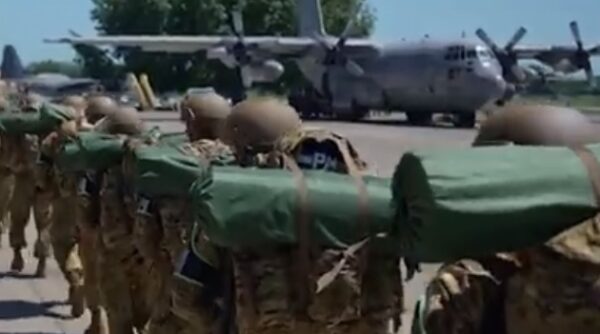
El Salvador has sent approximately 2,500 soldiers to Haiti to bolster security following the kidnapping of four Salvadoran aviation technicians who were part of a United Nations-backed force, according to President Nayib Bukele. This deployment, which is an increase from the initially reported 2,000 troops, marks El Salvador’s proactive effort to combat criminal gangs that challenge the authority of local law enforcement.
President Luis Abinader of the Dominican Republic confirmed that his administration is collaborating with El Salvador on various fronts. This partnership includes enhanced border security measures to prevent cross-border crime from Haiti, as the Dominican Republic shares the island of Hispaniola with Haiti.
Despite some domestic criticism regarding the Salvadoran military’s operations beyond the traditional scope of the Gang Suppression Force (GSF), Abinader firmly supports Bukele’s strategy. “The GSF must coordinate with Salvadoran security forces and decisively support the Salvadoran military and the attitude of President Bukele,” stated Abinader.
With the GSF recognizing the need for collaboration, spokesperson Igor Rugwiza emphasized that ongoing coordination is crucial in achieving shared security objectives in Haiti. He underscored the necessity for effective collaboration among all security actors in the area, pointing out that sustainable security outcomes depend on this cooperation.
In a recent offensive, Salvadoran forces partnered with Haitian police to target the stronghold of Wilson Joseph, the leader of the 400 Mawozo gang. Though the attack destroyed his home, Joseph was not killed. Bukele hailed this operation, highlighting El Salvador’s commitment to directly confronting gang violence.
Abinader has stated that the defense ministers of the Dominican Republic and El Salvador are in constant communication regarding the situation in Haiti. This week, Prime Minister Alix Didier Fils-Aimé is expected to visit El Salvador to discuss the status and future objectives of the Salvadoran troop presence in Haiti.
According to recent reports from the United Nations, gang-related violence in Haiti has resulted in over 5,700 deaths this year, with armed groups controlling much of the capital. The unrest has roots in longstanding governance issues exacerbated by the assassination of President Jovenel Moïse in 2021, which further destabilized an already fragile political landscape.
Conditions in Haiti are dire, with armed gangs displacing nearly 1.5 million people and terrorizing citizens through murder, kidnapping, and extortion. William O’Neill, a UN-designated human rights expert, has characterized the situation as “hell on earth.”
While El Salvador aims to restore order through military means, experts caution against mission creep that could lead to prolonged involvement in Haiti’s complex conflict. The initial objective of rescuing hostages must not devolve into an open-ended military commitment.
The situation remains tense, yet there is cautious optimism that El Salvador’s intervention may help disrupt significant criminal networks in Haiti. However, experts emphasize that long-term stability requires more than military action; it necessitates a robust political and security framework supported by both regional cooperation and sustained international aid.
