




President Luis Abinader of the Dominican Republic is set to discuss the security situation along the border with Haiti on Monday, following his directive to bolster military resources in the area. Local reports indicate that Abinader will address the issue during his weekly program, La Agenda Semanal, which airs at 3 pm local time (1900 GMT).
Accompanying him will be Defense Minister Carlos Antonio Fernandez Onofre, Foreign Minister Victor Bisono, and senior military officials. Abinader ordered the deployment of two additional battalions, along with heavy equipment and artillery, to strengthen military presence at the southern border. Prior to these reinforcements, approximately 11,000 troops were already stationed along the border.
Abinader stated, “We are in permanent session,” emphasizing that authorities are closely monitoring the situation unfolding in Haiti. He has also been in contact with El Salvador’s President, Nayib Bukele, regarding ongoing developments. Communication with the Gang Suppression Force operating in Haiti has also been maintained.
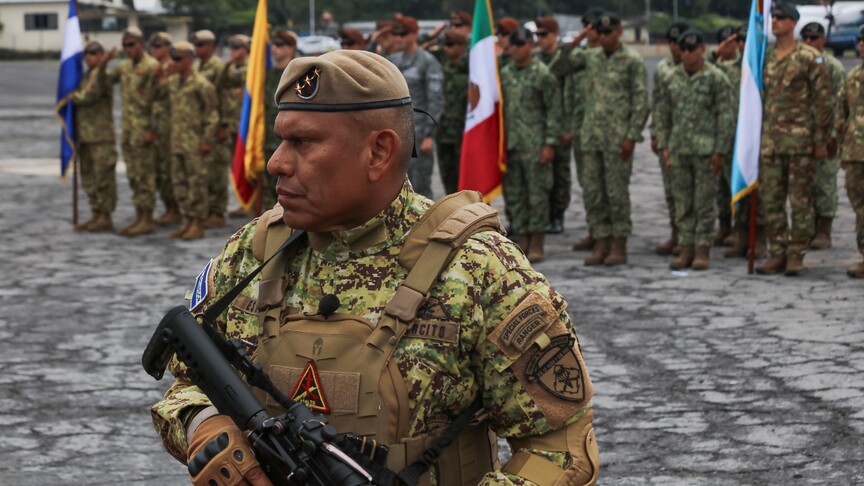
The Dominican government is particularly attentive to the recent kidnapping of four Salvadoran military technicians in Haiti. President Bukele has announced a deployment aimed at assisting in their rescue.
In response to the ongoing crisis, the Dominican Republic has intensified border controls, including the construction of a border wall designed to combat irregular migration, smuggling, and other cross-border issues. Authorities have ramped up migration enforcement measures and accelerated deportations of undocumented Haitians, amid rising violence emanating from Haiti.
Haiti continues to experience a severe security crisis, with armed gangs exerting control over significant areas, including the capital, Port-au-Prince. This unrest has led to large-scale displacement of residents, disruption of essential services, and hindered efforts to restore public order.
The Dominican Republic shares the island of Hispaniola with Haiti and has consistently reinforced border measures due to concerns related to instability and the flow of people across the shared border.
