




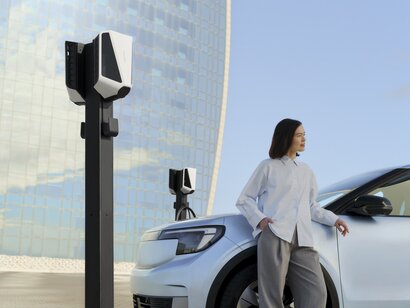
Easee is expanding its operations in Southern Europe, having already installed over 1,000 chargers across three countries despite not yet establishing a local commercial presence. To support this growth, the company is bolstering its sales operations and forging partnerships with installers and distributors.
This expansion comes on the heels of impressive financial results. In the first three quarters of 2026, Easee reported a 33 percent increase in revenue, totaling NOK 835.8 million (approximately €79.8 million or £66.9 million). Charger sales surged by 47 percent, and the adjusted EBITDA nearly quadrupled to about NOK 122 million (€11.6 million or £9.7 million). The adjusted EBITDA margin also improved significantly, rising from 5 percent to 14.5 percent.
Particular growth was noted in Europe’s major EV charging markets. In the Benelux region, hardware revenue soared by 86 percent, with charger sales more than doubling. The DACH region, which includes Germany, Austria, and Switzerland, saw a revenue increase of 26 percent, nearing NOK 200 million. Combined, these regions accounted for around 44 percent of Easee’s revenue during the reported period.
Øyvind Stavland Osjord, CEO of Easee, acknowledged the rapidly growing but competitive nature of Europe’s charging market. “We’ve focused on building a business that can grow profitably, and that’s now giving us a stronger foundation to expand into new markets,” he stated.
In Southern Europe, the focus extends beyond simply selling chargers. Installing EV charging systems in countries like Spain poses challenges due to many residents living in apartments with shared parking. These setups often lack sufficient electrical capacity for multiple charging points unless expensive electrical upgrades are undertaken.
Easee employs dynamic load balancing technology, allowing for the effective distribution of available power across charging points. This innovation helps both residential and commercial sites accommodate more electric vehicles without requiring an increase in their grid connection.
Spain’s National Integrated Energy and Climate Plan (PNIEC) aims for 5.5 million electrified vehicles by 2030, underlining the urgent need for extensive charging infrastructure as the country transitions to electric mobility.
Initial demand for chargers in Southern Europe was driven by existing customers from Northern Europe seeking installations for holiday properties in Spain, Portugal, and Italy. This early interest highlighted the potential of these markets, prompting Easee to establish a dedicated local sales presence.
With over 1.1 million chargers installed across Europe, Easee is leveraging its established technology platform as it continues to grow in new markets. Adjusted EBITDA results exclude one-off costs related to the company’s change of ownership earlier this year.
