




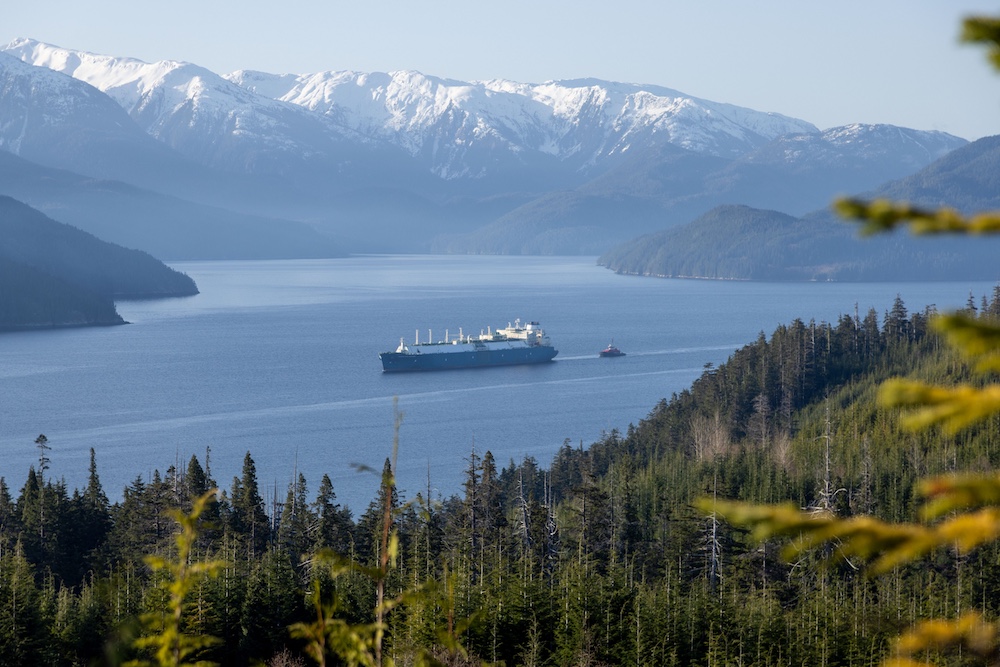
European utilities purchasing liquefied natural gas (LNG) from Western Canada are unlikely to redirect these shipments to Europe under normal circumstances, according to Seb Kennedy, publisher of Energy Flux. His analysis indicates that Asian markets, which offer higher profits, may be more appealing for Canadian LNG exports, raising questions about Europe’s dependency on U.S. gas supplies.
In an interview with Energi Media, Kennedy emphasized that the extended shipping route from British Columbia to Europe, combined with additional canal costs, undermines the economic viability of shipping to European destinations. “There are much higher profits to be made in Asia,” he said.
Nevertheless, European buyers could still gain from the Canadian supply by selling goods to Asian customers while securing Atlantic supplies for their European markets. This strategy might also increase the overall availability of American LNG for Europe by satisfying Asian demand with Canadian exports.
However, Kennedy noted that while this approach might improve global supply dynamics, it leaves Europe vulnerable to U.S. gas imports. He stated that a financially beneficial deal for a European utility may not align with the geopolitical goals that politicians promote.
The Cost Challenge for New Investments
The interview further explored whether upcoming Canadian LNG projects can recoup their full costs in an increasingly competitive global market. Kennedy’s basic modeling suggests that the full lifecycle cost of the Ksi Lisims project hovers just above $8 per million British thermal units. His projections for 2032 pricing indicate market conditions would allow export plants to receive about $7.80 for sales in Asia, $6.60 in the U.K., and $5.24 in Germany.
Importantly, these figures represent the revenue available before accounting for operational and capital costs, which distinguishes them from net profit. Kennedy warned that current revenue projections do not appear sufficient to cover the operating and capital expenditures of the project. Without improvements to the economics, investors might face diminished returns.
Despite this, Kennedy acknowledged that individual cargo shipments could still be viable. Once initial capital investments are made, and contractual obligations are in place, it may be beneficial for buyers to proceed with shipments, even if the overall investment hasn’t met expected returns. He noted that factors like lower operating costs and public subsidies could affect competitiveness but asserted that his modeling does not quantify the impact of such support.
Kennedy remains skeptical about the industry’s most optimistic forecasts regarding Asian LNG demand. He pointed out that importing nations are increasingly motivated to diversify their energy supplies to avoid reliance on vulnerable shipping routes. Continuous price fluctuations are prompting countries to reconsider their dependence on imported gas, which could influence future demand dynamics.
For Canadian policymakers, Kennedy’s insights present two key challenges: demonstrating the commercial viability of LNG expansion projects and clarifying how such trade will enhance energy security for countries procuring Canadian LNG.
