




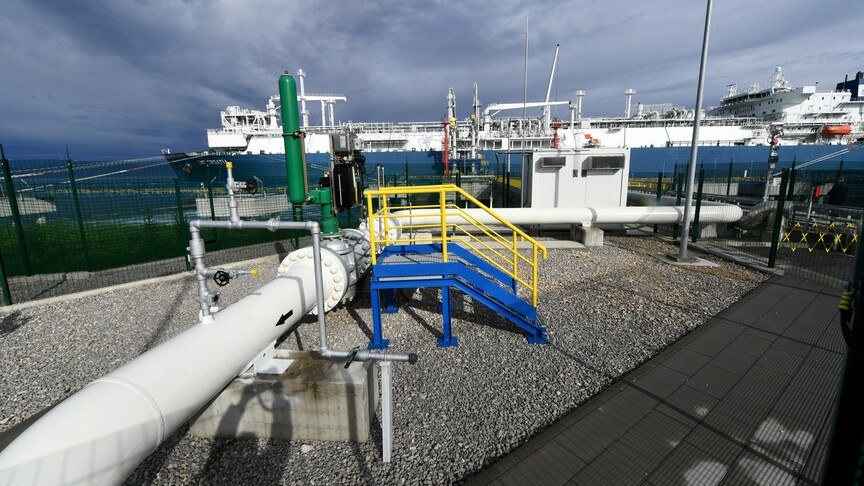
As Europe approaches the winter season, experts warn that the region’s natural gas storage levels remain low, presenting potential challenges for energy supply during cold months ahead. Analysts noted that disruptions to liquefied natural gas (LNG) supplies have contributed to soaring prices, with European natural gas prices reaching their highest point in over three years on September 8, driven largely by geopolitical tensions affecting supply routes, particularly the Strait of Hormuz.
Current Storage Levels and Market Conditions
According to Gas Infrastructure Europe, storage facilities in the European Union were approximately 68% full as of September 14, translating to roughly 772 terawatt-hours of gas. This figure falls short of the EU’s typical pre-winter target of 90%, raising concerns about how effectively inventories can be replenished amid ongoing supply disruptions.
Analysts, including Bill Farren-Price from the Oxford Institute for Energy Studies, indicated that global LNG markets are facing tightness due to factors such as the aforementioned closure of the Strait of Hormuz and reduced shipments from Qatar. Farren-Price highlighted that current price pressures, while significant, remain lower compared to the peaks seen in 2022 following the onset of the Russia-Ukraine conflict.
Energy Aspects’ lead European gas analyst Erisa Pasko emphasized that the issue is not only about the volume of gas in storage but also about the system’s capacity to deliver that gas during peak winter demand. Pasko noted that withdrawal capacity decreases notably when inventories fall below certain thresholds, which could hinder Europe’s ability to respond to extreme cold spells efficiently.
Current projections by Pasko estimate that Europe may only attain around 75 billion cubic meters (bcm), or 69% of storage capacity, by the end of October, potentially marking one of the lowest inventory levels in 14 years. Without substantial government intervention, reaching the 88-90 bcm range deemed comfortable for winter appears unrealistic, leaving Europe particularly vulnerable.
The risk of inadequate storage could necessitate replenishing supplies throughout 2027, particularly for countries like Germany, France, the Netherlands, and Slovakia. As of September 14, Germany’s storage was at 55.8%, while France was higher at 76.7%, yet still below typical pre-winter levels. Germany’s pressing storage issues mean it may need to increase imports from neighboring countries and reduce its exports this winter.
Despite these challenges, the European Commission recently asserted that the current situation does not equate to an immediate gas supply crisis. They maintain that the EU is better prepared than two years ago due to enhanced diversification and higher LNG import capacity. Additionally, experts have suggested that a stabilization of Middle Eastern LNG supplies and average winter temperatures could mitigate the impact of low inventory levels.
Overall, analysts remain cautious yet hopeful, indicating that the outcome of the winter season will depend on simultaneous favorable developments in supply and weather conditions.
Why It Matters
The state of Europe’s gas supply this winter could significantly impact energy security, economic stability, and the region’s transition to sustainable energy sources. As nations strategize to manage potential disruptions, the ability to effectively store and distribute natural gas becomes crucial in navigating an uncertain geopolitical landscape. Ensuring sufficient energy resources is vital not only for keeping homes warm but also for sustaining industries and overall economic resilience.

Nice article.
Good one