




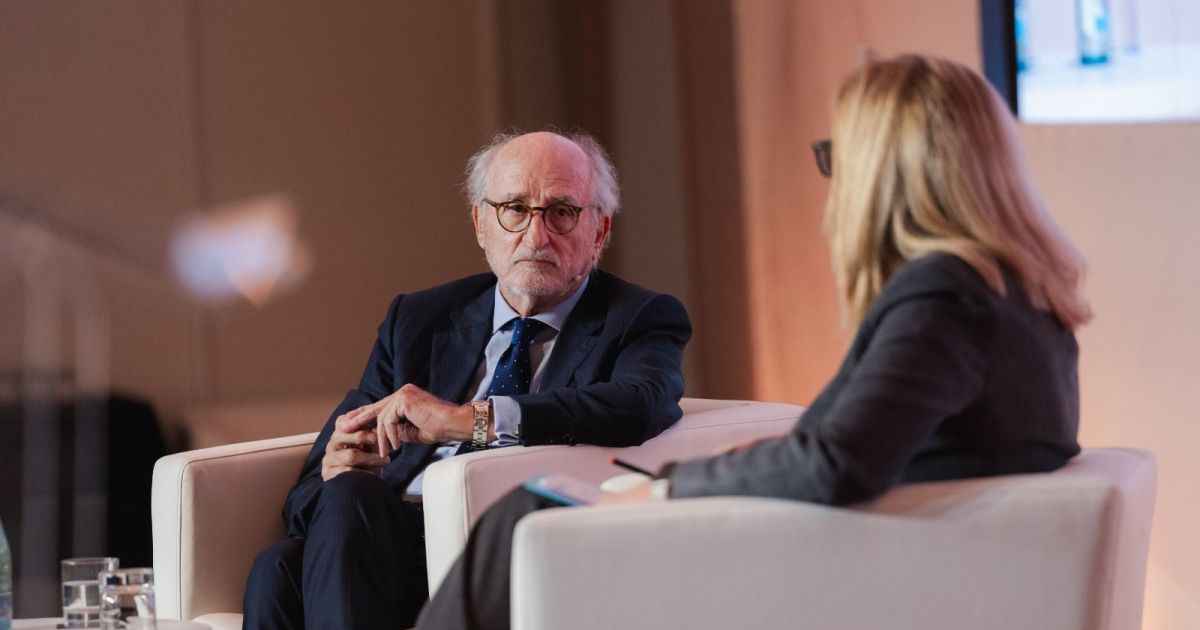
The era of globalization is perceived by some experts as coming to an end, with increasing isolationism from key global players like the United States and China. During a recent forum in Barcelona, Antoni Brufau, chairman of Repsol, highlighted this shift, stating that these countries have prioritized power and security over the benefits that globalization once promised.
Europe, according to Brufau, faces significant challenges due to its fragmented market and limited strategic autonomy. He emphasized that immediate changes are necessary in the wake of economic growth seen in neighboring superpowers, which has left Europe feeling vulnerable. He also noted that Catalonia could play a vital role in this transformation, but cautioned that without wider change in Europe, Catalonia’s potential for influence would also be limited.
The Barcelona Economists’ Forum held on November 13 at the Hotel InterContinental Barcelona gathered economists under the theme “New global order: the Catalan economy at stake.” The discussions centered around Europe’s competitiveness, security, and autonomy. Carles Puig de Travy, dean of the Col·legi d’Economistes de Catalunya, underscored the need for a sustainable economic model.
Alícia Romero, Spain’s Minister for Economy and Finance, referred to the current state as one of “world disorder” that has left Europe vulnerable. European weaknesses, she noted, include conservative corporate investment strategies and an overreliance on products from faster, more innovative nations.
Brufau pointed to a report by Mario Draghi, former president of the European Central Bank, warning that Europe faces an “existential challenge” that requires immediate action to sustain its welfare state. He acknowledged that Catalonia could be pivotal in driving this necessary change.
Various panelists at the forum discussed the potential for Catalonia in strategic industries. Rafael Ruiz, chairman of Ebro Motors Group, argued that the region needs to pursue energy transition, citing his company’s public-private investment aimed at reindustrializing the former Nissan plant as a step toward energy independence.
Andrés Martín Pérez, managing director of Elian Barcelona, voiced concerns regarding food production’s role in autonomy. He noted that past food crises have highlighted vulnerabilities due to overreliance on foreign imports and urged Catalonia to strengthen its local food production capabilities.
Despite having a strong semiconductor sector, Eduard Puig Martí, CEO of Ideaded, acknowledged that Catalonia lags behind in innovation compared to China and called for improved local manufacturing capabilities.
Investment and Talent
A recurring theme among speakers was the need for increased investment. Carme Hortalà Vallvé, managing director of Corporate Development and Internationalisation at Grupo GVC Gaesco, expressed concern over Europe’s conservative investment model, stating that it cannot compete with the aggressive funding seen in the United States and China.
Despite these challenges, the panelists agreed on the strength of human capital in Catalonia. Puig Martí praised local universities and the entrepreneurial spirit in the region, considering it a vital asset in leveraging opportunities in artificial intelligence.
As the forum concluded, Brufau reiterated that Catalonia has the potential to contribute significantly to both its own and Europe’s sovereignty, but warned that without fundamental changes at the European level, growth would be stunted.
