




CRESCENT, Iowa — The Hitchcock Nature Center is actively involved in the HawkWatch citizen science program, which tracks raptor and other bird migrations. This initiative provides essential data regarding environmental health.
Mark Orsag, a retired history professor, serves as the paid bird counter for the project and collaborates with several volunteers. Reflecting on his childhood in Pennsylvania, Orsag noted the rarity of bald eagles during that time. “Very rare. Very rare. I remember seeing one as a kid at Hawk Mountain and it was a huge deal,” he said.
Following the banning of the pesticide DDT in 1972, bald eagle populations gradually rebounded and are now frequently spotted near the Missouri River in Iowa. However, Orsag has observed a decline in the number of American Kestrels, a small type of falcon, suggesting a potential decrease in their population. He also mentioned that there are half as many Red-tailed Hawks migrating south compared to two decades ago. Yet, he believes this is not due to a decline in numbers but rather favorable conditions that allow them to remain in North Dakota and South Dakota throughout the winter.
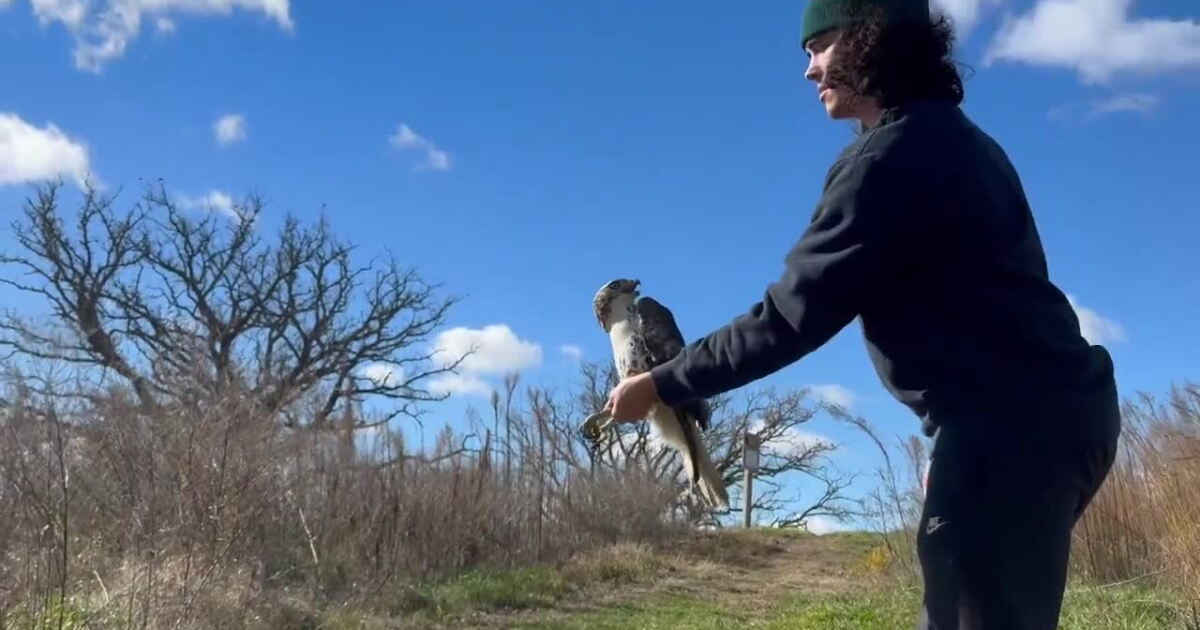
During a recent event at the nature center, Kellie Hayden and her team captured a Red-tailed Hawk, placing a band on its leg for tracking purposes. “So, we are learning that some of these birds have very, very long lives,” Hayden stated. She expressed interest in testing the captured birds for lead exposure, although the costs are currently prohibitive. “Some studies are looking at microplastics in large raptors because it probably has a cumulative effect much like DDT,” she added.
After removing burrs from the hawk’s feathers, the team released it back into the wild. This year, the HawkWatch team has recorded unprecedented numbers of migrating birds, and the collected data will contribute to an international database aimed at enhancing our understanding of avian migration patterns.
