




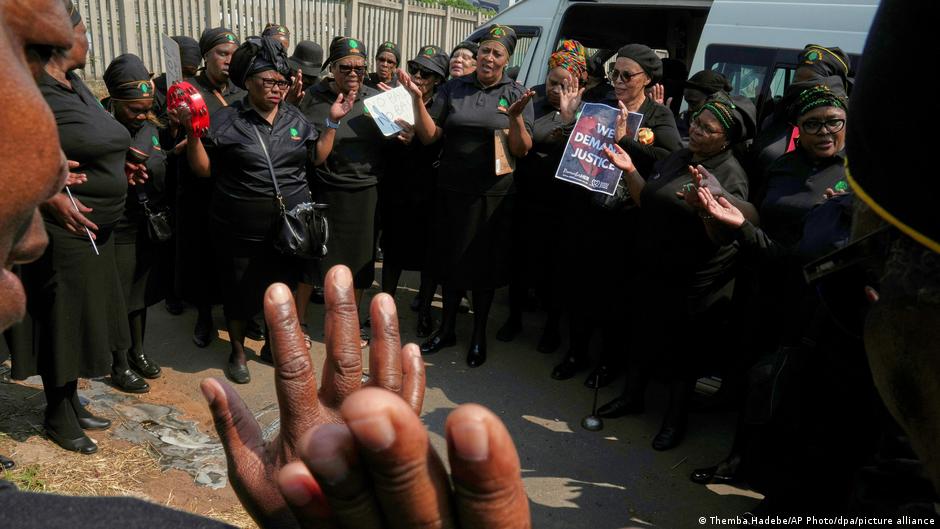
On Thursday, law enforcement in South Africa discovered the body of Dineo M., a 38-year-old woman, in a partially clothed state. She had sustained multiple injuries, including being beaten and stabbed to death, in Ekurhuleni, a municipality located on the outskirts of Johannesburg, the nation’s largest city. This incident adds to a troubling pattern of violence against women in the region, as multiple similar cases of women in their 20s and 30s have been reported over the past two months.
A Community on Edge
As authorities investigate the circumstances surrounding these killings, they have not yet confirmed a connection between them. However, they have noted potential similarities that warrant caution among women in the area. Police Minister Firoz Cachalia reported that no solid evidence suggests the involvement of a serial killer at this stage, but all possibilities remain on the table as the inquiry unfolds.
The escalating violence has prompted families and communities to reassess the effectiveness of existing protective measures for women. At a protest march in Johannesburg, Sindisiwe Chikunga, the South African Minister for Women, Youth, and Persons with Disabilities, urged the public to recognize the gravity of domestic violence. She emphasized the need to address abusive behaviors before they escalate into severe violence, stating that initial insults can lead to more severe forms of abuse and, potentially, murder.
Naledi Masipa, a campaigns manager at Gender Links, an NGO dedicated to gender justice, highlighted that merely enacting laws is insufficient. She stated the necessity for a comprehensive support system encompassing reporting mechanisms, law enforcement, healthcare, psychosocial support, and legal aid. If any of these components fails, women continue to endure the consequences of gender-based violence.
Tegan Snyman from Amnesty International South Africa noted that femicide is not distinctly classified as a crime but rather categorized with general murder. She called for a more urgent and resource-intensive approach to addressing gender-based violence and femicide, which the South African government has declared a national crisis.
Challenges persist in neighboring Botswana, where approximately 37% of women report experiencing violence in their lifetimes. Natasha Rampa, the permanent secretary in the Ministry of Youth and Gender Affairs, stated that collaborative efforts, including a recent initiative launched with the United Nations, aim to tackle gender-based violence through preventive measures and survivor support.
Why It Matters
Gender-based violence remains a pressing issue across Southern Africa, affecting women’s safety and well-being. As communities grapple with the implications of these violent acts and the systemic failures that allow them to persist, advocates emphasize the urgent need for not only stronger policies but also practical and effective protections for women. Families like that of Dineo M. are left to navigate the profound personal loss while seeking justice and change in their communities.
