




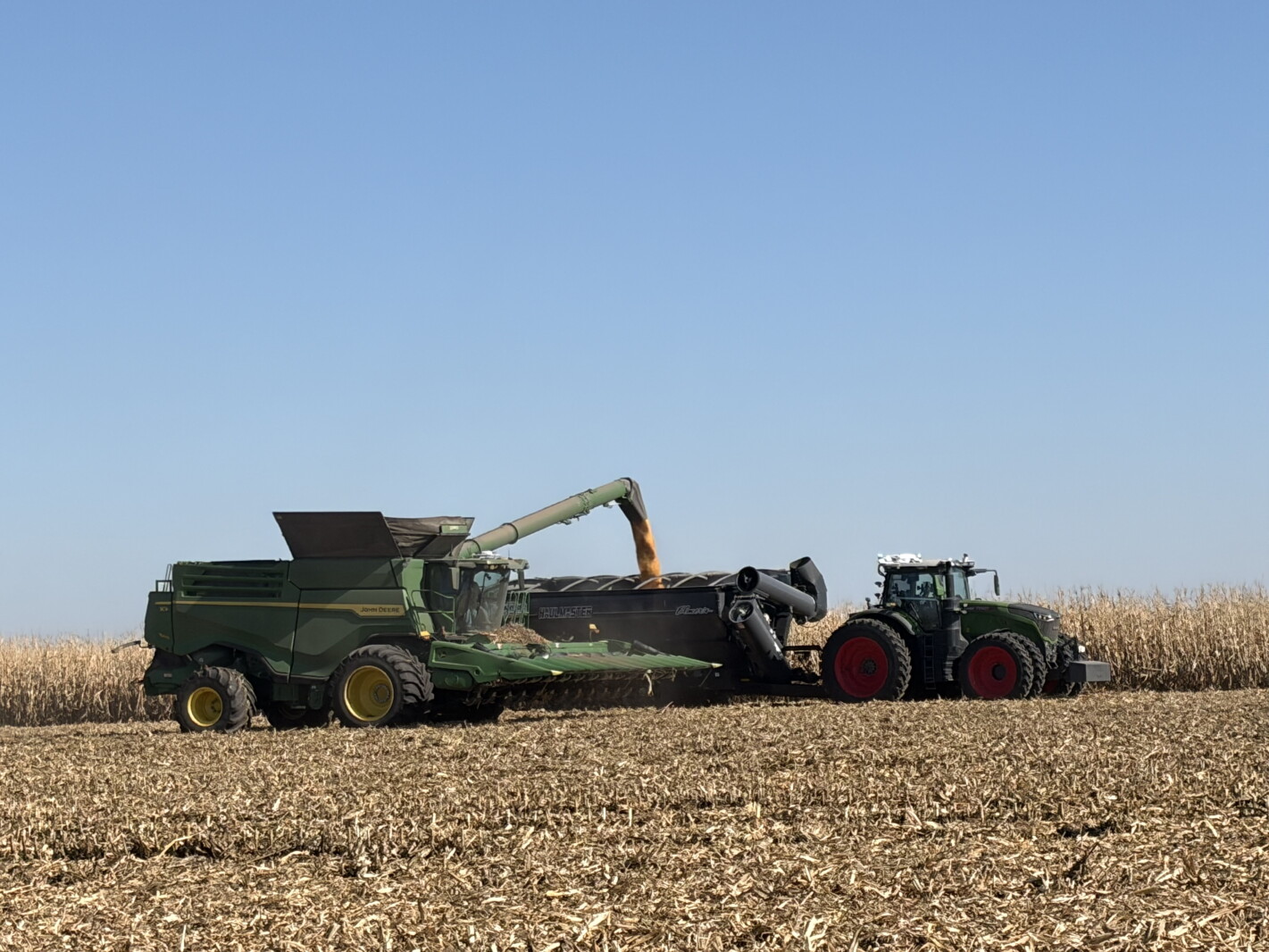
ADRIAN — On Wednesday, Son D Farms in Adrian showcased the latest in agricultural technology during Fendt’s annual Harvest Tour. The event featured autonomous tractors, driverless grain carts, and decision-support technology designed to enhance farming efficiency.
This year’s Harvest Tour stops included 11 locations across six states, focusing on innovations in agriculture while highlighting family-run farms. Fendt, a brand of agricultural equipment manufacturer AGCO, organized the tour to connect with farmers and demonstrate equipment in action.
Delbert Bullerman, owner of Son D Farms, emphasized the importance of technology in modern agriculture. “If you want to be competitive, I think it makes you more efficient at the end of the day,” Bullerman said, noting that his farm has utilized autonomous technology for about four years.
The tour featured the Fendt IDEAL combine, along with an autonomous tractor system that operates a grain cart manufactured by Elmer’s Manufacturing. The system demonstrated its ability to transport crops from the field to storage without a driver in the cab, with an operator in the combine controlling and monitoring the autonomous process.
Kevin Forth, Fendt’s marketing manager, explained how the autonomous system uses artificial intelligence to navigate its route, while lidar, radar, and cameras help in obstacle detection. The technology, which is commercially available, also supports tasks beyond harvesting, including tillage.
Forth noted that the selection of Son D Farms as a tour stop came after a competitive application process, attracting hundreds of farms. The company streamlined the entries to finalists, eventually choosing to showcase the Bullerman family’s operation.
As Bullerman pointed out, technology can enhance efficiency, particularly through GPS-guided equipment, which helps avoid overlap in field work. “If you do that every day for 30 days, how many extra acres did you till?” he asked, highlighting the cost implications of inefficiencies.
Labor considerations are significant in agriculture. Forth mentioned that autonomous equipment might not replace all drivers but could help farms maximize their existing workforce. This could be particularly beneficial for smaller operations that face labor shortages during peak times.
Although Bullerman acknowledges the advantages of automation, he stated that skilled workers remain essential. “You can have all the best stuff in the world, but if you don’t have good people to do it, the equipment alone will not make an operation successful,” he said.
Son D Farms has a long history in the Adrian area, founded by Bullerman’s father in 1950. The operation has expanded over the decades, and family involvement continues with Bullerman’s sons now participating in the farming activities.
The Harvest Tour serves to illustrate how advancements in technology can benefit family farming operations while fostering communication between equipment manufacturers and farmers. Forth noted that while the adoption of autonomous technology is expected to evolve, the pace remains uncertain, comparing it to the earlier days of GPS technology in agriculture. Bullerman believes that automation will increasingly shape the future of farming, enhancing efficiency while maintaining the core role of skilled labor.
