




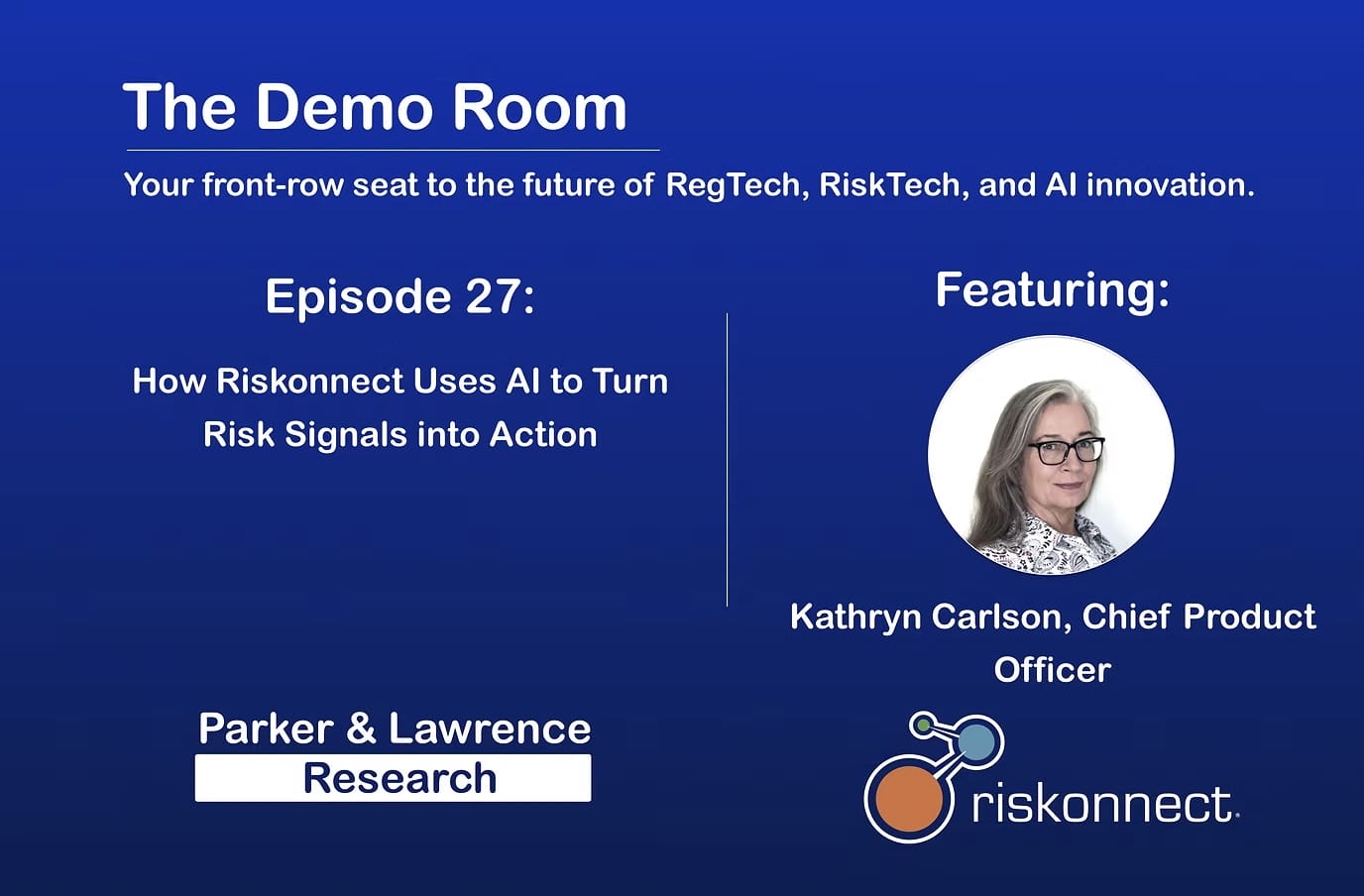
As organizations increasingly face technology risks posed by expanding AI systems and interconnected assets, the challenge of identifying necessary actions has become more complex. A 2026 survey by Parker & Lawrence Research found that 60% of respondents rated AI-related technology risk as high or greater, highlighting demands for enhanced risk management practices.
This research included interviews with providers aimed at assisting organizations in managing emerging risks, including Riskonnect. The company offers an Integrated Risk Platform designed to link technology assets, controls, incidents, policies, and regulatory requirements across enterprises.
The findings were part of The Demo Room series focusing on how technology providers tackle significant risk and compliance challenges. This specific discussion was included in the broader AI in Risk and Compliance 2026 report by RegTech Analyst and Parker & Lawrence Research.
Technology risk is adapting at a pace that often outstrips management processes. Changes in critical assets, dependencies, controls, incidents, or regulatory updates can significantly affect an organization’s risk profile. Yet, many companies continue to rely on periodic assessments facilitated by separate inventories and spreadsheets.
The rising integration of AI adds dimensions to this issue. Organizations must catalog models, data flows, and third-party dependencies while considering risks that conventional frameworks fail to address. Parker & Lawrence found that 60% of respondents viewed AI-related technology risks as critical, underlining the necessity for robust oversight as adoption increases.
Typically, technology teams oversee asset data, risk teams handle risk records, and compliance teams interpret regulations. This compartmentalization creates challenges in assessing risks in context. For instance, one incident may affect multiple controls, or a regulatory shift might change the requirements for a specific asset class.
Disconnected records hinder teams’ understanding of broader implications, leaving them vulnerable to unforeseen risks and unnecessary operational efforts. Standalone AI may struggle under these circumstances, as incomplete data can yield misleading assessments.
Riskonnect addresses these issues through a context-aware technology risk workflow. Their platform connects risk data with established business processes, integrating rules-based procedures with AI to enhance risk management practices.
The system evaluates changes against predefined risk appetites and governance frameworks, advising whether a reassessment is necessary while allowing human oversight for final decisions. Additionally, the platform identifies potential gaps between organizational policies and regulatory requirements, converting analyses into actionable items for technology risk teams.
Riskonnect claims that its methodology can significantly reduce the time spent understanding new regulations and lower labor costs while enabling quicker identification and mitigation of risks. However, the effectiveness of these tools will depend heavily on the quality of the underlying data and implementation practices.
Parker & Lawrence Research points to continuous materiality assessment as a key aspect of Riskonnect’s strategy. By evaluating changes against established frameworks, the platform helps determine which changes require attention and the appropriate follow-up steps.
Nonetheless, successful adoption of Riskonnect’s platform will rely on the readiness and quality of data within organizations. Without addressing existing information silos, even the most advanced AI capabilities may fall short. The ability to differentiate significant changes from routine activities, while ensuring proposed actions align with organizational policies, remains crucial.
As businesses navigate the increasing complexity of AI-driven environments, connecting risk information and identifying material changes are vital. Riskonnect’s approach exemplifies how organizations can blend structured enterprise data, AI analysis, and human oversight to transition from periodic assessments to more continuous and context-aware technology risk management practices.
