




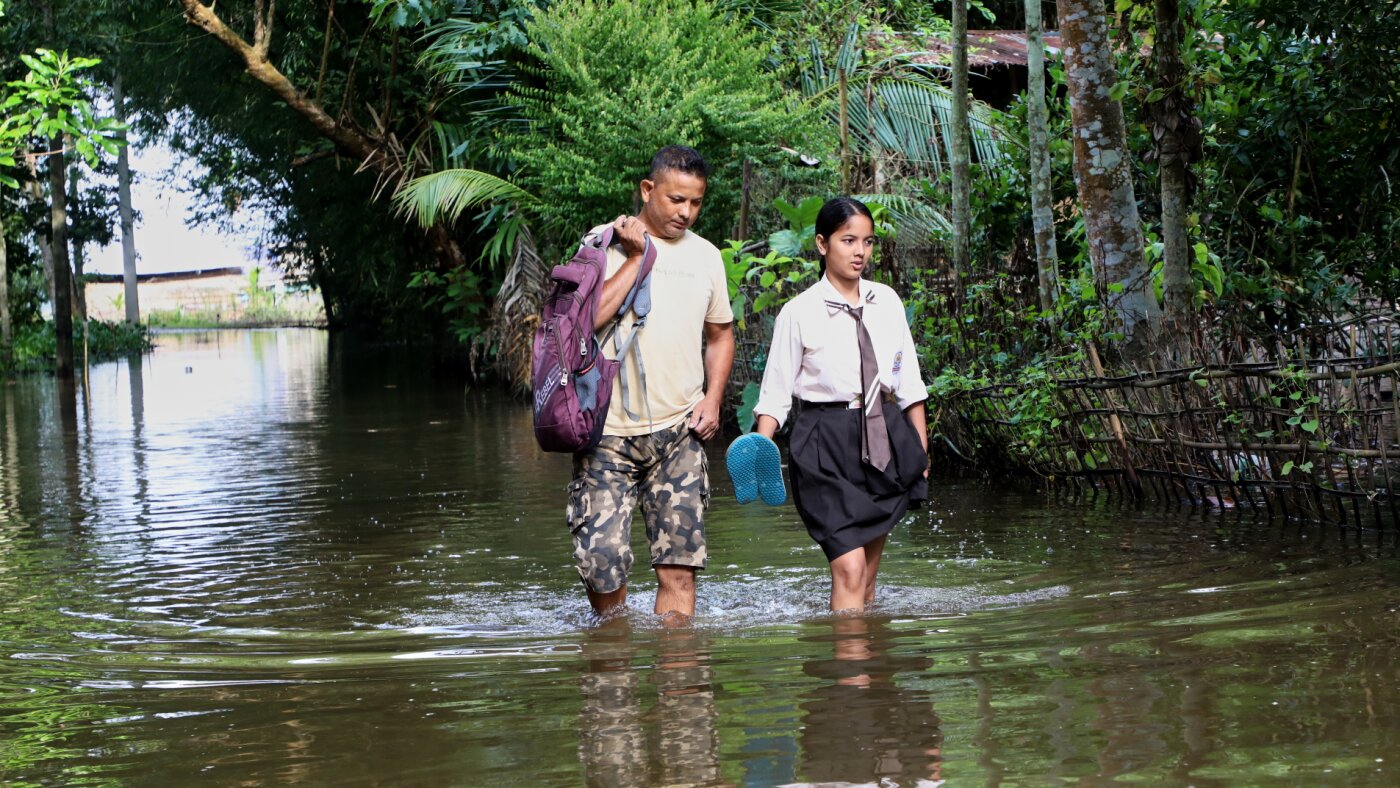
GUWAHATI, India — The flood crisis in northeastern Assam continues to escalate, with local officials reporting a death toll of 100 as of Monday following two additional fatalities overnight. The Assam State Disaster Management Authority indicated that several rivers remain elevated above danger levels, raising concerns over potential further flooding in susceptible areas.
Impact of Ongoing Flooding
Heavy monsoon rains have been persistent, causing significant overflow from rivers, particularly the Brahmaputra, one of Asia’s largest. The flooding has inundated various communities, damaging infrastructure and disrupting livelihoods. Reports indicate that nearly 300,000 people have sought refuge in government-operated relief camps due to the deluge.
Since the onset of these floods last month, approximately 700,000 residents have been displaced. Vast tracts of farmland have been submerged, and local infrastructure, including roads, has sustained considerable damage. Although floodwaters are beginning to recede in some areas, about 49,000 individuals remain in 125 relief camps and distribution centers designed to provide necessary assistance.
Alongside human casualties, the floods have severely impacted livestock, leading to substantial losses for rural communities. As the waters gradually recede, many families are returning to homes that are now covered in thick layers of silt, complicating the recovery process. Local resident Farukuddin Ahmed described the situation in his town of Nazira, saying that many returning families face the daunting task of rebuilding on ground still buried under one to three feet of silt.
In the village of Nepali Khuti, prior to the flooding, roughly 100 households existed. Ahmed noted, “Only a few houses are left; the rest have been washed away by the surging waters,” highlighting the extent of the devastation. Many residents, primarily dairy farmers, are now confronting the challenge of starting over after losing all their cattle.
Assam officials are actively engaged in relief efforts and are assessing the full extent of the damage. Assam Agriculture and Irrigation Minister Pijush Hazarika stated that officials have been directed to expedite damage assessments so that financial aid can be made available for rehabilitation. He confirmed that interim monetary compensation has already been provided to around 50,000 affected individuals.
The annual monsoon season traditionally brings flooding to Assam, affecting thousands of residents each year. However, experts indicate that climate change may be exacerbating these events, making rainfall patterns more erratic and extreme.
Why It Matters: The ongoing flood situation in Assam not only poses immediate threats to lives and local infrastructure but also raises long-term concerns about recovery and the impact of climate change on monsoon patterns, highlighting the vulnerability of communities in the region.