




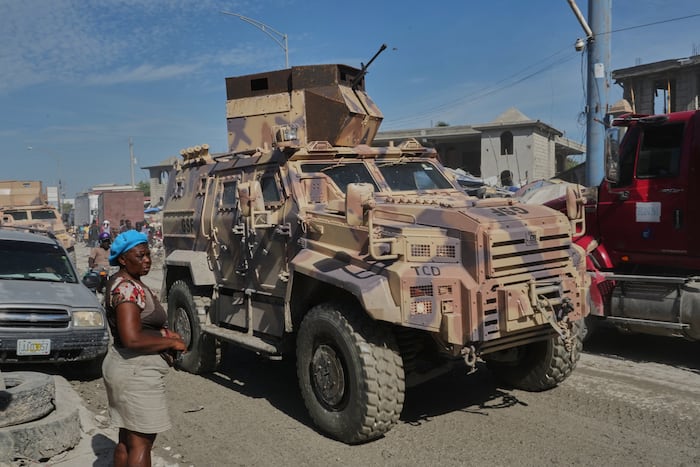
Gangs in Haiti ambushed an El Salvadoran armored vehicle in Croix-des-Bouquets, leaving four soldiers unaccounted for after the attack involving explosives. El Salvador’s armed forces reported that the four aviation technicians were returning to their camp when the gang attack occurred. They managed to escape from the burning vehicle, and the military is collaborating with international forces to locate the missing personnel.
The area of the attack is known to be controlled by various gangs, including Kraze Barye and 400 Mawozo. Romain Le Cour, head of the Haiti Observatory at the Global Initiative Against Transnational Organized Crime, commented on the evolving situation, indicating that while some gangs have faced increased pressure from the gang suppression force, others are retaliating to assert their power.
At a recent United Nations Security Council meeting, Egriselda Lopez condemned the ambush, noting that criminal groups utilized firearms and explosive devices in the attack. Mike Waltz emphasized the belief that the four men survived the initial assault but remain unaccounted for, vowing to bring them home.
Jack Christofides, addressing concerns to the Security Council, stated that the gang suppression force is assessing the situation and warned that gangs are testing its resolve. He acknowledged the limitations of the force, which is deployed from six countries, noting that it currently operates below its authorized strength and requires additional resources for effective operations. Carlos Ruiz Massieu reported that from July to September, gang violence led to over 1,000 deaths and more than 100 abductions in Haiti, stressing that mere security measures will not ensure lasting peace.
Following the ambush, the gang suppression force instructed residents of the area to remain indoors and continued efforts to locate the missing Salvadorans. The UN Security Council had previously authorized a 5,550-member force in September 2025, which is set to replace a Kenya-led multinational operation. The attack is expected to be a central topic during future discussions on Haiti’s security situation.
Furthermore, the incident coincides with Haiti’s preparations for its first general elections in over a decade. Concerns regarding the legitimacy of repeated electoral announcements without proper assessments of their feasibility have been raised by officials like Carlos Ruiz Massieu, who warned that such actions could undermine trust in Haitian institutions.
