




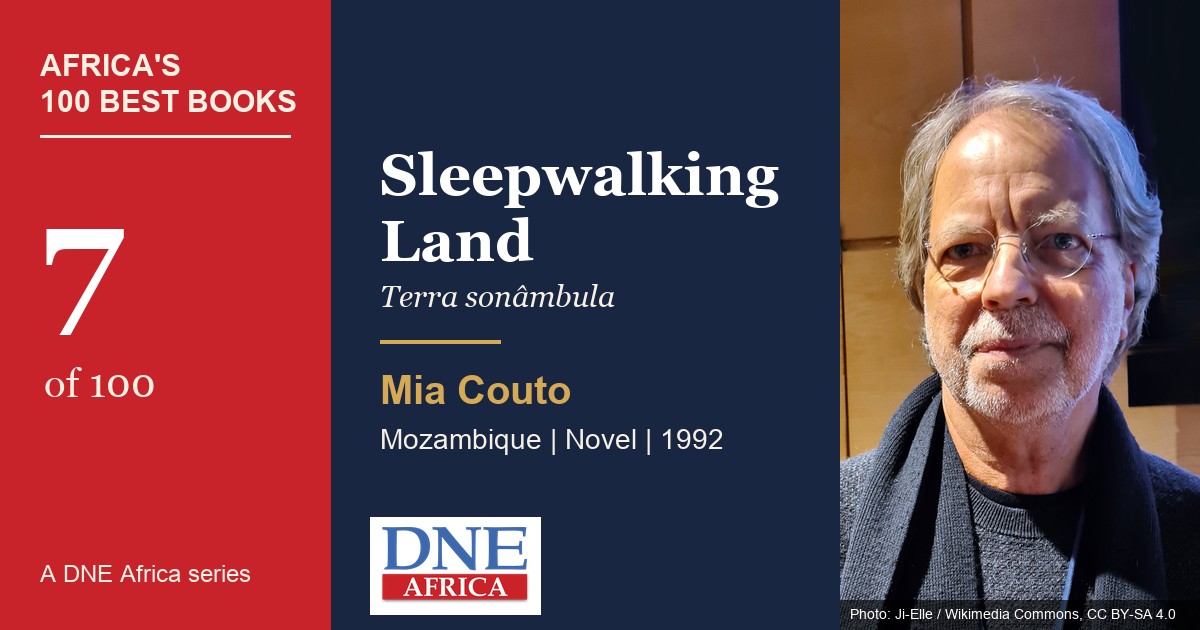
Mia Couto’s 1992 novel, Sleepwalking Land, captures the profound impact of Mozambique’s civil war through the journey of an old man and a boy navigating a country marred by conflict. The narrative suggests that the source of war is deeply ingrained within society itself.
The story begins with a father explaining to his children that the turmoil is an external confusion brought by those who have lost their power. However, the boy, Muidinga, who serves as the narrator, articulates a critical viewpoint with the line: “War is a snake that uses our own teeth to bite us.” This juxtaposition frames the essence of the novel, which explores the dichotomy between external perceptions of war and its internal consequences.
Officially titled Terra sonâmbula, the novel was published by Editorial Caminho in Lisbon in the same year Mozambique’s 16-year war concluded with a peace agreement in Rome. The English translation by David Brookshaw, published in 2006, is recognized as a significant literary work, landing in the top 12 of Africa’s 100 best books from the 20th century, as noted by the African Studies Centre Leiden. Couto received the Neustadt International Prize for Literature in 2014, partly due to the impact of this novel.
The narrative starts on a desolate road where the characters, Tuahir and Muidinga, have escaped from a camp for displaced people. Muidinga, recovering from a serious illness, struggles with trauma and abandonment, while Tuahir takes on the responsibility of nurturing him. They find shelter in a burned-out bus, a poignant symbol of devastation, where they unearth personal belongings, including a suitcase filled with clothes and school exercise books. This discovery ignites a transformation in Muidinga, who learns to read, highlighting the novel’s theme of the power of writing in the face of despair.
While the conflict remains unnamed in the narrative, its repercussions are apparent: scorched villages, destroyed vehicles, and lingering dread permeate the landscape. The historical context alludes to the war between the Frelimo government and the Renamo movement, often mischaracterized as foreign interference.
Critics in Mozambique have had mixed reactions to Couto’s work. Fátima Mendonça, a literary historian, highlighted a divide in the reception of Couto’s literature, while Gilberto Matusse integrated him into a discourse on Mozambican identity. Recent assessments, such as those by linguist Alexandre António Timbane, emphasize that Couto’s language showcases a unique Mozambican Portuguese that resonates with local readers, despite adaptations for broader audiences.
Mia Couto, born in Beira in 1955, is both a biologist and a writer. His journey in literature began with poetry and expanded to prose, culminating in Sleepwalking Land, which stands as his first novel. He continues to receive recognition for his work, recently noted for the nomination of his upcoming book, The Cartographer of Absences, for the 2027 Dublin Literary Award.
The Mia Couto Literary Prize, established in Mozambique to honor emerging writers, reflects his influence within the literary community. In September 2025, the prize was awarded to Léo Cote and Mélio Tinga for their respective works.
Currently, Sleepwalking Land remains a poignant exploration of the ramifications of war on individuals and families, emphasizing the necessity of storytelling as a means to reclaim narratives in the aftermath of violence.
