




Michael Gaffey, Renowned Asteroid Researcher and Educator, Passes Away at 80
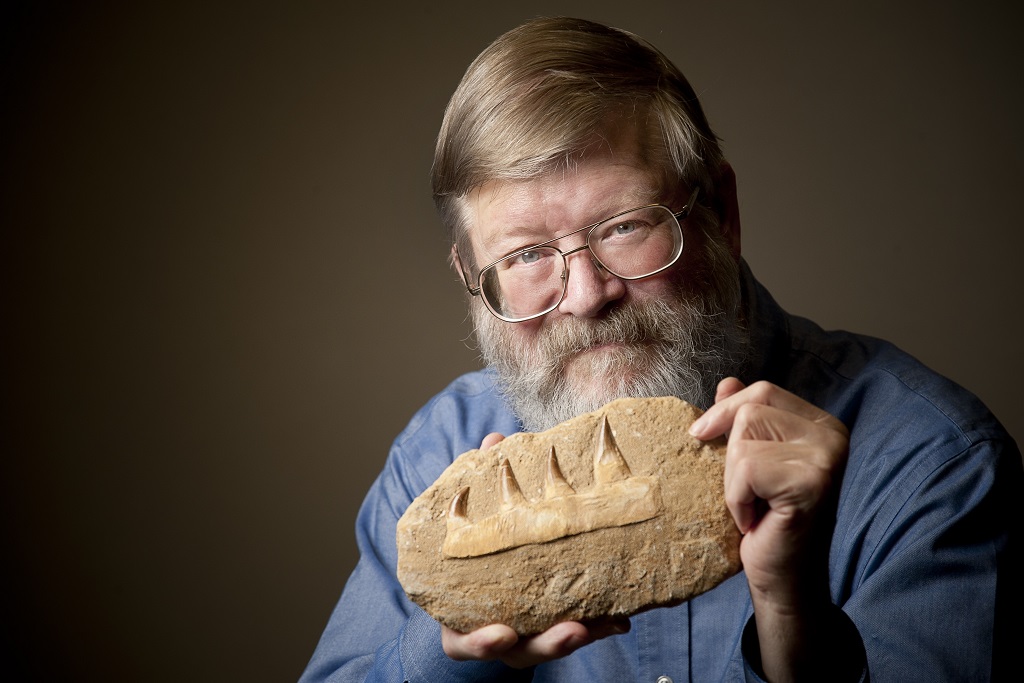
Michael Gaffey, a prominent figure in asteroid research and a long-time educator at the University of North Dakota (UND), passed away on September 20, 2023, at the age of 80. An asteroid named in his honor, 3545 Gaffey, continues to orbit the solar system, reflecting his significant contributions to the field.
Gaffey joined UND’s Department of Space Studies in 2001, where he served as the Chester Fritz Distinguished Professor until his retirement in 2022. His research primarily focused on understanding the mineral composition and history of asteroids, illuminating how they inform our understanding of the solar system’s formation.
“Mike left a lasting mark on UND through the way he taught, mentored, and cared about his students,” remarked Sherry Fieber-Beyer, an associate professor in Space Studies and director of the UND Observatory. “He emphasized that good science starts with well-calibrated data and honesty in following the evidence.”
A Lifelong Dedication to Science and Education
Beginning his doctoral research at the Massachusetts Institute of Technology in the early 1970s, Gaffey pioneered techniques to analyze light reflected from asteroids, which allowed scientists to connect meteorites found on Earth with their corresponding asteroid sources. His efforts have advanced the understanding of asteroids as potential resources and hazards.
Among his notable achievements was the identification of key features on the asteroid Vesta, years before they were confirmed by NASA’s Hubble Space Telescope and the Dawn mission, in which he was a participating scientist.
His work garnered him numerous accolades, including the Leonard Medal from the Meteoritical Society and the G.K. Gilbert Award from the Geological Society of America. At UND, he received the Thomas J. Clifford Faculty Achievement Award for Excellence in Research and became a Chester Fritz Distinguished Professor, one of the university’s highest honors.
Beyond his scientific expertise, Gaffey was deeply committed to mentoring students. Fieber-Beyer, who first met Gaffey as a student in 2004, described his mentoring style as demanding yet transformative. She noted that it instilled in her a thorough and evidence-driven approach to science.
His interests spanned a range of fields, including planetary geology and paleontology, which influenced the courses he taught, such as Introduction to Space Studies and a popular class on dinosaurs. Colleagues described his office as a “treasure trove” of fossils and scientific curiosities.
Even after retiring, Gaffey remained active in the academic community as Chester Fritz Distinguished Professor Emeritus, fostering an enduring legacy at UND. “His rigorous approach to research and steadfast belief in his students will continue to shape Space Studies for years to come,” Fieber-Beyer said.
As Gaffey’s influence lives on through the students and researchers he inspired, asteroid 3545 Gaffey will forever carry his name across the cosmos.
