




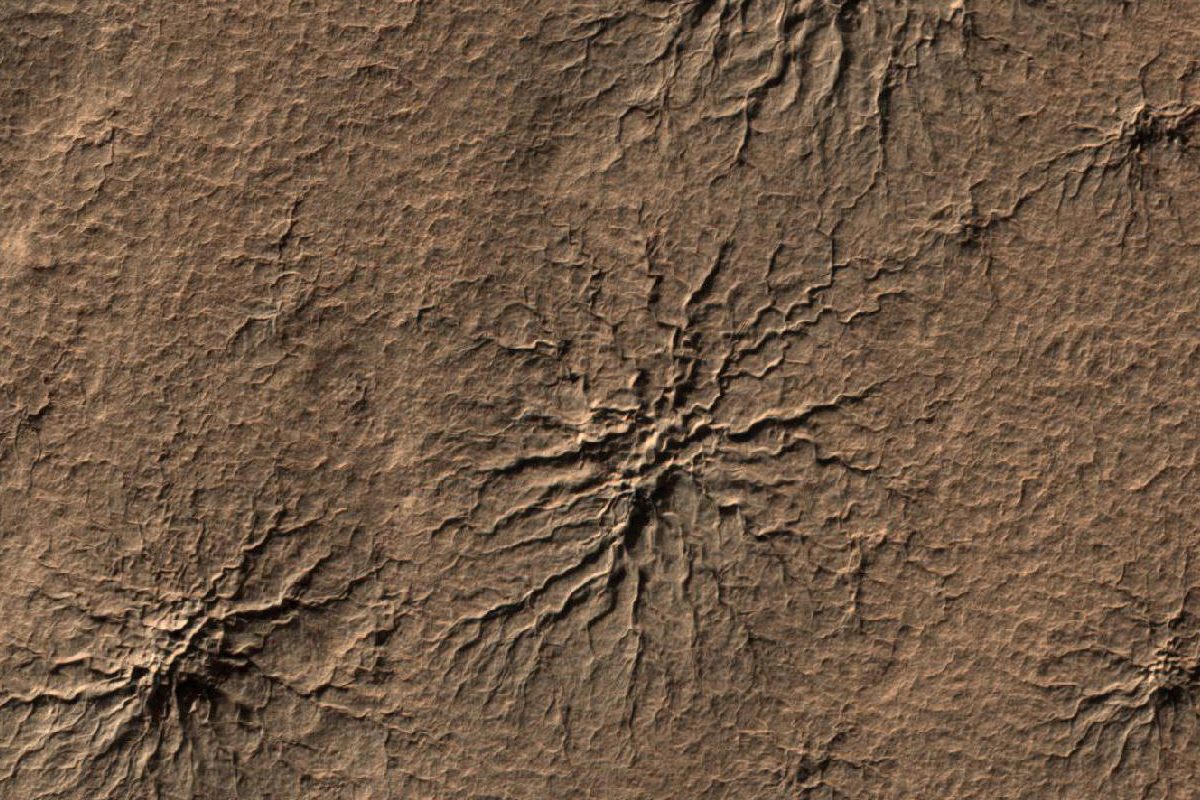
NASA’s Curiosity rover has released its most detailed images of unique spiderweb-like formations on Mars, providing new insights into the planet’s geological history. These formations, referred to as boxwork, indicate that groundwater played a significant role in shaping the Martian landscape.
Boxwork appears as vast patterns resembling webs when viewed from a distance, but closer examination reveals them to be low ridges and hollows that extend for miles. Scientists believe these structures were formed when water flowed through cracks in the Martian bedrock, resulting in the deposition of minerals that solidified into ridges, while the surrounding material eroded away.
The latest images were captured by Curiosity’s Mastcam as the rover ascended Mount Sharp in Gale Crater. The boxwork formations stand at heights of 1–2 meters and create a distinctive spiderweb pattern across the terrain. This discovery suggests the presence of liquid water on Mars occurred much later than previously thought.
Tina Seeger, a mission scientist, noted that observing boxwork at this elevation indicates that the groundwater table must have been relatively high, implying that conditions capable of sustaining life may have existed longer than earlier orbital observations suggested. She added that researchers are still investigating why the nodules form in specific locations, positing that the ridges may have been cemented by minerals before later groundwater contributed to the formation of nodules around them.
As the exploration of Mars continues, scientists are hopeful that these intricate structures will yield further information regarding the timing, extent, and duration of water on the planet, ultimately contributing to the understanding of whether Mars could have supported ancient life.
More of Curiosity rover’s amazing Mars images
Why It Matters: The findings from Curiosity’s exploration not only enhance our understanding of Mars’ past but also raise critical questions about the potential for life beyond Earth. Discovering evidence of ancient water forces a reevaluation of the planet’s habitability and the conditions that prevailed during its early history, which is vital for future missions aimed at seeking signs of life on Mars.
