




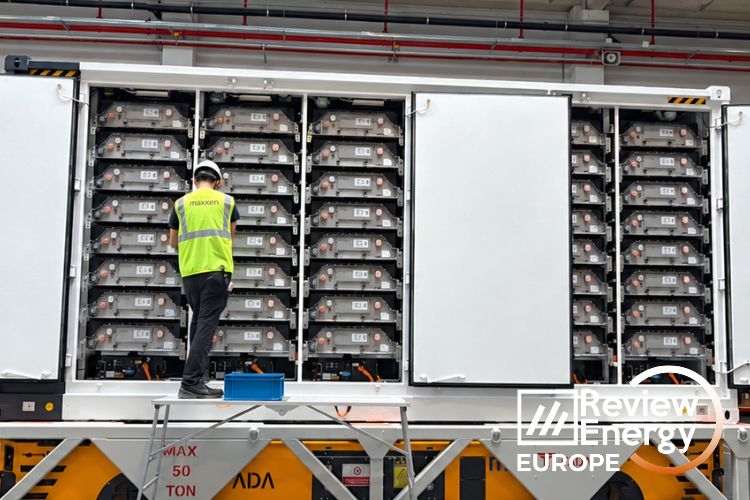
In Aydin, Türkiye, more than 300 delegates from across the globe convened for Maxxen Day 2026, an event dedicated to discussions on Europe’s growing need for domestic battery production. The gathering coincided with a demonstration of the Maxxen factory’s capabilities, highlighting the company’s ambitions within the European energy storage sector.
The event featured presentations on the state of the European storage market, alongside a tour of Maxxen’s manufacturing facilities. Attendees included engineers, manufacturers, investors, and energy professionals, all of whom engaged in conversations centered on strategies for battery manufacturing and regional production capacity.
Maxxen’s Manufacturing Ambitions
Ruben Valiente, Managing Director at Maxxen, opened the event by outlining the company’s objectives and its role in addressing Europe’s battery needs. Valiente emphasized the necessity for batteries to be manufactured within Europe, highlighting the factory’s 20,000 square meter site with an impressive production capacity of 5 GWh. The facility produces Battery Energy Storage System (BESS) solutions, including various configurations such as DC Box units and MV Box systems.
Valiente referred to the Aydin site as “one of the most advanced factories in Europe,” noting its various certifications, including TÜV accreditation, LEED certification, and ISO 27001. The factory operates on solar energy and incorporates a self-sustaining production model.
In addition to its production capacity, Maxxen is actively scaling its commercial activities, having sold 644 MWh across 21 projects in Europe from January to September 2026. Valiente described the rapid development of the factory, recalling its inauguration in December 2025, and underscored the need for ongoing sales to maintain the company’s momentum.
The Need for Local Manufacturing
Walburga Hemetsberger, CEO of SolarPower Europe, emphasized the importance of Europe developing its battery manufacturing capabilities. She pointed out that geopolitical challenges have made local production essential for reducing reliance on external supply chains and enhancing the resilience of the continent’s energy system. Hemetsberger mentioned the “Made in Europe” framework and the role of Türkiye in defining European manufacturing.
The event also examined the evolving landscape of battery storage in Europe, focusing on co-location trends and revenue opportunities. Rory McCarthy of Wood Mackenzie discussed how regulatory changes and market conditions are influencing the integration of renewable generation with battery systems.
Salomé Perperot, an analyst at Clean Horizon, provided a detailed analysis of revenue possibilities for battery storage, revealing that revenues for two-hour BESS systems could range between €100,000 and €600,000 per MW annually, with variations across countries.
During the factory tour, attendees observed the active production lines, showcasing the journey from cell sorting to module assembly. The facility features cutting-edge automation and a production layout designed for efficiency, ensuring a continual flow from cell to complete BESS containers.
Valiente reiterated the significance of integrating battery production with grid development as essential for advancing the energy transition, reflecting Maxxen’s commitment to bolstering battery production capabilities in Europe.
