




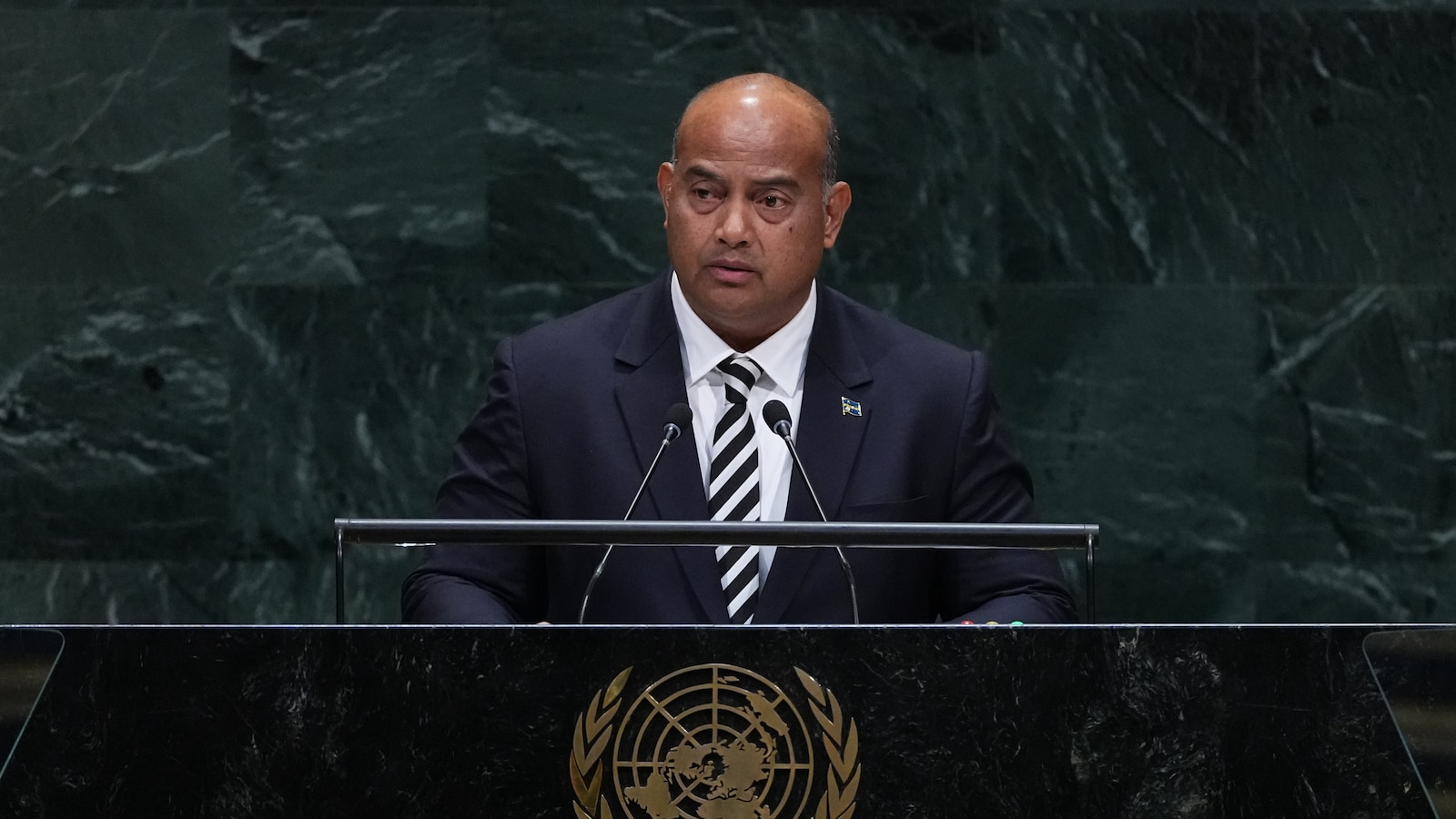
David Adeang, the president of Nauru, announced that all opposition lawmakers in the country’s parliament have joined his government, marking a significant shift in the political landscape of the Pacific Island nation. Adeang stated that this move reflects “unity, stability, and shared purpose” in Nauru’s politics.
The 19-member parliament is now left without any opposition, a rare situation for the country. While it is not uncommon for lawmakers in South Pacific nations to shift between government and opposition, Nauru’s complete lack of opposing politicians stands out.
In a Facebook post on Tuesday, Adeang did not elaborate on the reasons behind this political consolidation, aside from mentioning a “shared commitment” to prioritize Nauru’s interests. He did not indicate who would provide the necessary scrutiny usually supplied by an opposition party in a parliamentary democracy.
“There will still be a diversity of views and robust debate as in any strong and healthy democracy,” Adeang added.
The recent appointment of lawmakers Pyon Deiye and Jason Bingham Agir as deputy cabinet ministers has contributed to this unprecedented level of parliamentary support for the government, Adeang stated, noting that this is the first time since Nauru gained independence in 1968 that the entire parliament supports the administration.
Details of the parliamentary changes emerged through government Facebook posts, as all media outlets in Nauru are government-owned. Foreign journalists face challenges accessing the island, with journalist visa applications costing 8,000 Australian dollars (approximately $5,445).
Adeang gained international attention in August by announcing that Nauru would officially be known as Naoero, adopting the local spelling of its name. This change brought visibility to the island, which sees few visitors compared to other Pacific nations.
Nauru is a small constitutional republic and a member of the United Nations. Its remote location, limited infrastructure, and environmental issues from phosphate mining have impacted its tourism sector. However, recent years have seen increased global interest in Nauru’s domestic politics because of the geopolitical dynamics in the South Pacific.
The surrounding exclusive economic zones and the strategic importance of the region have attracted attention from major powers, as both China and Western nations vie for influence among Pacific governments.
Nauru has shifted diplomatic relations in recent years, most notably severing ties with Taipei in 2024 to partner with Beijing, which claims Taiwan as part of its territory. The relationship has positioned Nauru as one of China’s key allies in the Pacific.
Adeang’s government also recently signed a lucrative pact with Australia, which grants Canberra veto power over any security agreements Nauru may seek with China.
As of Friday, Adeang has traveled to China for meetings with officials, accompanied by the newly appointed cabinet members Agir and Deiye.
Adeang has been in office since 2023, following a no-confidence motion that removed his predecessor. He continues to be a central figure in Nauru’s unpredictable political scene, where many lawmakers typically run as independents.
The 2026 report by Freedom House highlighted that, while Nauruans generally enjoy political rights, the country faces ongoing challenges regarding corruption.
Historically, Nauru enjoyed a prosperous economy during the phosphate boom but has struggled since its decline. Today, the nation relies heavily on foreign aid, fishing licenses, and funding from Australia, particularly for housing asylum seekers and deportees.
