




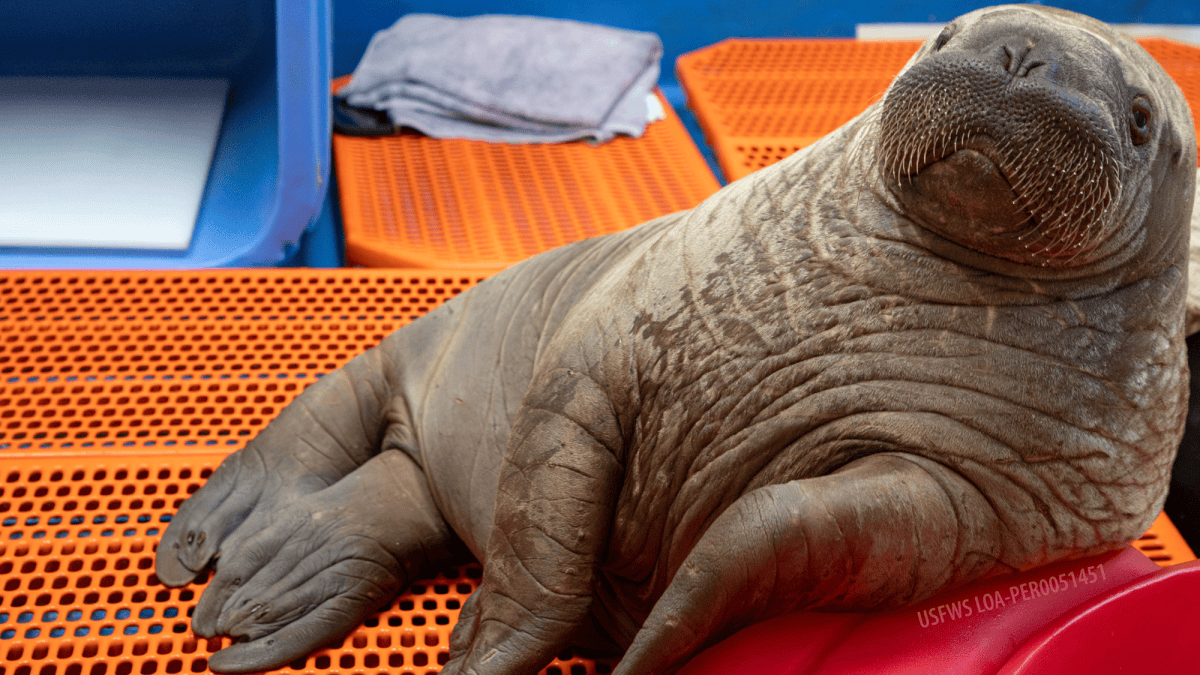
A young Pacific walrus calf was rescued from a perilous situation on a remote beach in Point Lay, Alaska, where it was threatened by polar bears and scavenging seagulls. The calf, found orphaned between the remains of two adult walruses, was discovered by Tony Fischbach, a biologist with the U.S. Geological Survey (USGS), and Violet Anniskett, a student from Ilisaġvik College.
The researchers were in the area to investigate walrus carcasses when they encountered the calf, marking a first in Fischbach’s extensive experience working with walrus populations. After confirming the situation, they sought permission to rehabilitate the animal from the local Inupiaq community and the U.S. Fish and Wildlife Service. Once approved for intervention, the next challenge was transporting the calf over 800 miles to the Alaska SeaLife Center, Alaska’s only marine mammal rehabilitation facility.
While waiting for transportation, Fischbach and Anniskett sheltered the calf in an abandoned building due to the threat posed by predators. Fischbach expressed concern, stating, “When we found him, a determined flock of gulls was intent on scavenging him,” adding that two polar bears were also active in the area.
After several days stranded due to stormy weather, the team finally flew to the Alaska SeaLife Center on September 14. The calf weighed approximately 200 pounds upon arrival, largely dehydrated but in good health overall. Staff at the center treated its superficial wounds and provided fluids and additional supportive care.
Caring for an orphaned walrus calf is notably difficult, as these young mammals typically depend on their mothers for up to two years. With a need for constant care, authorized specialists at the SeaLife Center must ensure the calf receives food, social interaction, and veterinary attention, often requiring long hours and shift work. Jane Belovarac, a wildlife response curator at the center, emphasized the commitment needed, stating, “Caring for an orphaned walrus calf is truly a team effort.”
As the calf adjusts to its new environment, it is also becoming comfortable with human interaction, which makes it unlikely that it could return to the wild. The animal will now serve as an ambassador for its species, promoting awareness about Pacific walruses in an undisclosed long-term home.
