




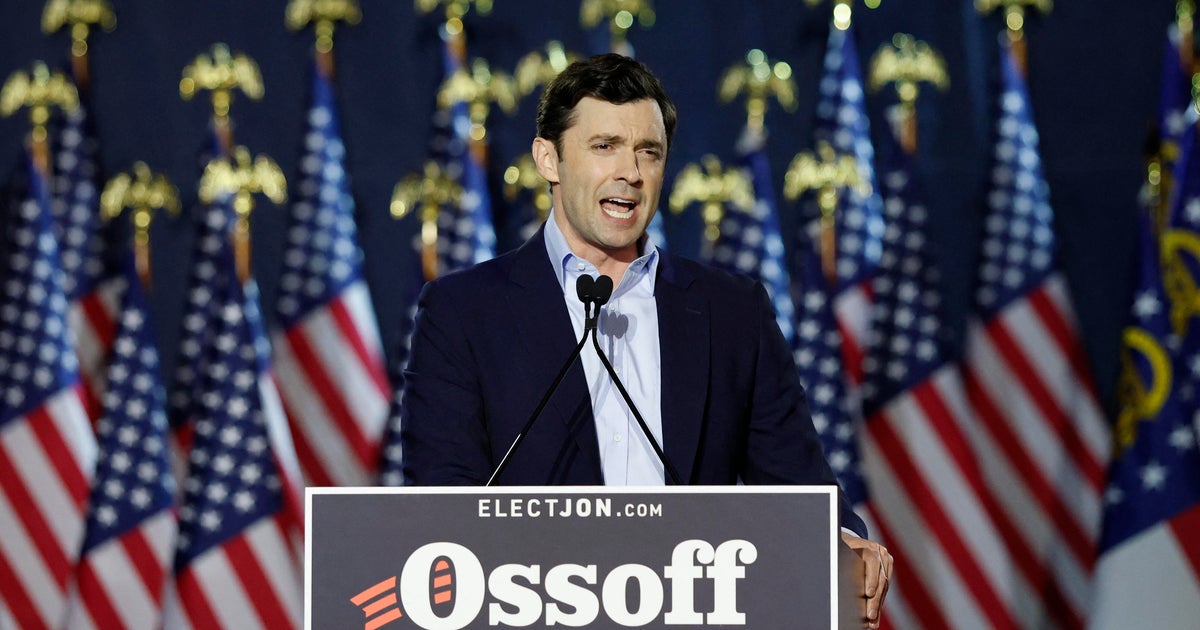
Washington — Democratic Senator Jon Ossoff of Georgia is generating interest as a potential candidate for the 2028 presidential race following his recent reelection victory. Despite this speculation, Ossoff, 39, has stated he is not considering a White House bid, declaring during an October debate that he has “zero interest in running for president” in 2028.
Ossoff’s post-election polling data indicates he commands a strong position among hypothetical contenders for the Democratic primary. An Emerson College survey placed him in the lead with 17% support among respondents, slightly ahead of former Vice President Kamala Harris and Representative Alexandria Ocasio-Cortez. Former Transportation Secretary Pete Buttigieg and California Governor Gavin Newsom follow in the rankings.
Following his decisive win in Georgia, a state critical for presidential elections, Ossoff has garnered support from both moderate and progressive factions. At a recent gathering for progressives in Washington, he secured 38% of first-choice votes in a straw poll, outperforming Ocasio-Cortez and Buttigieg.
Jerry Gonzalez, CEO of the GALEO Impact Fund PAC, which backed Ossoff during his Senate campaign, described him as an attractive candidate for the presidency. “He is not afraid, he won’t shy away from holding the Trump administration accountable,” Gonzalez noted, emphasizing Ossoff’s ability to build coalitions.
Ossoff has cultivated a diverse voter coalition, a strategy vital for Democrats in swing states. Charles Bullock, a political science professor at the University of Georgia, remarked on Ossoff’s moderate approach, suggesting that presenting himself as a centrists could appeal to voters across party lines.
However, there are concerns about how well a moderate message would resonate in the Democratic primaries, where ideological alignment often prevails. Bullock speculated that Ossoff might be preparing for a future run while acknowledging that current primary dynamics could pose challenges for moderates.
Ossoff’s recent victory over GOP challenger Mike Collins by approximately 18 points contrasted starkly with the narrow margins seen in previous elections. His performance is particularly notable among various demographics: he won 93% of Black voters, approximately 40% of White voters, and gained ground among White voters without college degrees and White evangelical voters. His support among Latino voters also saw a significant increase, winning around two-thirds of this group.
Gonzalez attributed Ossoff’s success to key issues impacting Latino communities, such as affordability and immigration enforcement. “Things are really expensive,” he stated, highlighting the concerns that resonated with voters in Georgia.
As the potential landscape for the 2028 Democratic primary begins to take shape, groups such as Black and Latino voters could play pivotal roles. The Democratic National Committee has recalibrated its primary calendar to favor regions with large populations of these demographics, beginning with South Carolina.
Though Ossoff has reiterated his focus on current responsibilities rather than future aspirations, his significant electoral achievements in Georgia could influence his considerations moving forward.
