




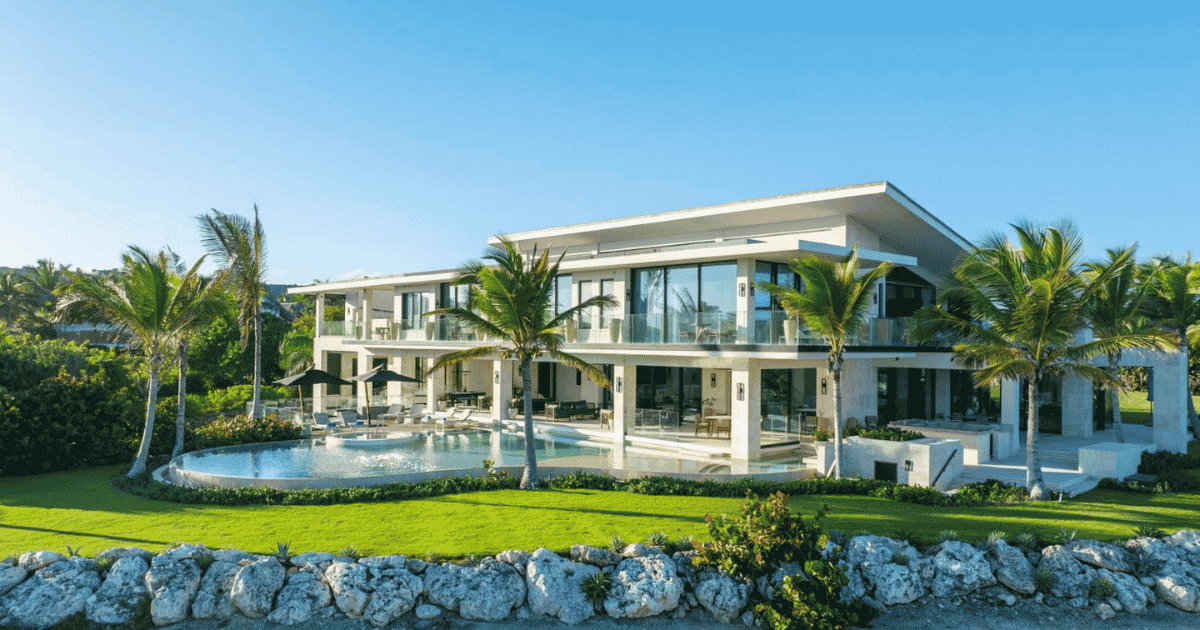
The Dominican Republic has emerged as a flourishing real estate market, transforming from a little-known resort destination to a competitive global player in the real estate sector. Once overlooked for tourism, the island nation began to attract international attention in the 1970s, notably with the development of Punta Cana by early investors like Club Med.
Today, the Dominican Republic ranks as one of the Caribbean’s most visited destinations, buoyed by its international air connectivity and favorable exchange rates promoting foreign investment. Despite residing alongside Haiti—a country often associated with poverty—the Dominican Republic has carved a distinct identity, evident in stark geographical contrasts visible from space, with its lush landscapes compared to Haiti’s deforested areas.
From Jungle to Property Hub
The country’s real estate boom has been accelerated by the COVID-19 pandemic, which increased the appeal of remote work. This shift has welcomed younger generations, expats, and retirees, fueling a surge in both property purchases and infrastructure improvements. “Historically, real estate has grown together with tourism,” said Manuel Higuera, CEO of Engel & Völkers Dominican Republic, emphasizing the symbiotic relationship between the two sectors.
The market caters to a range of demographics, encompassing everything from luxury buyers to budget-conscious investors. Areas like Punta Cana and Santo Domingo host a variety of properties, including exclusive gated communities famed for attracting celebrities. The ongoing development of new cruise ports further expands opportunities on previously untapped coastal regions.
Manuel Higuera highlighted that one unique aspect of the Dominican Republic is the equal ownership rights for both foreigners and locals, making it a highly accessible real estate market. While affordability is a major draw, the luxury segment is also expanding, with properties available for millions.
How the Business Works
The Dominican Republic imposes no restrictions on foreign property buyers, which has encouraged a steady influx of investment. Transactions often occur in U.S. dollars, with buyers frequently opting for cash payments or developer financing plans. Most properties are sold with freehold ownership, and all titles must be registered with the government, which is increasing its efforts to regulate the industry to combat money laundering.
Real estate agents typically earn commissions ranging from 3% to 5%, although this can vary, particularly in tourist-heavy areas. Unlike North America, the Dominican Republic currently has no mandatory licensing for agents, although the government is moving toward more stringent regulation. Yolanda Tejeda of Sotheby’s International Realty emphasized the importance of cooperation among agents for better market efficiency and accuracy, urging buyers to employ local lawyers for due diligence on property purchases.
Not as Cheap as You Think
Despite perceptions of the Dominican Republic as an inexpensive destination, industry experts like Sol Aufiero from Century 21 Sunsets caution that prices can vary significantly. While buyers often enjoy more value than in major North American markets, properties can range from modest investments of around $60,000 to luxury estates worth over $30 million.
Aufiero noted a shift in buyer demographics, highlighting that many buyers now seek long-term value rather than just vacation homes. The market continues to evolve, driven by increased investment and a growing international profile, yet faces challenges in aligning rapid development with enhanced industry standards.
As the market progresses, experts predict it will offer additional opportunities for both buyers and investors looking for diverse options in one of the Caribbean’s most vibrant destinations.
