




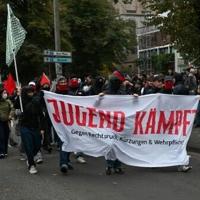
Protests are set to erupt across Europe on Friday as activists and unions from various countries join forces in coordinated demonstrations against rising living costs, militarization, and social justice issues. This collective action aims to amplify pressure on governments amid ongoing economic struggles.
Activists from France, Britain, Belgium, Spain, Italy, Portugal, and Greece have organized these simultaneous rallies as a response to local grievances that reflect broader continent-wide concerns. Key issues include skyrocketing housing expenses, poor educational conditions, stagnant wages, and increasing military spending.
The protests coincide with the upcoming fifth anniversary of Russia’s invasion of Ukraine and precede significant elections in Spain, France, Italy, and Greece. A youth-led coalition anticipates participation from young people in over 25 countries. Zennor Tyndale-Biscoe, a 17-year-old student in Truro, England, emphasized the importance of youth involvement, stating, “It’s a really important event in giving a platform to the youth voice throughout the country and expressing our need for systemic and immediate change for our futures.”
Demands for Systemic Change
The coalition is calling for a radical reformation of societal systems, urging youth to protest against militarization and social injustice. “Fight for our future, not their wars!” declares a collective of over 50 youth and student organizations, which includes France’s Yellow Vests, known for their significant protests in 2018 and 2019.
Union and housing rights activists have articulated six primary demands, advocating for guaranteed housing rights, tax reforms targeting the wealthy, and the cessation of military build-up policies. As the European Union focuses on rearmament amidst Russian threats, protest organizers argue that these funds should instead support education, youth initiatives, and housing.
In Germany, concerns about potential military service reintroduction have motivated many young individuals to join the protests. Hannes Kramer, a student protester, remarked, “While seemingly unlimited amounts of money are being poured into the military and the infrastructure supporting the military, the welfare state is being dismantled.”
National Mobilization Efforts
Organizers expect hundreds of protests and strikes in several nations, including Portugal, Croatia, and Switzerland, although the overall scale remains unclear. In France, these demonstrations mark the eighth anniversary of the Yellow Vest movement, which began in response to rising fuel taxes but has evolved into a broader critique of living costs.
Italy’s protests coincide with a general strike affecting transportation, schools, and hospitals, with the CGIL trade union labeling the events “the country’s call for change.” Meanwhile, in Spain, demonstrations are planned on the anniversary of dictator Francisco Franco’s death, featuring midday youth protests coupled with evening anti-fascist rallies. In Germany, the group “GenZ regelt” expects around 15,000 participants in Berlin, alongside initiatives in other cities.
The mobilization has been inspired by French students, who began blocking their high schools in mid-September to demand better conditions. Their actions have sparked similar movements in Belgium, Italy, and Spain, where the term “blocus” has surfaced as a rallying hashtag. French historian Sylvain Boulouque noted a global emergence of youth movements, pointing out a shared distrust of law enforcement and political authorities among demonstrators.
