




The University of California, Berkeley, and Lawrence Berkeley National Laboratory (Berkeley Lab) will join the Schmidt Science Computing Network (SSCN), a new distributed network aimed at enhancing advanced computing capabilities for scientific research. This collaboration is designed to assist researchers in tackling complex scientific challenges at unprecedented scales.
Rich Lyons, UC Berkeley’s chancellor, expressed enthusiasm about the partnership, stating, “Now, with Schmidt Sciences, our researchers have the computing power they need to cast new light on even more of science’s biggest questions.” He looks forward to the discoveries that may emerge from this initiative.
A significant grant from Schmidt Sciences will fund the establishment of the Berkeley Science AI Platform (BSAIP), which will operate on hardware at the National Energy Research Scientific Computing Center (NERSC) located at Berkeley Lab and managed by the U.S. Department of Energy (DOE). The BSAIP marks the first academic-philanthropic public-private collaboration within the DOE framework.
SSCN aims to combine institution-owned frontier-class computing infrastructure with expert support and software in order to allow researchers to work on projects that have historically been beyond the reach of individual academic teams. Schmidt Sciences, founded by former Google CEO Eric Schmidt and Wendy Schmidt, supports researchers globally in fields including computer science, astrophysics, and biosciences.
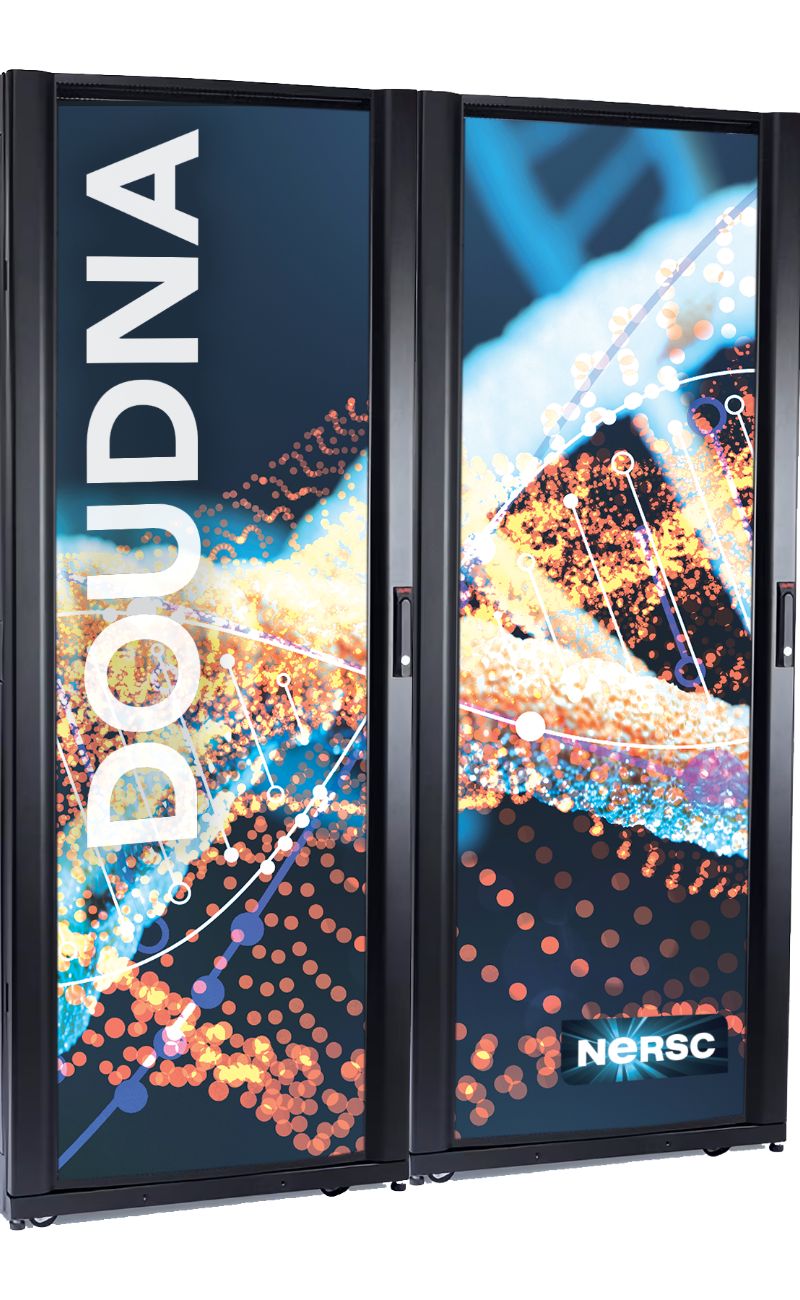
NERSC’s new flagship supercomputer is named for Nobel Prize-winning Berkeley chemist Jennifer Doudna. (Credit: Cait Youngquist, Berkeley Lab)
As part of the SSCN support, the BSAIP will enhance the Doudna supercomputer at NERSC, which is named after Nobel Prize-winning chemist Jennifer Doudna. The supercomputer is built using advanced Dell Technologies servers paired with NVIDIA’s Vera Rubin platform and is slated for availability in 2028. This system aims to facilitate high-performance computing and provide an environment conducive to cutting-edge scientific workflows.
Kathy Yelick, Berkeley Lab Director, stated that NERSC’s mission is to provide advanced computing resources for scientific discovery. She added that the Doudna system will broaden access to advanced computing and support initiatives in machine learning, aiming to advance human knowledge.
Richard Allen, Vice Chancellor for Research, noted the excitement surrounding the new resource, highlighting Schmidt Sciences as a key partner in supporting researchers worldwide.
According to Stuart Feldman, President of Schmidt Sciences, the SSCN aims to build enduring scientific capabilities. “Scientific ambition should not be limited by whether a research team already has the massive computing and storage needed to pursue its most important questions,” he said.
The Doudna supercomputer is expected to support various research fields, including cosmology, materials science, and computational biology. Noteworthy researchers at NERSC include Berkeley Nobel Laureates Jennifer Doudna and Saul Perlmutter, who stand to benefit significantly from the increased computing capacity.
Jennifer Doudna emphasized the importance of this collaboration in advancing computational biology: “Paired with the right data, that power lets super intelligence surface more possibilities than any lab could test.” She expressed optimism that the initiative would lead to breakthroughs in medicine, agriculture, and climate science.
