



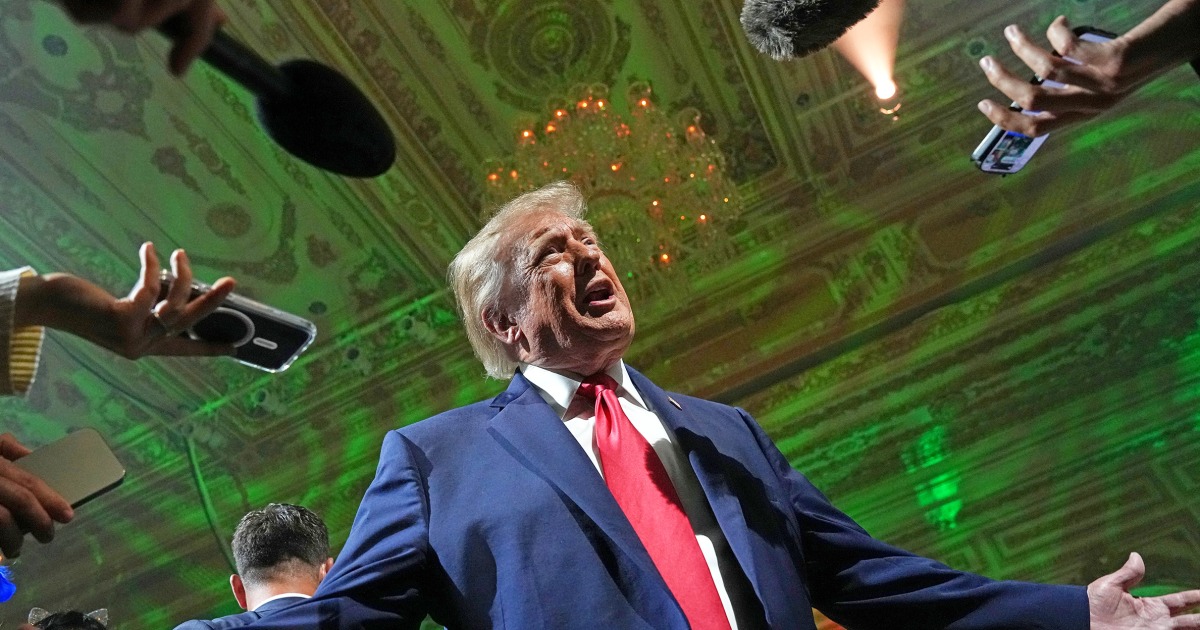
Former President Donald Trump is intensifying his campaign efforts for the upcoming midterm elections, focusing on key Republican candidates. During a series of telerallies, he acknowledged the strain his campaigning is placing on his vocal cords. “By the time I get to the end of the day, I may have no voice left,” he said, referring to his rigorous schedule.
Trump’s recent telerally for Rep. Mike Lawler, R-N.Y., marked a special tribute to the congressman, highlighting their collaboration. Trump mentioned, “This [telerally] was in honor of Mike in particular, because I worked so hard with him.” Despite the toll on his voice, he aimed to rally support before proceeding to additional telerallies.
Over the past month, Trump has participated in more than 25 rallies. Recently, he remarked, “God didn’t make your vocal cords to do a rally every day,” hinting at the challenges he faces while campaigning. His voice has been described as noticeably raspy during this period.
At another event to support Sen. Lindsey Graham, R-S.C., Trump noted Graham’s dedication to campaigning and reflected on their shared experience. “You’ve been all over South Carolina, and I’ve been working hard too. I’ve been all over the country, but our voices are hanging in by a thread, and that’s good,” Trump stated.
Although questions have arisen regarding his health, particularly after he canceled two rallies in key states last week, Trump insisted that he feels “perfect.” He responded sharply to a reporter’s inquiry about his health-related cancellations. He later reinstated those rallies, expressing determination to remain active on the campaign trail.
In recent remarks, he noted the toll that continuous campaigning takes: “I thought I could relax. Twenty-eight days in a row of this is a lot. My voice is about operating at about 49.2%,” he said during a rally in Florida where he discussed his rescheduled events.
While acknowledging the difficulties, Trump emphasized the significance of his telerallies, stating that they play a vital role in mobilizing support. He believes these engagements have positively impacted voter turnout and influenced public opinion in the areas he visits.
