




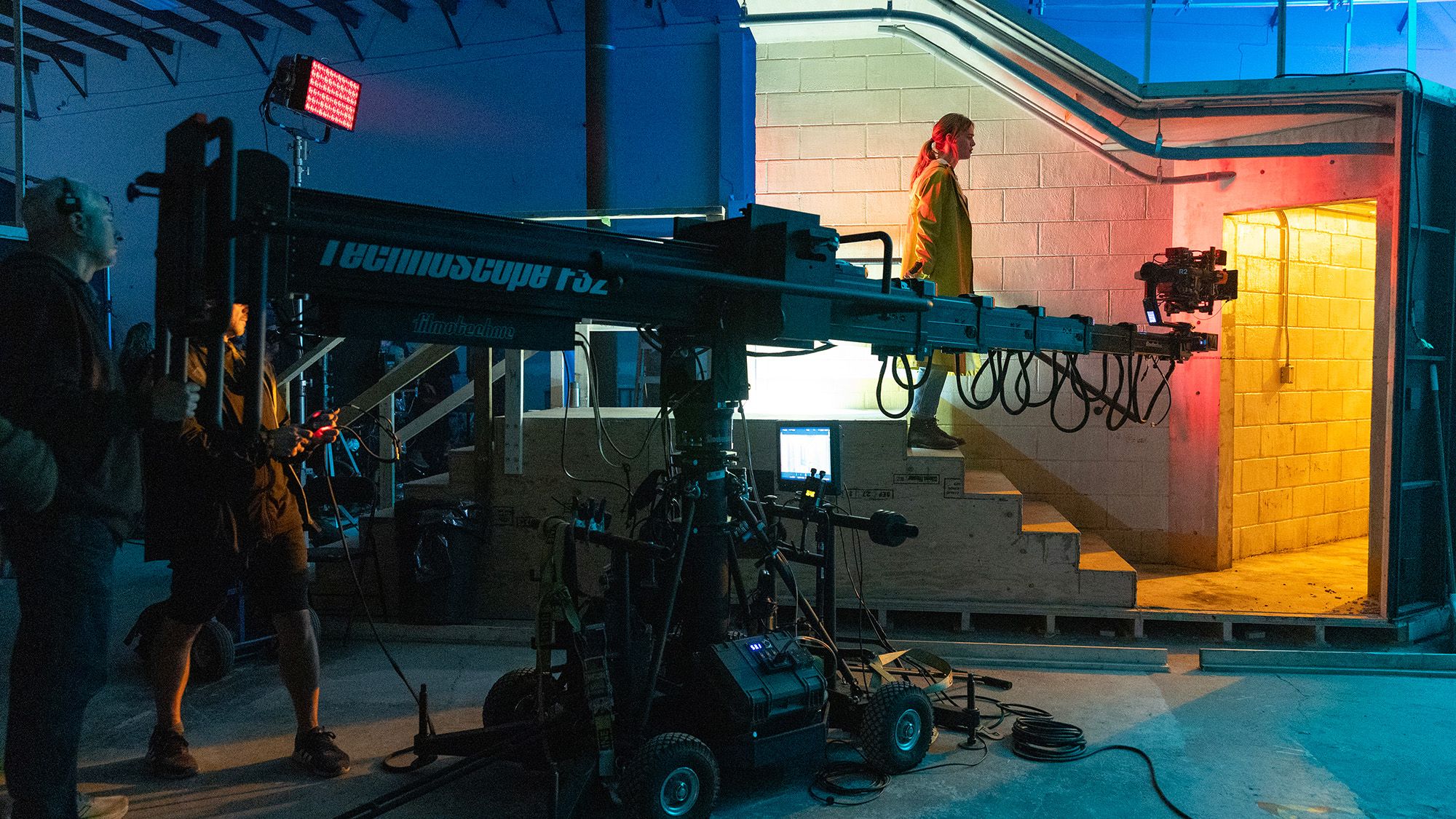
Netflix’s new series “Below” features a fictional ancient creature known as “Mudder,” which poses a threat to a small coastal community in Newfoundland, Canada. This storyline coincides with the arrival of a mysterious iceberg that causes hallucinations among the town’s residents.
The series intertwines marine science, horror, and ecological themes, drawing inspiration from Newfoundland’s historical ties to giant squids, with reports of sightings dating back to the 1870s. To lend authenticity to the sci-fi narrative, Annie Mercier, a marine biologist from Memorial University, served as a scientific adviser during production, which began in 2025.
Mercier’s expertise focuses on deep-sea organisms, including their behavioral responses to environmental stressors. Her lab at the Ocean Sciences Center also served as a filming location, where she collaborated closely with actor Mackenzie Davis, who portrays Dr. Fonda Howander, a research scientist in the series.
In a recent interview, Mercier discussed her involvement with “Below,” explaining that she became aware of the project when the director, Jesse Mckeown, sought a local science adviser. Although she does not specialize in cephalopods, her extensive background in marine biology and experience consulting for documentaries made her a suitable candidate.
Mercier was actively engaged throughout the scripting process, reviewing drafts to provide feedback on the scientific accuracy of various elements, including the portrayal of the creature, the iceberg’s effects, and the depiction of scientific work. She noted, “They wanted to know how far-fetched or how close to reality some of the things were,” and she offered insights on the creature’s behavior and scientific principles related to marine biology.
Regarding Mudder’s character design, she expressed relief that the creators avoided clichéd portrayals, such as overly exaggerated movements. “When I read the scripts, I could see they were trying to make it as close to reality as possible,” she said. Mercier and the writers kept the creature’s representation mysterious, balancing fear with grounded biological traits.
While focusing on biological realism, Mercier addressed creative liberties taken in the storyline, especially concerning the creature’s abilities to induce hallucinations. “That’s definitely fictional,” she asserted, emphasizing that while many marine animals have toxins, none produce hallucinations through airborne means.
Ultimately, Mercier feels the series successfully captures the essence of marine science while portraying Newfoundland authentically. “They aimed to make Newfoundland almost a character in the series,” she noted, highlighting its landscapes and community spirit. The first episodes of “Below” not only showcase marine life’s complexity but also reflect the collaboration between science and storytelling in bringing this thrilling narrative to life.
