




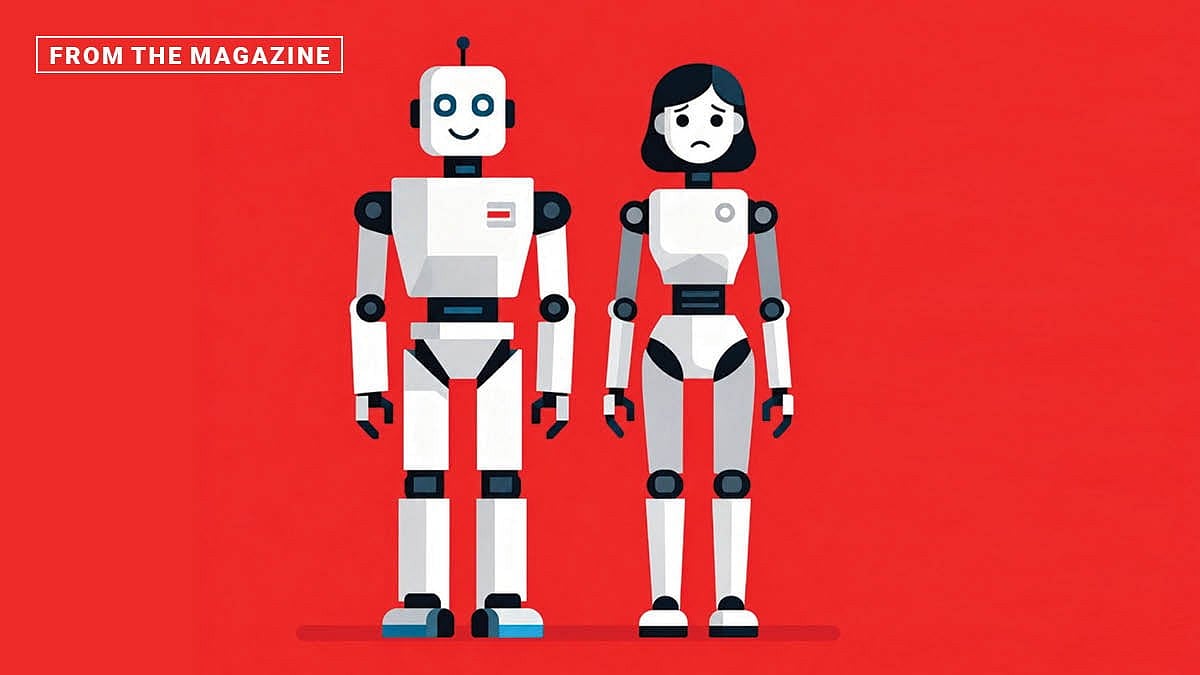
A recent study from the University of Limerick highlights gender bias in interactions with AI agents, revealing that male-presenting assistants receive higher rewards than their female counterparts. The findings suggest that human biases are mirrored in how individuals treat AI, particularly in workplace environments.
The research involved 189 participants who engaged with various AI assistants, including a text-based chatbot, a desk robot, and humanoid AI agents that appeared either male or female. Each participant completed a set of tasks and subsequently distributed a sum of money between themselves and the AI assistants for the work performed. Despite all AI assistants using the same technology, those presenting as male received, on average, 10.25 percent more compensation than those presenting as female.
Furthermore, participants perceived the male-presenting AI as more human-like compared to the female-presenting version. Interestingly, many participants indicated that they did not care about the gender of the AI and expressed a preference for clearly non-human assistants. Nonetheless, the results demonstrate a notable discrepancy, rewarding both human-like and male-presenting assistants more than those that were female-presenting or non-human.
Mary Hausfeld, a co-author of the study, stated, “We often think of AI as being neutral, but the way we design and present these systems can activate those same assumptions and biases that exist in our interactions with other people.” This finding underscores the importance of addressing underlying biases in the development and presentation of AI technologies.
The study’s implications extend to various sectors that implement AI in workplaces, raising awareness about the potential for gender-based discrimination even in non-human entities. As organizations increasingly adopt AI tools, understanding these biases could influence how AI systems are designed and integrated into daily operations.
