




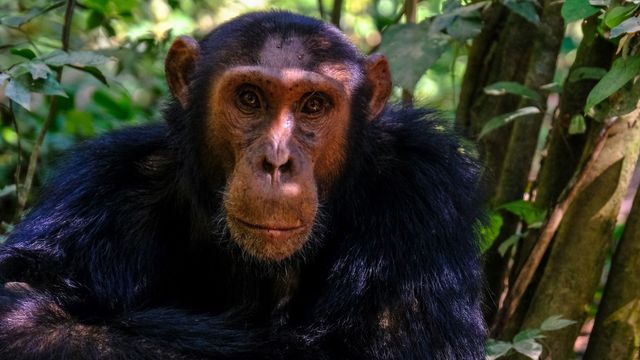
A recent study published in Science Advances reveals that an ancient viral remnant in the chimpanzee genome plays a critical role in silencing a gene essential for early brain development. Researchers at Lund University discovered that the gene LINC00662, which is active in humans, is silenced in chimpanzees due to the presence of the endogenous retrovirus PTERV1, which infected chimpanzee populations millions of years ago.
Johan Jakobsson, a professor of molecular neurogenetics, emphasized the importance of understanding gene regulation differences between species. He stated, “The virus we investigated specifically affected chimpanzees. Yet humans and chimpanzees have largely the same genetic makeup.” He noted that the findings help illuminate how gene regulation can influence brain development.
The study highlights how PTERV1’s genetic material remains embedded within the chimpanzee genome, where it has been passed down through generations. The researchers found that PTERV1 replicated itself at multiple sites in chimpanzee DNA, creating sequences that are systematically silenced through a process known as methylation. This process regulates gene activity, determining which genes are turned on or off.
To explore the implications of the viral remnant on brain development, the scientists created brain organoids—three-dimensional models resembling early brain tissue—using stem cells from both humans and chimpanzees. Their analysis revealed that LINC00662 was strongly expressed in human organoids but entirely silenced in chimpanzee organoids.
Postdoctoral researcher Patricia Gerdes commented, “The gene was strongly expressed in the human organoids, but not at all in the chimpanzee organoids.” To confirm the role of the viral remnant, the team employed the CRISPR-Cas9 gene-editing tool to excise the viral DNA from chimpanzee cells. With the removal of the viral insertion, LINC00662 was reactivated, further supporting the connection between the viral remnant and gene silencing in chimpanzees.
Additionally, the researchers investigated LINC00662’s functions in humans. They found that silencing the gene in human brain organoids reduced the activity of genes crucial for the development of nerve cells and the formation of connections between these cells.
The findings contribute to the understanding that not only do humans and chimpanzees differ in gene presence, but also in gene activity. Moving forward, the researchers plan to examine whether other viral remnants may have similarly influenced brain evolution and their potential links to brain diseases.
