




Natural gas prices in Europe have seen notable fluctuations, affecting energy security as winter approaches. The Dutch Title Transfer Facility (TTF), the benchmark for gas prices in the region, is currently around €72 per megawatt-hour, roughly $24 per million British thermal units. This figure is significantly higher than the U.S. price, which stands at approximately $2.97.
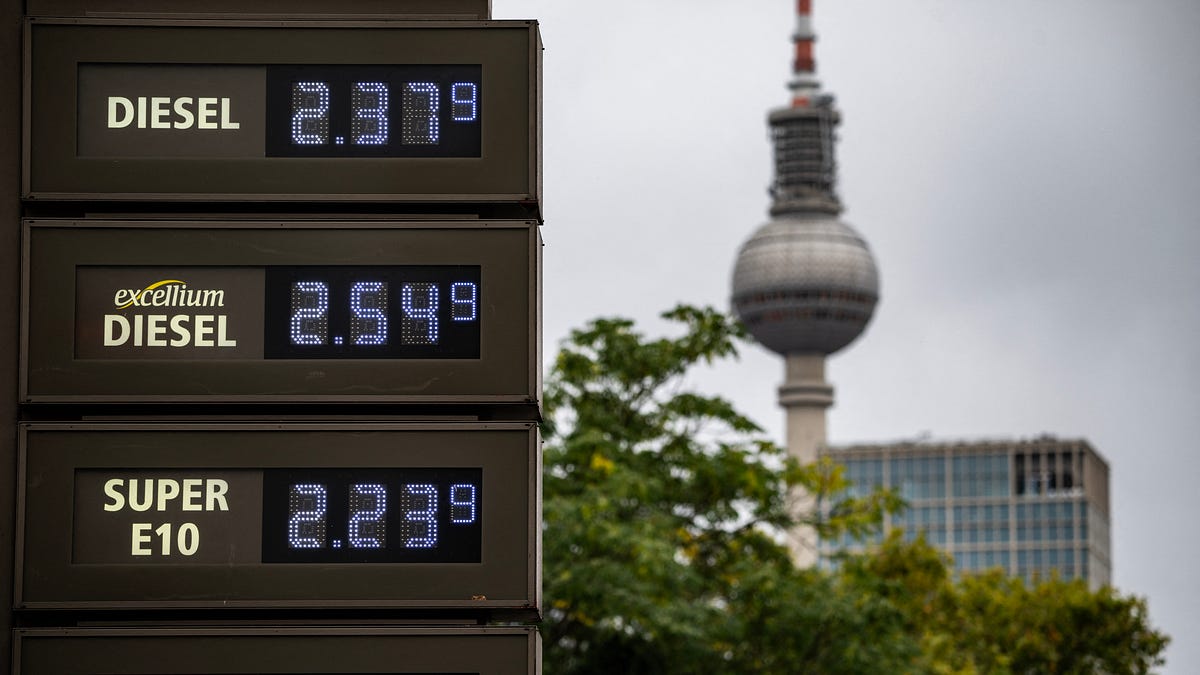
The ongoing energy squeeze is largely attributed to external factors. Damage to Qatar’s Ras Laffan liquefied natural gas (LNG) plant due to the Iran war is expected to delay deliveries to Europe by an estimated 12 to 36 months, while the Strait of Hormuz remains largely closed to commercial traffic. Concurrently, Ukraine’s military efforts against Russian refining capacities have contributed to soaring diesel prices across Europe.
An impending ban on Russian LNG imports by the EU, effective January, adds pressure as Europe prepares for winter. This has prompted European buyers to purchase 57 percent more Russian LNG in June compared to the prior year, although such measures may not sufficiently stabilize energy markets during the heating season. Current EU gas storage levels sit at just over 71 percent of capacity, below the seasonal average of 88 percent. In Germany, which holds the largest storage capacity in the EU, levels were just above 50 percent in late August, down from around 69 percent a year earlier.
The legal requirement for gas storage mandates that facilities reach 70 percent of capacity by November 1, a target that appears increasingly challenging. The German gas storage association INES has warned that insufficient storage capacity combined with a particularly cold winter could leave Germany unable to meet its normal gas demand.
European Commissioner for Energy Dan Jørgensen has acknowledged the “exceptionally low” storage levels but maintains that there are “no immediate risks to security of supply.” However, concerns persist among analysts. David Lewis from Wood Mackenzie highlighted that the combination of supply disruptions and low storage reserves leaves minimal margin for error this winter, with conditions unlikely to improve before 2028.
Beyond immediate concerns, Europe’s energy policy has been characterized by indecisiveness. Past reliance on Russian gas and a focus on decarbonization have overshadowed the need for substantial investment in energy supply to support economic growth. For instance, the Dutch province of Groningen is in the process of sealing a gas field that contains an estimated 550 billion cubic meters of fossil fuel, which equates to about eighteen years of Dutch consumption. Although capping the field was influenced by fears of induced earthquakes, experts have suggested maintaining it as a strategic reserve rather than decommissioning it entirely.
The impact of rising energy costs is visible in the industrial sector, with companies like Dow shutting down production facilities due to financial pressures. Germany’s chemical lobby has warned of potential risks to the country’s industrial base, while fertilizer producers have also expressed concerns over economic viability amid escalating gas prices.
Long-term forecasts suggest that Germany’s potential growth may plummet to just 0.1 percent, accompanied by a projected deficit reaching 4.6 percent of GDP by 2027. These financial constraints could limit investments in energy solutions and infrastructure reform, further complicating Europe’s energy dilemma.
As Europe grapples with these challenges, the call for a unified and forward-thinking energy policy becomes more pressing. Establishing long-term contracts for LNG, increasing investments in diverse energy sources, and maintaining strategic reserves will be crucial steps for Europe as it seeks to navigate its energy landscape amidst ongoing geopolitical tensions.
