




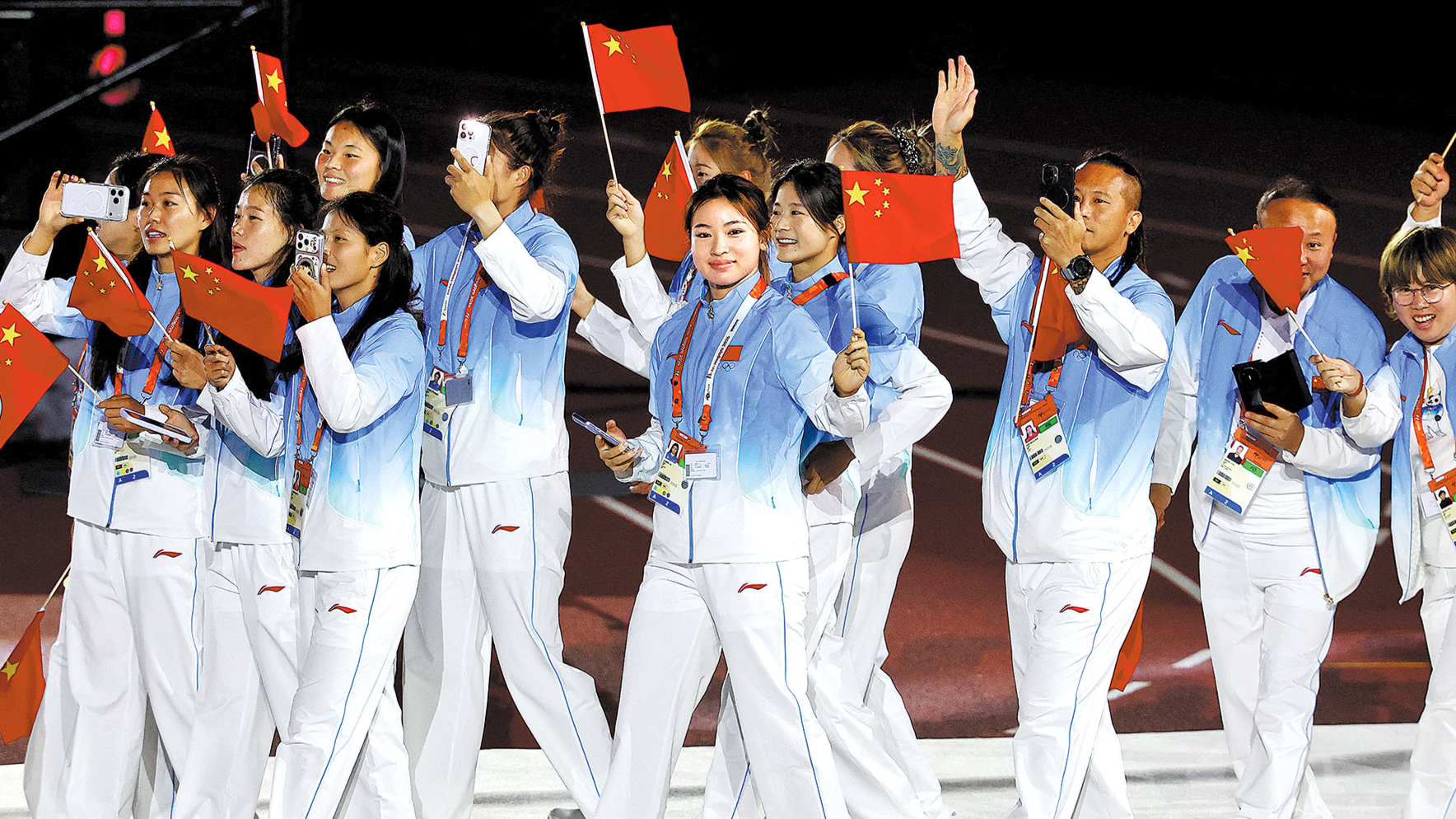
China concluded the Aichi-Nagoya Asian Games on October 4, 2026, retaining its top position for a record 12 consecutive times. The Chinese delegation secured 169 gold, 89 silver, and 83 bronze medals, totaling 341, surpassing the previous record of 165 golds achieved in Doha, Qatar, in 2006. Japan finished in second place with 83 gold medals, while the Republic of Korea ranked third with 39.
The Games showcased a new generation of athletic talent. Thirteen-year-old swimmer Yu Zidi was named the Most Valuable Player among female athletes, crafting a remarkable performance by winning gold in all three of her individual events and setting Games records in each, including an Asian record. In the men’s category, Thailand’s 20-year-old sprinter Puripol Boonson also made headlines, achieving a sprint double. He secured gold in the 100m with a Games record time of 9.90 seconds and claimed victory in the 200m, where he equaled the Asian record with a time of 19.88 seconds.
During the closing ceremony, Sheikh Joaan bin Hamad Al Thani, President of the Olympic Council of Asia (OCA), reflected on the impact of the Games, stating, “Tonight, we close a Games that will shape the next generation of Asian sport.” His remarks highlighted the unity that the Games foster despite the global challenges of conflict and economic instability, with OCA Director General Husain Al Musallam noting that athletes set 54 world records and 89 Asian records during the event.
China’s delegation consisted of 815 athletes, with 548 making their Asian Games debut. Among them, 17-year-old sprinter Chen Yujie set a Games record in the women’s 100m, while 19-year-old Zhang Zhanshuo made history by becoming the first swimmer to win seven gold medals at a single Asian Games. Looking forward, Zhang Xin, secretary-general of the Chinese delegation, emphasized the need for preparation for the 2028 Los Angeles Olympics, stating that they would focus on addressing their weaknesses and improving their overall competitive level.
The Aichi-Nagoya Games expanded the program from 40 sports to 43, introducing new events such as mixed martial arts, padel, surfing, and teqball. Conversely, some sports including chess, bridge, and dragon boat racing were removed from the roster. Additionally, China excelled in areas beyond its traditional strengths, winning gold medals in individual speed climbing, BMX freestyle, and esports, and marking its first Asian Games medal in women’s shortboard surfing with Yang Siqi’s silver.
The closing ceremony also featured the passing of the Asian Games flag to Qatar, the host of the 2030 edition, returning to the country 24 years after it last hosted the Games in 2006.
