




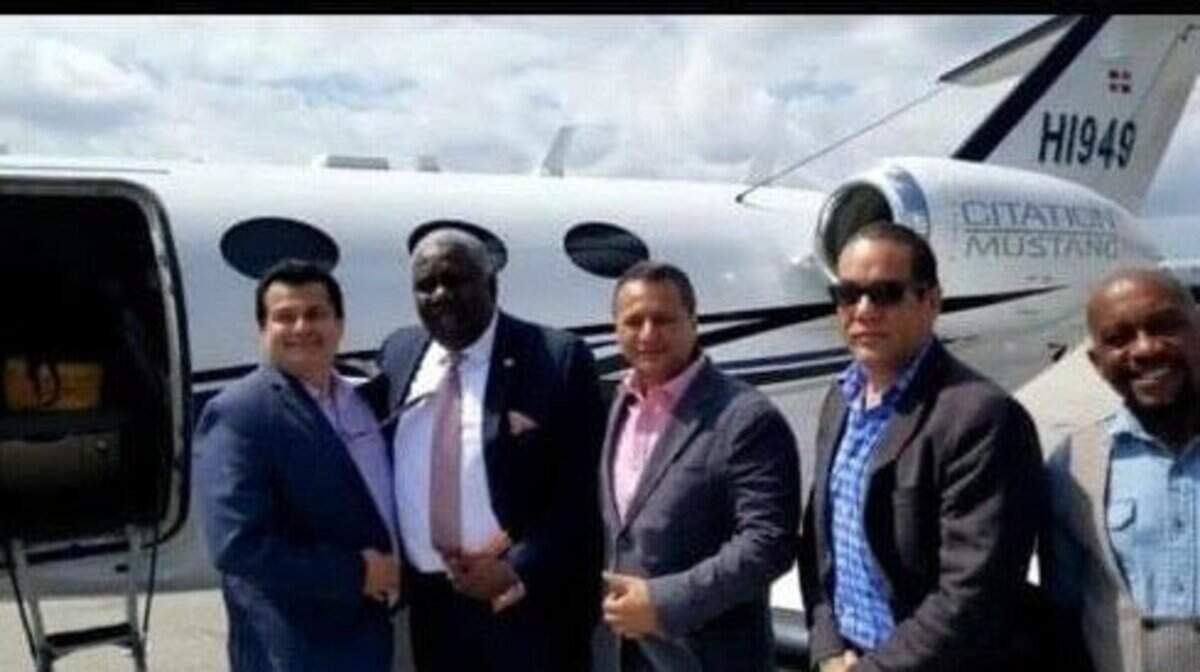
During the ongoing federal conspiracy trial of Christian Emmanuel Sanon in Miami, questions have surfaced regarding the connections between U.S. intelligence and individuals involved in the events leading up to the assassination of Haitian President Jovenel Moïse on July 7, 2021. Former opposition senator Joseph Joël John shared an account about a phone call he received from Haitian official Joseph Félix Badio after returning from Miami, where he had met with Sanon and FBI agents. Badio, who has since been indicted in the assassination plot, inquired how John could support Sanon’s candidacy as president of Haiti.
On Friday, defense attorneys began to investigate potential links between U.S. authorities and two individuals closely tied to the conspiracy: Helen Manich and Jean Robert “Bob” Balthazar. Both have been identified as former FBI informants. FBI supervisor Nicholas Rahmer testified that while Manich served as a confidential source from 2011 to 2016 and Balthazar from 2011 to 2012, neither was actively involved during the alleged conspiracy to overthrow Moïse.
John testified about Balthazar’s reputation and suggested that he had been an informant for both the State Department and the Pentagon. He initially supported Sanon’s bid to succeed Moïse but later aligned with Windelle Coq Thélot, a justice reportedly backed by Badio. Balthazar was also noted as a contact for Joseph Vincent, a co-conspirator and former DEA informant, who indicated that he had been sent to Haiti to assist Sanon.
Questions around Balthazar’s previous roles arose when defense counsel Dominguez probed Rahmer about whether Balthazar was registered as a foreign agent for the Haitian government. Rahmer could not confirm whether such documentation existed. This line of questioning seems to aim at untangling the relationships between U.S. law enforcement, Haitian political figures, and the circumstances surrounding Sanon’s aspirations to replace Moïse.
Manich, who has previously shared information on Haiti’s political crisis with Balthazar, also sent text messages to Sanon, reflecting on his political discussions. Just days following Moïse’s assassination, she wrongfully claimed that U.S. troops were on their way to stabilize Haiti.
As the trial progresses, prosecutors have focused on clarifying the connections between U.S. agencies and the assassination, distancing the case from speculation over U.S. involvement. Early in the trial, it was revealed that Badio had also served as a U.S. government informant. Jake Johnston, an analyst researching the case, remarked that understanding these dynamics is crucial for preventing similar events in the future.
Prosecutors indicated they still have 19 witnesses to call, including John, who could potentially provide further context on the conspiracy. Additionally, evidence in the form of electronic messages between Sanon and other key figures is being utilized to establish the extent of their involvement.
