




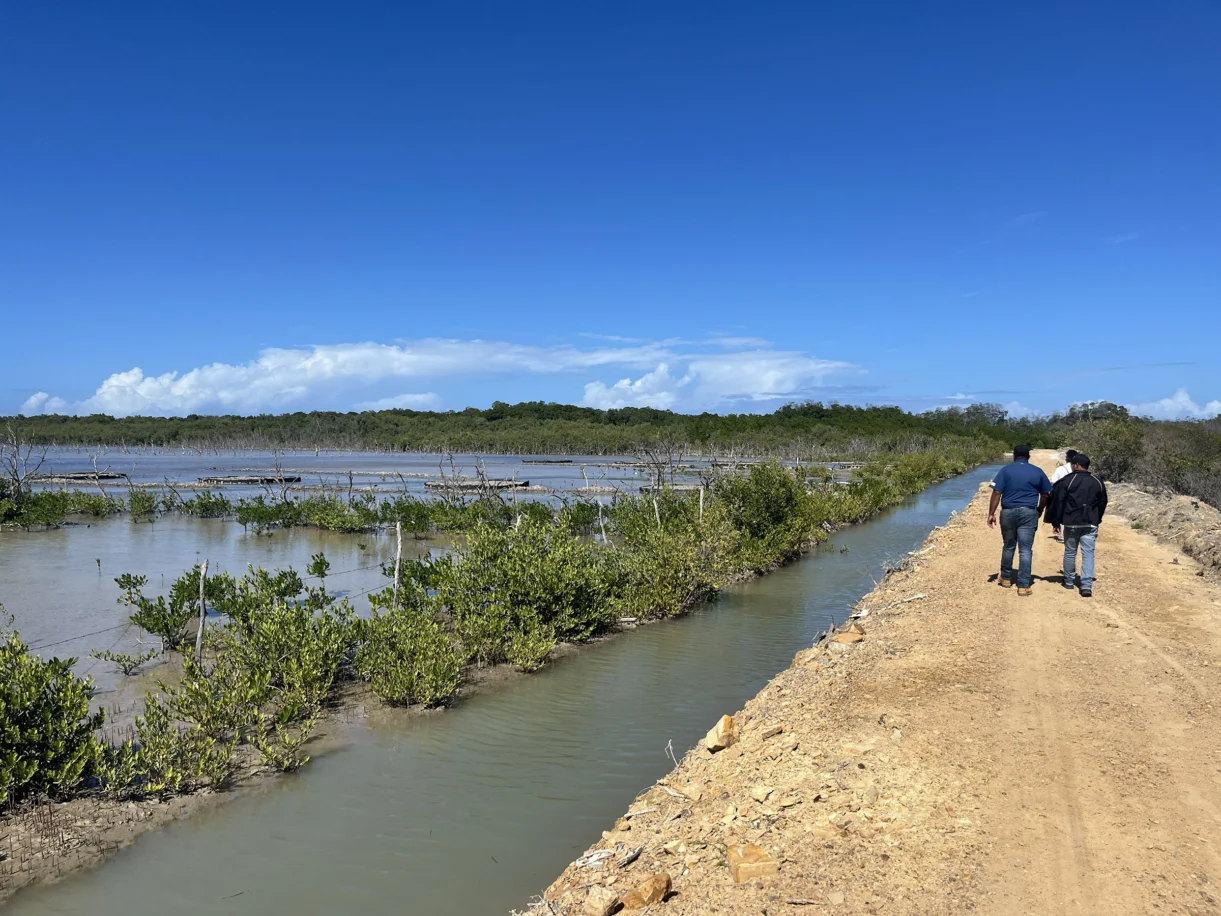
Agrofrontera, in partnership with the Instituto Dominicano de Desarrollo Integral (IDDI) and local community brigades, is spearheading efforts to restore mangrove ecosystems in the Dominican Republic. The initiative engages community members—including crabbers and salt miners—by providing them with hands-on training in restoration activities. This training equips participants to maintain waterways and ensures ongoing recovery of mangrove habitats.
Active community involvement
Robinson Jiménez, director of Agrofrontera’s Coastal programme, highlighted the project’s unique approach, which emphasizes direct community involvement and practical solutions. Jiménez noted that while he is often asked to contribute to various studies, he rarely observes significant outcomes. “This project is different; it is an actual intervention that addresses the root cause of the problem and benefits the community and ecosystems here. It creates lasting change,” he said.
The project, referred to as a living lab in Montecristi, has fostered collaboration among diverse stakeholders, including private landowners, salt producers, crabbers, fishers, divers, and farmers. This cooperative effort aims to restore water flows and support mangrove recovery while building relationships and a shared understanding of stewardship among local actors. The insights gained from this living lab are also being integrated into the forthcoming Management Plan for El Morro National Park, enhancing long-term governance and conservation of the mangrove ecosystem.
Important local knowledge
Community engagement and local expertise have proven vital to the initiative’s success. Barquet emphasized the importance of contributions from traditional crabbers, salt miners, landowners, and other locals who bring critical knowledge of regional hydrology and land-use practices to the table. “This is essential so that the project can adapt hydrological interventions to local environmental conditions and community needs,” she stated.
Barquet also believes the living lab model encourages collaboration among communities, NGOs, and researchers to develop and refine solutions under real-world conditions. This approach is particularly important in the Caribbean, a region facing significant climate vulnerabilities, where coastal ecosystems such as mangroves and coral reefs are under considerable threat.
Supporters of the project, including funder Sikkar, expressed the importance of witnessing the results firsthand in Montecristi, underscoring the initiative’s local impact and potential for broader applications.
