




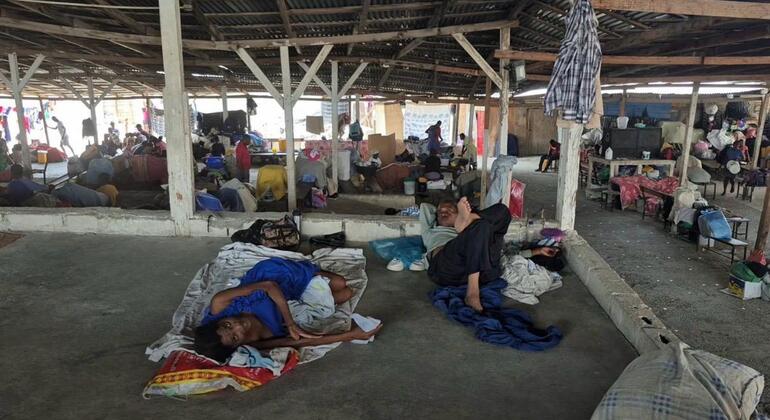
The United Nations Security Council has extended sanctions against individuals and groups involved in criminal activities that destabilize Haiti. This decision aims to combat the widespread influence of gangs, which have contributed to a humanitarian crisis, displacing approximately 1.5 million people, or 12 percent of the population.
Details of the Sanctions
Initially established in 2022, the Haiti sanctions committee employs several measures, including an arms embargo, a travel ban, and an asset freeze designed to target the sources of armed violence. Currently, nine individuals and two entities are subject to these sanctions.
The arms embargo specifically seeks to prevent weapons and ammunition from reaching gangs, while the travel ban and asset freeze apply to those recognized for inciting violence and insecurity in Haiti.
Humanitarian Impact of Gang Violence
The dire consequences of gang violence are evident, with more than 3,000 deaths and over 1,500 injuries reported between October and April. Additionally, a UN partner has recorded more than 2,400 instances of sexual violence treatment in Port-au-Prince, predominantly affecting women and girls, with a notable percentage involving minors.
Gang recruitment has increasingly impacted children, posing further challenges to community safety.
Enforcement of Sanctions
Sanction enforcement largely falls on various governments, particularly at ports, borders, and banking institutions. Haitian authorities have intercepted multiple illegal shipments, and U.S. officials have also seized firearms and ammunition intended for the country.
The UN Office on Drugs and Crime is actively supporting regional efforts to combat trafficking into Haiti. Despite the presence of sanctions, the illegal arms trade remains robust, with an estimated 270,000 to 500,000 illegal weapons in circulation, according to figures released by the UN human rights office last year.
Effectiveness of the Sanctions
Regular violations of the arms embargo have been reported by an independent UN panel, which also noted that while the asset freeze has been implemented minimally, no attempts have been reported to breach the travel ban. The panel highlighted that corrupt practices within law enforcement and delays in bank actions have undermined the efficacy of the sanctions.
The independent experts assert that merely targeting gang leaders without addressing the broader support networks does not suffice to dismantle the gang infrastructure.
Future Actions and Responses
Despite existing sanctions, gang activity continues its expansion, underscoring the importance of robust enforcement strategies. In discussions at the Security Council meeting, representatives emphasized the necessity of disrupting gang financing and exposing the support networks behind the violence.
The council has extended the mandate of its sanctions committee for another 13 months. While the Haitian government welcomed this renewal, it cautioned that sanctions alone cannot restore peace and security. For many Haitians, the focus remains on whether these efforts will translate into improved safety, reduced violence, and broader access to essential services.
