




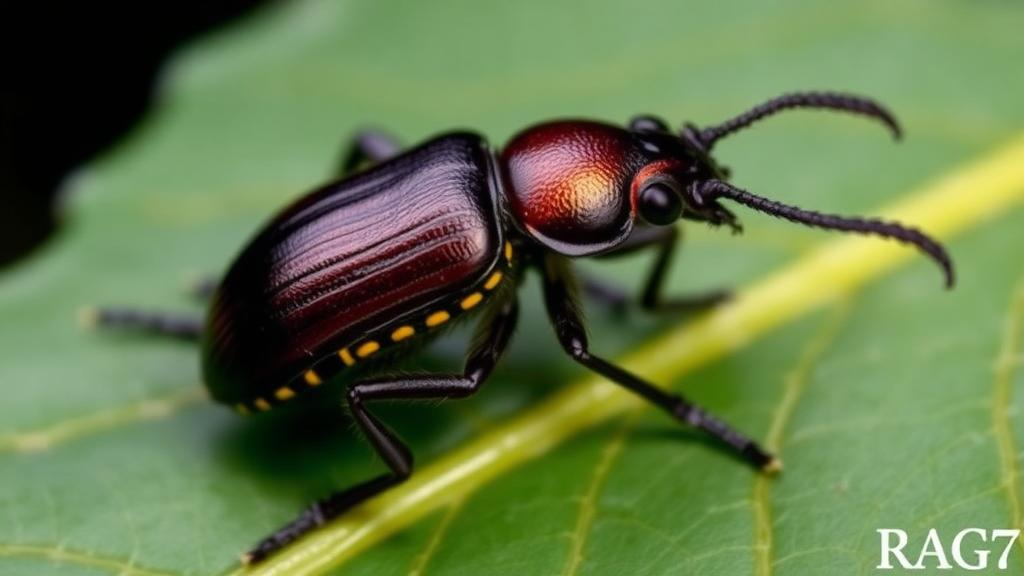
Entomologists have identified a new genus and species of click beetle in the Dominican Republic, marking the first time an endemic genus from the family Elateridae has been reported in the West Indies. The newly described beetle, named Aiyitioderus montanus, was discovered in the cloud forests of Hispaniola.
The formal description of Aiyitioderus montanus appears in the journal Alpine Entomology. Paul J. Johnson, who led the study, gathered specimens during several entomological expeditions to the Dominican Republic in 2021, 2023, and 2024, alongside researchers including Jiri Hodeček and Jiri Pirkl. Previous surveys by Daniel E. Perez-Gelabert and Ruth Bastardo also contributed to the specimen collection. These expeditions are part of a broader biodiversity project authorized by the Dominican Ministry of Environment and Natural Resources, which has yielded numerous publications concerning various insect groups in the region.
The holotype specimen, a male beetle, was captured at an elevation of 1,075 meters in the Reserva Científica Ébano Verde, situated in La Vega Province. This reserve is regarded as biologically rich, encompassing nearly 3,000 hectares of humid broadleaf and pine forests and featuring over 686 documented vascular plant species. Remarkably, Aiyitioderus montanus is the first click beetle ever recorded in this protected area.
Historically, the click beetle fauna of Hispaniola has been under-explored, with a 2020 assessment reporting only 15 genera and 45 species. Researchers now posit that as many as 15 additional species could be awaiting formal description, suggesting that over half of the island’s click beetle species may be endemic.
Aiyitioderus montanus is characterized by its slender shape, measuring between 6.8 to 8.9 millimeters in length. Its body is a shining brown color, with yellow-brown antennae and legs. Distinct anatomical features found in this species, including its unique pronotum and scutellar shield, warranted its classification into a new genus, alongside notable differences in male and female reproductive structures.
The beetle’s evolutionary journey hints at historical connections between Hispaniola and mainland species, especially those in the genus Heteroderes, found in parts of the Americas. However, distinct morphological and anatomical traits confirm that Aiyitioderus stands apart from other known lineages, showcasing its unique biogeographical history.
All collected specimens to date have been sourced from mid-elevation localities across several provinces in the Dominican Republic, typically from late March to early December, with a peak activity period observed from May through July. This discovery not only highlights the richness of Hispaniola’s biodiversity but also emphasizes the necessity of continued exploration and research into the island’s endemic species.
