




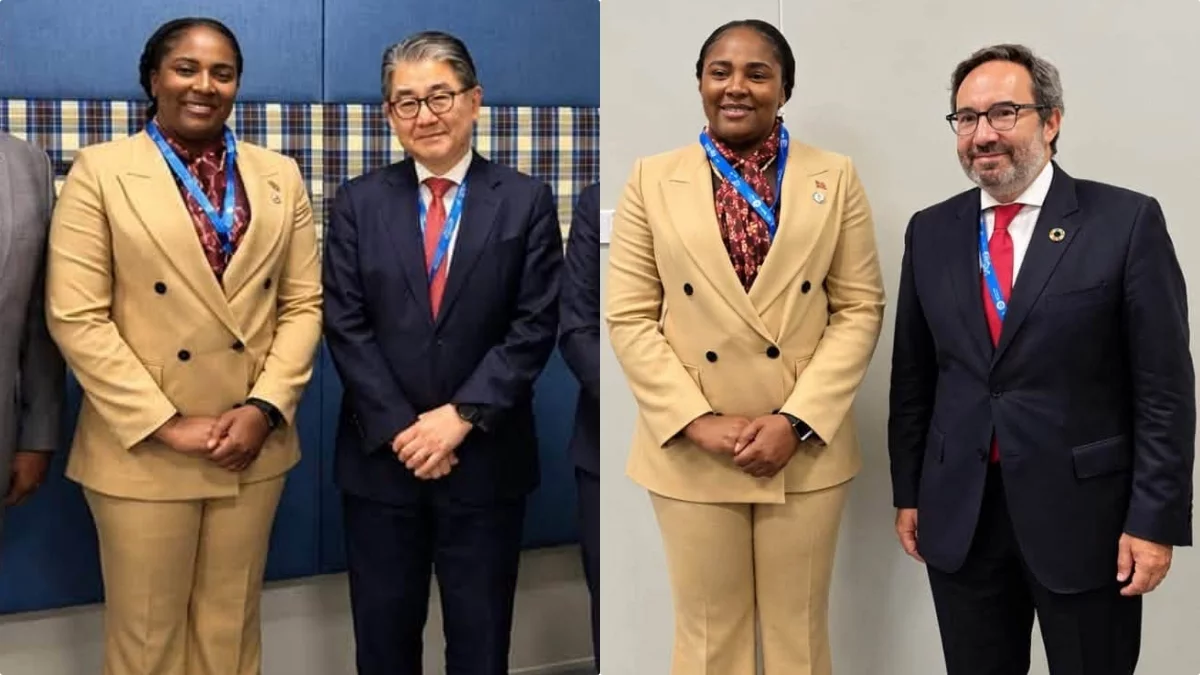
Haiti’s Minister of Planning Meets with JICA and UNOPS in Bangkok
During the Annual Meetings of the International Monetary Fund (IMF) and the World Bank Group in Bangkok, Thailand, on October 15, 2026, Sandra Paulemon, Haiti’s Minister of Planning and External Cooperation, held discussions with representatives from key international organizations.
In her meeting with Hara Shohei, Vice President of the Japan International Cooperation Agency (JICA), Paulemon explored ways to enhance cooperation between Haiti and Japan. A primary focus was on job creation and aiding vulnerable populations in their economic recovery. Paulemon praised Japan’s longstanding support for Haiti and proposed a new collaborative effort centered on job creation.
She suggested initiatives such as a labor-intensive public works program, which would involve rehabilitation of rural access roads, maintenance of drainage and irrigation systems, reforestation, and improvements to schools, health centers, and sanitation facilities in affected communities. Paulemon laid out three key requests for JICA: financial support, technical assistance for project design and implementation, and exploration of co-financing opportunities with other multilateral partners.
Hara Shohei responded positively, expressing JICA’s readiness to continue its efforts in Haiti. He acknowledged the clarity Paulemon brought to Haiti’s needs and indicated that follow-up technical meetings would occur to define the nature of assistance that JICA could provide.
Later, Paulemon met with Jorge Moreira da Silva, Executive Director of the United Nations Office for Project Services (UNOPS). This meeting also concentrated on potential collaboration, especially in addressing Haiti’s critical needs for social infrastructure and economic development opportunities.
Paulemon underscored the challenges in converting financial commitments into actionable projects. She proposed identifying pilot programs under Haiti’s 2026–2030 National Program for Stabilization and Economic, Social, and Territorial Recovery (PNSREST) that UNOPS could support. She emphasized two key areas: rehabilitating essential community infrastructure and implementing labor-intensive public works to create jobs for vulnerable populations.
Moreira da Silva reiterated UNOPS’s commitment to aid Haiti in building resilient infrastructure and improving essential services. He highlighted the importance of strengthening local capacities to foster sustainable development.
The discussions reflect ongoing efforts to bolster international cooperation aimed at improving the living conditions within Haiti, particularly in light of its pressing social and economic challenges.
