




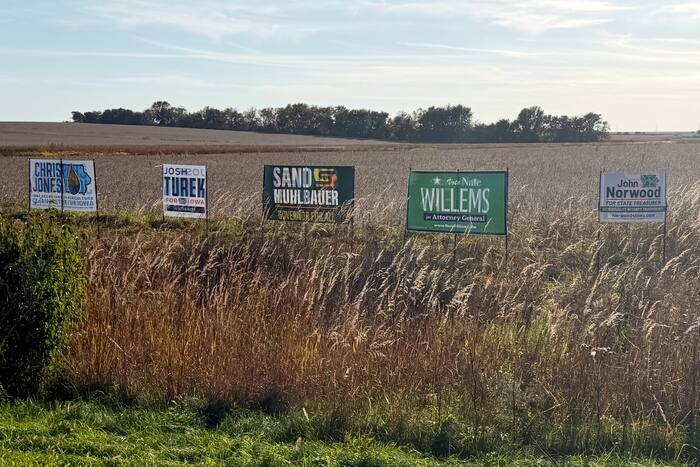
NEW HAMPTON, Iowa – As the upcoming midterm elections approach, Democrats are focused on reclaiming support from rural voters in Iowa, a state that significantly backed Donald Trump by 13 percentage points in the last presidential election. Many voters, however, are expressing disillusionment with the former president’s performance since he took office again in January 2025.
Dave Roethler, a 70-year-old custodian from New Hampton, voiced his concerns about the state of the economy. While he appreciated Trump’s first presidential term, Roethler criticized the impact of current economic conditions on middle-class families. He plans to support Democratic candidates in the upcoming elections, stating, “I think he has delusions of grandeur” regarding Trump’s ambitions for accolades like a Nobel Peace Prize or recognition on Mount Rushmore.
Democrats are seeking to regain ground in rural areas like Chickasaw County, where they believe narrowing losses among voters such as Roethler can make them competitive. Josh Turek, a Democrat running for U.S. Senate in Iowa, highlighted the need for targeted outreach to rural communities, calling it a “math problem” that can be addressed with a strategic approach.
Despite the challenges, Democrats are ramping up efforts in Iowa, where compelling races are shaping up for the governorship, the U.S. Senate, and multiple House seats. U.S. House Speaker Mike Johnson visited the Cedar Falls area to urge local voters to maintain Republican control ahead of the November 3 elections, emphasizing the state’s importance to the party.
In New Hampton, voter sentiment appears to be shifting. Bill Stonecypher, 69, who previously voted for Trump, now intends to support all Democratic candidates for the first time, citing dissatisfaction with the current administration. His neighbor, Deb Thorne, 70, echoed similar feelings, stating, “He lied to us,” as she considers voting Democratic due to rising costs.
Democratic gubernatorial candidate Rob Sand is also trying to appeal to independent and disillusioned Republican voters. At a recent event in St. Ansgar, he emphasized his focus on pragmatic issues over divisive cultural debates. Sand noted that his party affiliation was primarily to participate in primaries and that he aligned with Democrats on environmental issues.
The Democratic Governors Association has invested $10 million into campaigns in Iowa, among other states, while the Democratic Congressional Campaign Committee is implementing a rural engagement program ahead of the election. Their efforts will include targeted advertising, particularly in the 2nd Congressional District, which covers much of Iowa’s northeast.
While a recent poll indicated economic frustration among rural voters, showing that many believe the national economy has worsened since Trump returned to office, support for Democratic candidates remains uncertain. Mark DeVries, a 64-year-old farmer, acknowledged the challenges but expressed loyalty to Trump, indicating that many voters still view him favorably.
As the election draws near, both parties are investing heavily in outreach, but Democrats must navigate a landscape marked by Trump’s enduring influence in rural America. With key races approaching, candidates from both sides are ramping up their efforts to connect with voters and address their concerns.
