




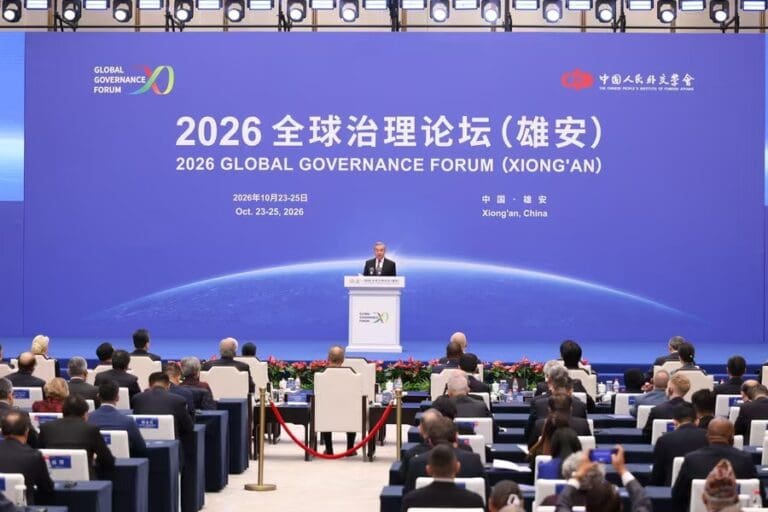
China has advocated for a permanent seat for Africa on the United Nations Security Council, aiming to enhance the continent’s representation in global governance. This announcement was made by Chinese Foreign Minister Wang Yi at the 2026 Global Governance Forum held in the Xiong’an New Area of Hebei Province.
Wang emphasized that reforms to the Security Council should prioritize the inclusion of developing countries, particularly those in Africa, allowing smaller nations to have a more substantial role in international affairs. He stated that addressing Africa’s aspirations is essential through specialized arrangements, reflecting the increasing influence of developing nations in global decision-making processes.
Wang noted that increasing participation from developing countries could help rectify historical imbalances and introduce diverse perspectives to international discussions. However, he did not specify which African countries might receive permanent seats or discuss the potential extension of veto powers.
As reported, the Security Council is comprised of 15 members, including five permanent members—China, France, Russia, the United Kingdom, and the United States—who hold veto powers. Currently, Africa has three elected non-permanent seats but lacks permanent representation. Substantive resolutions require at least nine affirmative votes and no veto from any permanent member, highlighting the significant influence these five nations have over international peace and security decisions.
African leaders advocate for at least two permanent seats with equivalent privileges to current permanent members, including veto rights, along with five additional non-permanent seats. They argue that Africa’s geographic size, developmental needs, and substantial resource wealth, which includes approximately 30 percent of the world’s mineral reserves, justify stronger representation in the Security Council.
Any reform of the Security Council requires an amendment to the UN Charter, which must be approved by two-thirds of the General Assembly members and ratified by two-thirds of all UN member states, including all five permanent members.
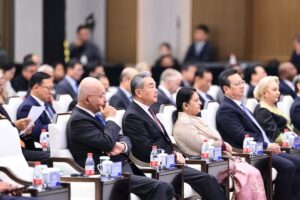
The three-day forum, organized by the Chinese People’s Institute of Foreign Affairs, gathered participants from over 90 countries, showcasing China’s long-term strategies in planning, innovation, and green development.
