




Santo Domingo, 13 August 2026
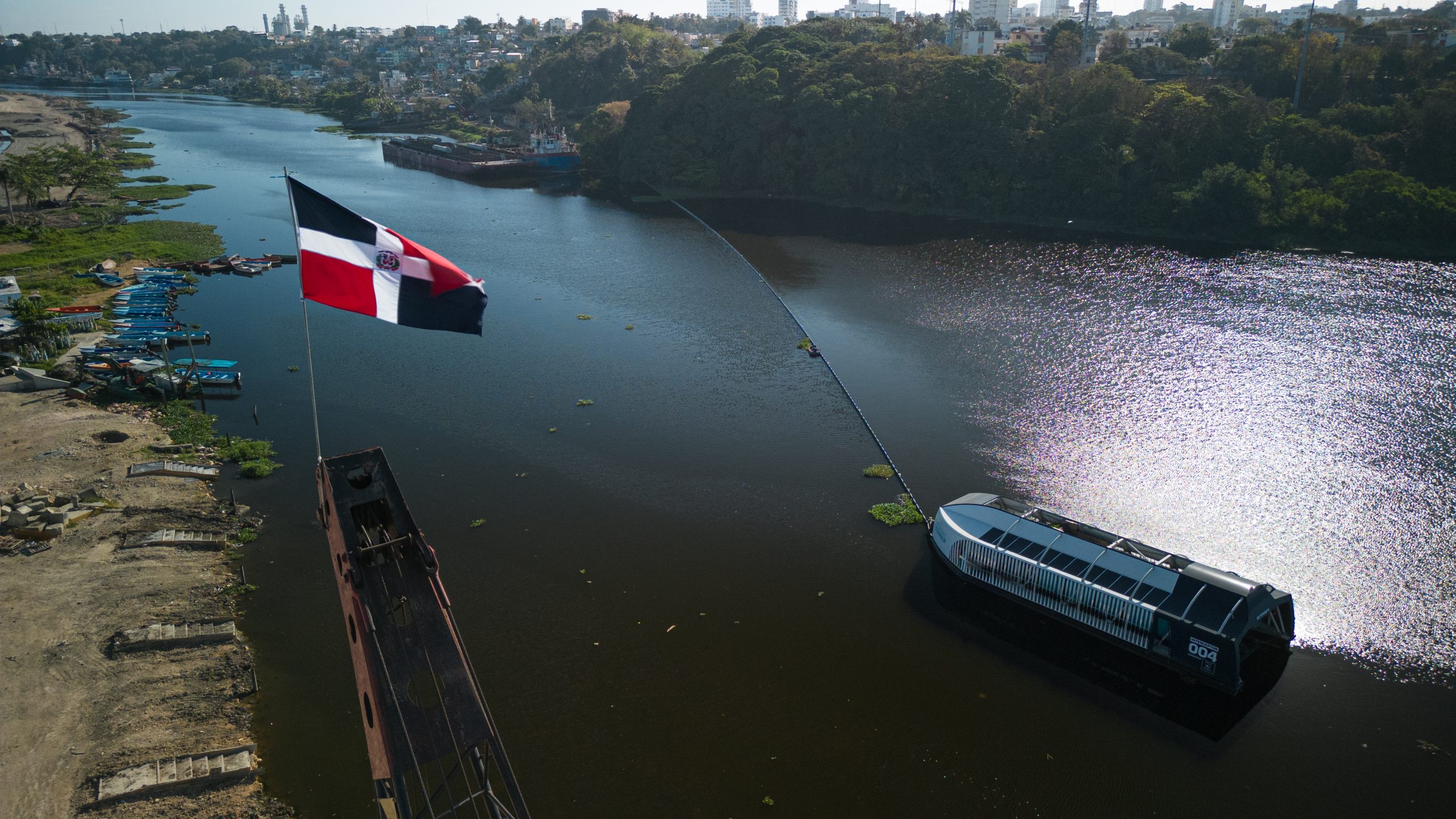
The Ocean Cleanup and the Government of the Dominican Republic announced plans to replace the Interceptor 004 in the Ozama River with a new split barrier, measuring 400 meters, set for deployment in early 2027. This updated structure aims to enhance waste capture capabilities, including the removal of invasive water hyacinth, which poses environmental challenges in the river.
Since its installation in 2020, the original Interceptor 004 has successfully intercepted over 300 tonnes of waste, preventing it from entering the Caribbean Sea. The decision to replace the Interceptor comes as the Dominican government implements new environmental policies, reevaluating the role of existing technologies in local contexts.
The forthcoming barrier will be the largest deployed by The Ocean Cleanup to date. It will incorporate two overlapping sections, allowing for marine traffic while effectively addressing seasonal water hyacinth blooms that disrupt the river’s ecosystem. These invasive plants deplete oxygen levels, create nutrient imbalances, and complicate navigation for local fishermen, as well as affecting infrastructure such as the Ozama’s floating bridge.
Boyan Slat, Founder and CEO of The Ocean Cleanup, expressed appreciation for the collaboration with the Dominican government, stating, “Like many engineering innovations, the first generation revealed both its strengths and its limitations… this new barrier – our biggest ever – represents our commitment to long-term impact.”
José Ignacio Paliza, Minister of the Presidency, highlighted the significance of the new deployment: “This redeployment marks a new chapter in our commitment to the recovery and protection of the Ozama River… capable of responding to challenges such as water hyacinth blooms.”
Paíno Henríquez, Minister of Environment and Natural Resources, emphasized that the new infrastructure is a result of a continuous improvement process and partnerships with international collaborators. He noted that such initiatives are critical to developing strategies aimed at preventing pollution at its source and protecting the country’s ecosystems.
The original deployment was part of the Rescate Ozama Platform, a partnership involving the Dominican government, The Ocean Cleanup, the Embassy of the Kingdom of the Netherlands, ECORED, and the United Nations Development Programme.
This redeployment is part of a broader initiative, the 30 Cities Program by The Ocean Cleanup, which aims to reduce global plastic emissions from rivers by one-third by the end of the decade, targeting some of the most polluted urban areas across Asia and the Americas.
