




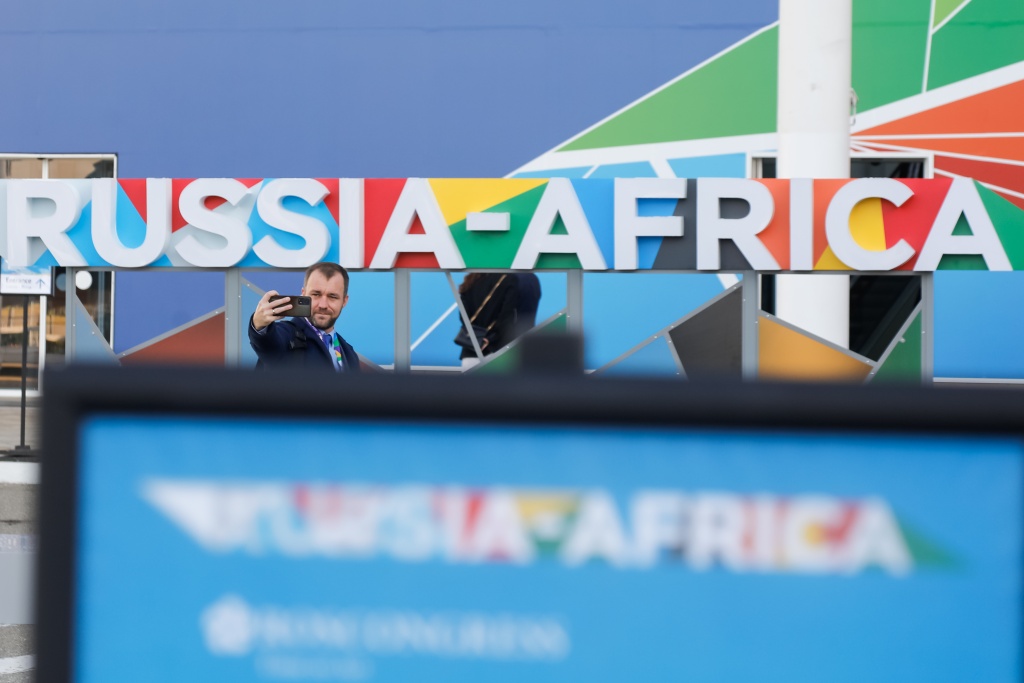
Moscow is set to host the third Russia-Africa Summit this week, beginning Wednesday and lasting for two days. Russian President Vladimir Putin will meet with various African leaders to strengthen economic, security, and humanitarian ties. The summit will take place alongside the Russia-Africa Economic and Humanitarian Forum.
Organizers anticipate the issuance of a joint declaration and a new action plan for the Russia-Africa Partnership Forum, which will cover the period from 2027 to 2029. Additionally, they expect to finalize a series of intergovernmental agreements and commercial contracts.
The summit’s program will unfold at the Gostiny Dvor Exhibition Centre on October 28, with over 2,000 attendees anticipated. This year’s theme is “For Peace, Security, and Development,” with key topics including trade and investment, peaceful nuclear energy, independent payment systems, food security, and advancements in digital technology, including artificial intelligence.
During the summit, President Putin will conduct his typical meetings with leaders of African regional integration bodies and engage in bilateral discussions with individual leaders. Russian Foreign Minister Sergey Lavrov will also host a working breakfast for African foreign ministers on the same day.
The business program of the forum will feature around 40 panel sessions divided into four tracks: sovereignty as the foundation of sustainable development, the economy of a sovereign world order, social and humanitarian cooperation, and technology and innovation. Topics for discussion will include industry, technology transfer, energy, healthcare, education, and mining. Additionally, a youth forum is scheduled for October 28-29, along with a media forum.
A plenary session set for Thursday will be co-chaired by Putin and the current chair of the African Union, Burundian President Évariste Ndayishimiye. A joint news conference and signing ceremony will follow this session.
Organizers are aiming for this summit to be the largest event in the history of Russian-African relations. They note that the success of Russian trade with the continent hinges on diversifying exports and establishing international financing channels. However, challenges persist due to infrastructure issues, financing limitations, and specific risks within individual countries. African nations, often facing structural disadvantages, seek reliable and stable investments, a need that could be complicated by current geopolitical tensions regarding Russia’s involvement in Ukraine.
