




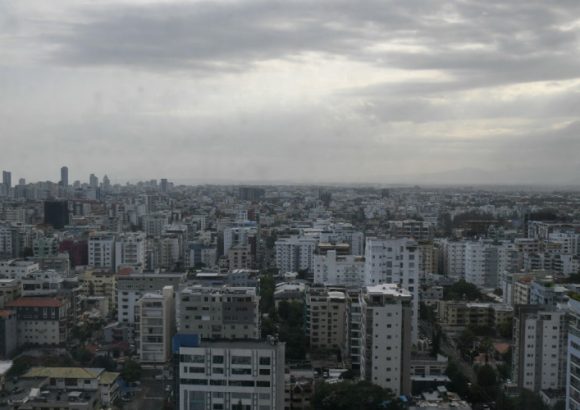
Santo Domingo — An inventory by researchers from the Technological Institute of Santo Domingo (Intec) revealed that tree cover in the Dominican capital has plummeted to just 15.4%. The report highlighted that over 60% of the city’s soil is now covered by cement, asphalt, and buildings, resulting in increased temperatures and flooding.
The stark contrast between the current urban landscape and its historical greenery is underscored by the book “The Trees of Santo Domingo.” Photographs from decades ago depict avenues once lined with oak, mahogany, and laurel trees, forming a vibrant contrast against the now predominantly gray environment. Bolívar Avenue, for example, was famously a tunnel of pink oaks in the past.
Efforts to greenery the city began following the destruction caused by the San Zenón cyclone in the 1930s. However, a gradual loss of trees occurred as urban development intensified. Major construction projects and the development of high-rise buildings severely diminished yards and public gardens. This, compounded by the selection of inappropriate tree species and a lack of effective planting initiatives, has contributed to the ongoing decline of urban green spaces.
Sowing and Loss
The early 20th century saw initiatives aimed at enhancing the city’s greenery, including the founding of the Tree Society in 1908, which aimed to plant 300 almond trees. In 1929, legislation was passed to ensure that widened streets reserved space for trees and grass. However, these efforts were often stifled by landowner interests, including those of the Trujillo family, undermining conservation plans.
Despite a peak in tree-planting efforts between 1966 and 1978, the city’s urban sprawl continued unabated. Hurricane David in 1979 and subsequent storms devastated around 40% of Santo Domingo’s trees, with some areas like Mirador Sur losing up to half of their tree cover.
While the 1993 creation of the Santo Domingo Green Belt represented a step towards preservation, by 2010, urbanization had stripped two-thirds of this area. Recent initiatives have attempted to address these losses. In 2004, regulations were introduced controlling the planting and removal of trees in public spaces, while the “Plant Your City” initiative, launched in partnership with various environmental organizations in 2021, aimed to enhance urban greenery. As of July, over 110,000 trees, shrubs, and ornamental plants have been reportedly planted since 2020.
However, challenges remain, particularly concerning cutting regulations that do not cover public green spaces like sidewalks and parks. Recently, councilman Wilkin Martinez proposed a reform to clarify ambiguous aspects of tree protection laws.
Despite requested comments from the Ministry of Environment and the Mayor’s Office regarding tree loss and recent removals, no responses were provided by the time of publication. Experts from Michigan State University have previously noted that urban development in the Dominican Republic lacks an adequate tree-planting strategy, a critique that seems just as relevant today.
