




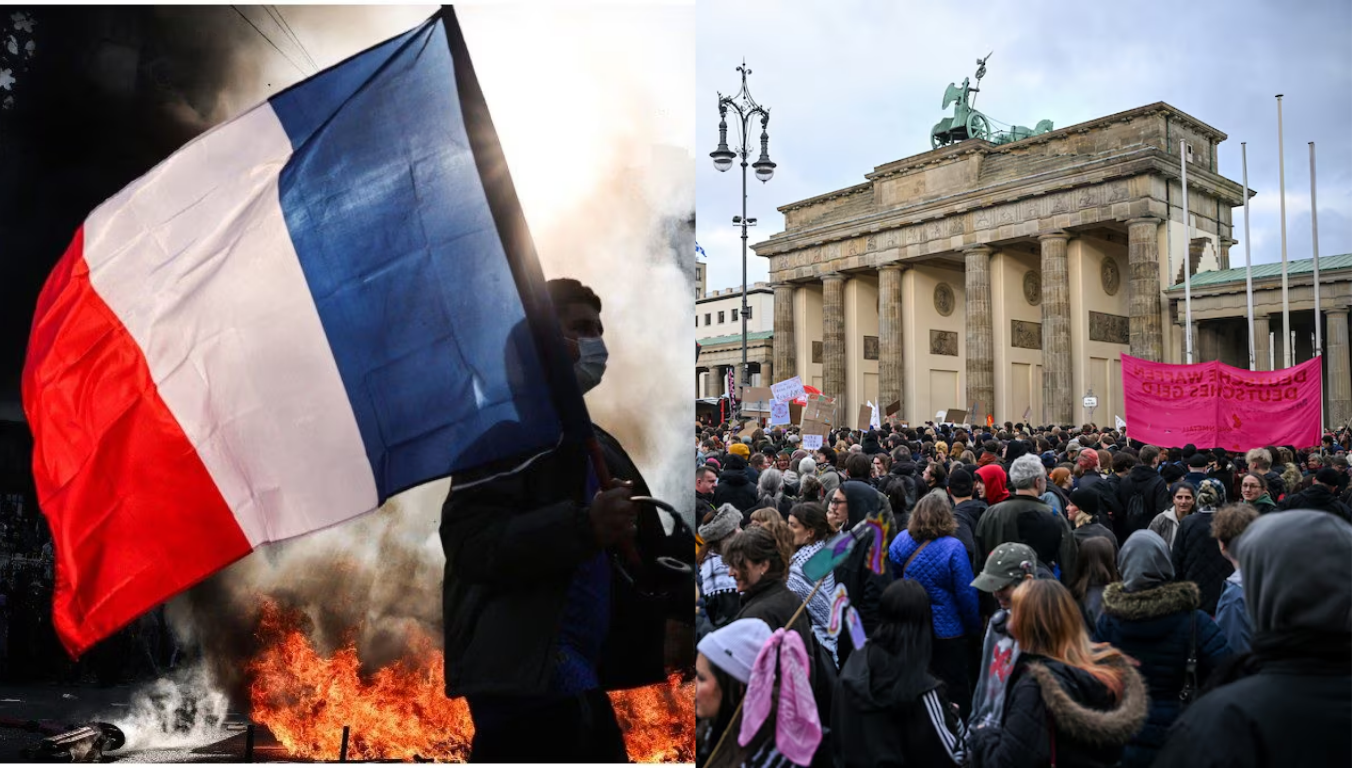
Demonstrations erupted across France and Germany over the weekend as public discontent with political leadership reached a boiling point. What initially began as student protests targeting poorly maintained schools, inadequate public services, and rising living costs has expanded to include a diverse coalition of trade unions, climate activists, public sector workers, and supporters of the Yellow Vest movement.
In France, the Interior Ministry reported approximately 320,000 participants nationwide on Saturday, including 70,000 in Paris, while organizers claimed the total could be as high as half a million. Attendance has decreased from earlier protests, which saw 550,000 on October 17 and 410,000 on October 24, yet the continued mobilization suggests persistent unrest among citizens.
The protests have grown to encompass broader issues, such as wages, living standards, social inequality, and the future of public services. The demonstrated unity among students, trade unionists, and other groups reflects a widespread frustration with a political system perceived as failing to address basic needs and security.
French President Emmanuel Macron is facing mounting criticism as the demonstrations highlight a disconnect between political authority and the everyday concerns of citizens. After nearly a decade in office, Macron’s presidency, which promised modernization, is now weighed down by rising public discontent. His government’s attempts at reform are complicated by parliamentary fragmentation and increasing debt, which limit the administration’s ability to respond to social demands while maintaining budgetary discipline.
The government has responded to the protests with heightened security, deploying around 70,000 police officers and imposing restrictions on demonstrations. While most protests remained peaceful, some areas witnessed violent clashes and the use of tear gas, resulting in over 560 arrests nationwide. Authorities have suggested that radical groups may be exploiting the situation, which raises questions about why so many citizens feel that direct action is necessary to be heard.
In Germany, the “Gen Z regelt” movement organized demonstrations in 34 cities, drawing tens of thousands with calls for increased funding for education, affordable living, better social protection, and climate action. Reports indicated over 180,000 online registrations, although actual participation may vary. Demonstrators emphasized discrepancies in governmental resource allocation, questioning why funds for defense and security surpass investments in public education.
German protests also experienced unrest, with notable disturbances in cities such as Hamburg and Cologne. These events reflect a growing concern among young people about economic instability, housing affordability, and the quality of public services in a nation otherwise viewed as economically robust.
Both countries’ protests underscore a broader European sentiment fueled by rising costs of living and unresolved political issues, including migration and social inequality. These ongoing challenges have contributed to an upsurge in support for populist movements, as traditional political systems struggle to provide effective solutions.
As protests are expected to continue—the unions in France have called for further mobilization on November 5—political leaders face a critical challenge. Demonstrators are calling for a reassessment of how government institutions engage with everyday citizens. Without substantial action to address these concerns, public unrest is likely to persist across Europe.
