




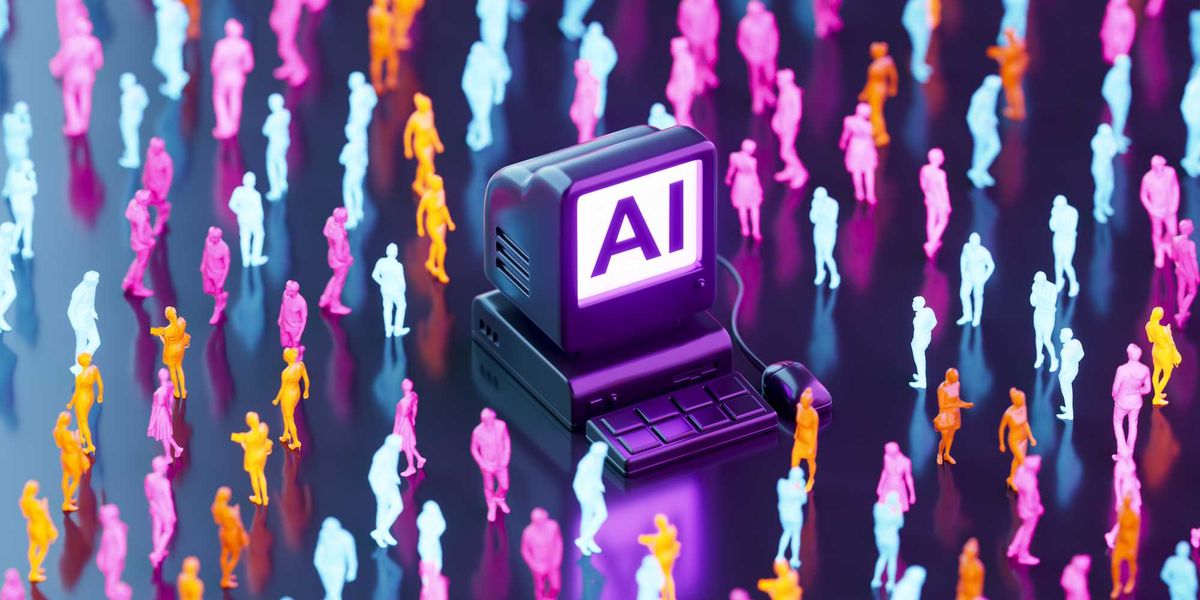
President Donald Trump has signed an executive order directing federal agencies to replace the term “artificial intelligence” with “Super Intelligence.” He argued that the term “artificial” creates a perception that the technology lacks authenticity.
The shift in terminology comes as many Americans increasingly view AI as a form of “super intelligence,” with some even treating it as a source of spiritual counsel or emotional support. A recent survey by Common Sense Media found that one-third of teenagers have discussed personal matters with AI instead of a human, with 31 percent claiming that they find these interactions equally or more satisfying than talking with friends. Additionally, the app Bible Chat, which provides scripture-based advice, has been downloaded over 30 million times.
The rebranding of AI as “Super Intelligence” encourages a perception of these technologies as possessing superior knowledge, lending them an almost divine status. This notion raises concerns among some spiritual leaders about the impact of technology on human relationships and the essence of faith. Over the past 18 months, a coalition called Faith Leaders for Secure AI has been formed, consisting of over 60 health and spiritual leaders who express concern that reliance on technology could alter individuals’ spiritual lives.
Nico Zviovich, the External Affairs and Coalitions Manager for The Alliance for Secure AI, advocates for a more cautious approach to the integration of AI into personal and spiritual matters. He notes that the term “artificial” serves a purpose, reminding people that it was created by flawed human beings. Zviovich adds that the discomfort associated with AI—referred to by roboticists as the “uncanny valley”—can help maintain a critical perspective when interacting with these technologies.
Despite the executive order, some individuals, including prominent figures like Elon Musk, continue to use the outdated terminology when discussing AI. Joe Allen, a writer focused on transhumanism, argues that the push to merge humans with machines reflects a religious-like fervor, casting these creations as deities of sorts.
Experts, including Professor Heidi Campbell from Texas A&M, caution that chatbots tend to tell users what they want to hear, contrasting with the sometimes uncomfortable truths delivered by human mentors or spiritual guides. The interactions with AI also raise privacy concerns; unlike a clergy member bound by confidentiality, apps are incentivized to collect user data.
In Austin, Texas, Pastor Michael Grayston points out that people are increasingly turning to AI for companionship, which they once sought from friends or spiritual leaders, emphasizing that “AI cannot pray over your children.” Research from Drexel University indicates that the reliance on AI companions may lead some users to develop dependencies akin to addiction.
While AI has practical applications, such as assisting with emails or document summaries, it is not infallible. Instances of AI errors have led to serious repercussions, including wrongful arrests. Experts suggest that parents be aware of which AI applications their children engage with and that religious leaders should address the use of AI within their communities.
In conclusion, the continued use of the term “artificial intelligence” is recommended to maintain a realistic understanding of these technologies. Zviovich urges individuals to reserve deeply personal matters for human connections and to approach AI as a tool, not a replacement for spiritual engagement.
