




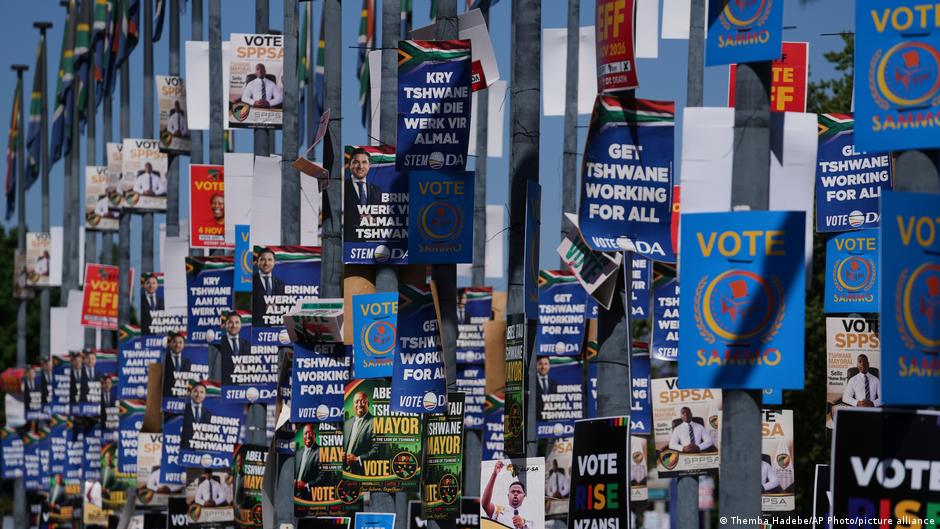
As South Africans prepare to vote in municipal elections on Wednesday, many voters express disillusionment with the political landscape. Vatiswa Zoya, a resident of Tembisa, declared her decision not to participate in the elections, saying, “What is the point? We will still sleep hungry.” In contrast, 22-year-old Lindokuhle Mbandazayo plans to vote, though she remains undecided on her choice, noting her community’s struggles with electricity outages and poor sanitation.
Both women highlight the frustrations that many in Tembisa, a township near Johannesburg, feel regarding their living conditions. Mbandazayo underscored the importance of local councilors, saying, “When we vote for councilors, we ask them to fix the area.”
Sanusha Naidu, an analyst at the Institute for Global Dialogue, explained that these frustrations drive voter participation. “Your vote actually puts some of these political parties’ feet to the fire,” Naidu noted, while also acknowledging that change may not come quickly.
This election is critical as it will not only determine the leadership in South Africa’s largest cities but will also test the electoral strength of the African National Congress (ANC), historically the nation’s dominant political party. The ANC’s share of votes has declined in recent years, dropping from 53.91% in 2016 to 45.59% in 2021. Ipsos analysts predict a potential fall to as low as 30% in this election, which could lead to more coalition-run municipalities.
Key Voter Issues
Water supply issues are a major concern for voters. Several neighborhoods in Johannesburg have been affected by ongoing water cuts, and Ferrial Adam from the water rights NGO WaterCAN pointed out that “almost 70% of our wastewater treatment works are in a critical state.” These issues have spurred protests and raised questions about candidates’ plans for addressing water shortages and quality.
The migration debate has also become a significant election issue, fueled by recent protests against the government’s handling of immigration matters. Parties like Action SA and the MK Party have focused on these sentiments, with Action SA expected to benefit from anti-immigration rhetoric, according to analysts at Murmur Intelligence.
Misinformation surrounding the elections has emerged as another challenge, with over 700 complaints of disinformation reported to the Independent Electoral Commission (IEC). Concerns include false claims that asylum seekers would be allowed to vote, which is not permitted under South African law.
Voter turnout in municipal elections has historically been lower than in national polls. In 2016, turnout was 57.95%, dropping to 45.87% in 2021. Analysts believe the turnout will be critical for these elections, affecting the distribution of council seats and potential coalitions.
In what’s seen as a crucial moment for both voters and political parties, the results of the elections could reshape the governance of key municipalities as South Africans head to the polls directed by various pressing issues, including water crises, infrastructure failure, and political discontent.
