




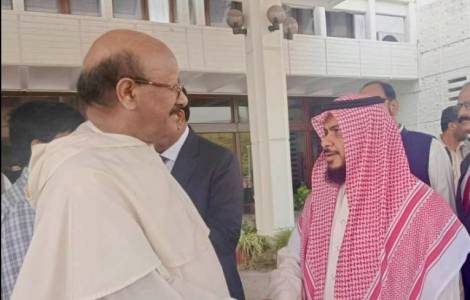
Forty Years of Christian-Muslim Dialogue Marked in Pakistan
Lahore – As Pakistan marks four decades of Christian-Muslim dialogue, leaders within the movement celebrate both the challenges faced and the significant progress made since its inception in 1985. Founded within the Catholic Bishops’ Conference, the National Commission for Christian-Muslim Dialogue, known as the “Rabita” Commission, has played a pivotal role in fostering relationships between the Christian and Muslim communities throughout the nation.
The establishment of the Rabita Commission followed a request from Saint John Paul II to Pakistan’s bishops during their 1984 visit to the Vatican. Its mission aligns with “Nostra Aetate,” a document from the Second Vatican Council that emphasizes the importance of interfaith dialogue.
Today, the dialogue initiative has expanded into a comprehensive network recognized by the government, which has established Interreligious Harmony Commissions at both federal and provincial levels. The principles of interreligious harmony have also been integrated into school curricula across the country.
Dominican Father James Channan, OP, who served as the Executive Secretary of the Rabita Commission, expressed pride in the developments during a recent interview. Currently the Director of the Peace Center in Lahore, he noted, “What in 1985 seemed a new and little-known concept is now widely recognized as a dimension of Pakistani society.” Underlining the shift in perception, he highlighted the growth from a small committee to a significant movement that encompasses a variety of institutions and community leaders.
At the heart of the commission’s mission has been its focus on linking dialogue to everyday life and the defense of human dignity. Over the years, the commission and its Muslim counterparts have addressed sensitive issues, such as electoral systems for minorities, the inclusion of religious affiliations on identification documents, and the misuse of blasphemy laws. Father Channan noted that they have also successfully advocated against forced conversions and the imprisonment of individuals falsely accused of blasphemy.
The ongoing recognition and support from state institutions reflect the maturity of interfaith dialogue in Pakistan. Father Channan remarked that the Pakistani government now explicitly acknowledges the importance of this dialogue, which further legitimizes their efforts.
A delegation from the Holy See’s Dicastery for Interreligious Dialogue is visiting Pakistan from November 6 to 14, 2026, to partake in events celebrating this anniversary. The delegation’s focus is on the future of interreligious dialogue under the theme “Building Bridges for Harmony.”
Reflecting on the progress made, Father Channan expressed hopes for the future, stating, “My hope is that dialogue will increasingly become a ‘way of life.’” He emphasized the importance of fostering education about dialogue among young people and families to combat longstanding prejudices and discrimination.
As the commission celebrates its 40th anniversary, it looks forward to continued collaboration among faiths to tackle pressing social issues, such as poverty and discrimination, and to promote mutual respect among Pakistan’s diverse communities.
