




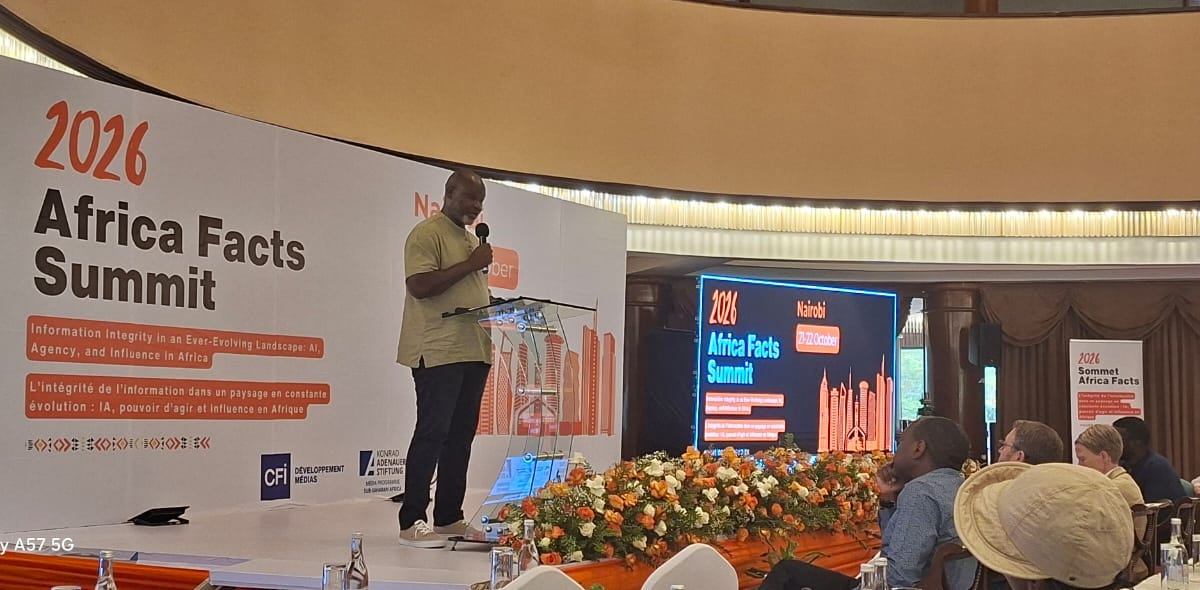
NAIROBI, Kenya — Journalists, fact-checkers, technologists, researchers, and policymakers from 30 countries have convened in Nairobi for the Africa Facts Summit, focusing on the growing concerns surrounding artificial intelligence-driven disinformation and the integrity of information across the continent.
The summit, themed “Information Integrity in an Ever-Evolving Landscape: AI, Agency, and Influence in Africa,” aims to address the emerging challenges faced by Africa’s swiftly evolving information ecosystem.
During the opening speech, Africa Editors Guild President Churchill Otieno noted that advancements in technology have transformed how information is created and shared, yet the fundamental responsibilities of journalism remain constant. “Before we publish a claim as true, we must establish what we know, how we know it, and what evidence supports that claim,” he stated in his keynote address. “Verification is not a specialization at the edges of journalism; it is journalism’s core foundation.”
Otieno cautioned that the rapid increase in information manipulation—encompassing AI-generated deepfakes, voice cloning, and multilingual disinformation campaigns—poses unprecedented challenges for journalists and fact-checkers. He pointed out that misleading content can now spread across borders and reach millions before newsrooms can complete traditional verification processes.
To combat these threats, Otieno introduced the Africa Frequency initiative, a collaborative pan-African movement aimed at strengthening the continent’s information ecosystem. He described the initiative as a shared platform for collective action, underscoring the need for collaboration among journalists, technologists, policymakers, and legal experts to create solutions that suit African contexts.
Through this initiative, journalists are encouraged to influence the discovery, moderation, and valuation of news. Technologists are challenged to develop AI systems that can recognize African languages and cultural nuances. Meanwhile, policymakers and legal experts are tasked with creating governance frameworks that uphold human rights and protect public-interest information.
Otieno stressed the importance of maintaining accuracy, even as newsrooms feel pressure to deliver information swiftly. He called for verification approaches that reflect local languages and cultural realities, arguing that public trust is contingent upon journalism remaining relevant and accountable to its audience.
The summit also emphasized the necessity of human oversight in the use of AI within newsrooms. As AI can produce both credible information and convincing misinformation, participants recognized that the responsibility for verifying and publishing information should lie with accountable human editors.
Over the next two days, delegates plan to explore topics such as conflict-sensitive reporting, AI-driven scams, and coordinated influence operations, as well as practical strategies to protect information integrity across Africa. This event comes at a time when African media organizations strive to leverage emerging technologies for journalism while combating increasingly sophisticated misinformation and disinformation.
