




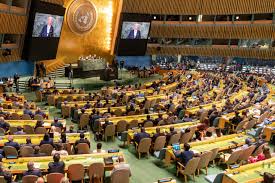
The United Nations Security Council’s current structure, a reflection of post-World War II geopolitics, has faced criticism for failing to include Africa among its permanent members. The Council, established in 1945, consists of five permanent members—China, France, Russia, the United Kingdom, and the United States—each wielding veto power, alongside ten non-permanent members serving two-year terms. Despite comprising 54 UN member states and a significant portion of the global population, Africa has not secured a permanent seat on the Council, raising issues of historical injustice and equitable representation.
Efforts for reform have been formalized through agreed frameworks like the 1997 Harare Declaration, the 2005 Ezulwini Consensus, and the Sirte Declaration. These documents collectively propose that Africa should be allocated at least two permanent seats and five non-permanent seats on an expanded Security Council. While African nations advocate for the eventual elimination of the veto, their position states that any new permanent members from Africa should hold the same veto rights as existing members, provided they remain in place.
In a recent development, the UN’s 2024 Pact for the Future explicitly recognizes addressing Africa’s under-representation as a key issue for Security Council reform. However, securing a permanent seat remains challenging, as changes to the UN Charter require both a two-thirds majority among member states and the approval of all five existing permanent members. Therefore, Africa’s strategy must involve dual objectives: maintaining a strong diplomatic push for its representation and acknowledging the importance of enhancing its own economic, technological, and institutional capacity.
The historical influence of permanent members, stemming from their advancements in various sectors, underscores the need for Africa to leverage its youth population, agricultural potential, and rich mineral resources to boost its international standing. Currently, Africa predominantly exports raw materials while importing higher-value products. Boosting local processing capabilities for minerals and transitioning agriculture from primary production to a technology-driven agro-industrial sector could fortify the continent’s economic backbone.
As the global landscape evolves, Africa stands at a crossroads with opportunities presented by technological advancements, particularly in artificial intelligence. To avoid past pitfalls of technological dependency, investment in areas such as education, digital infrastructure, and scientific research is essential. Furthermore, unity among African nations is critical to uphold the Common African Position regarding Security Council reform and to mitigate competition that could dilute collective goals.
Ultimately, the African Union will play a vital role in guiding Africa’s representation efforts. The pursuit of permanent Security Council seats must be viewed not as an end but as part of a broader journey toward industrialization and socio-economic empowerment. As African nations continue their push for reform, they aim not only for representation but also for a transformative role in global decision-making processes.
